


How to Balance Retirement Savings With Commercial Property Debt
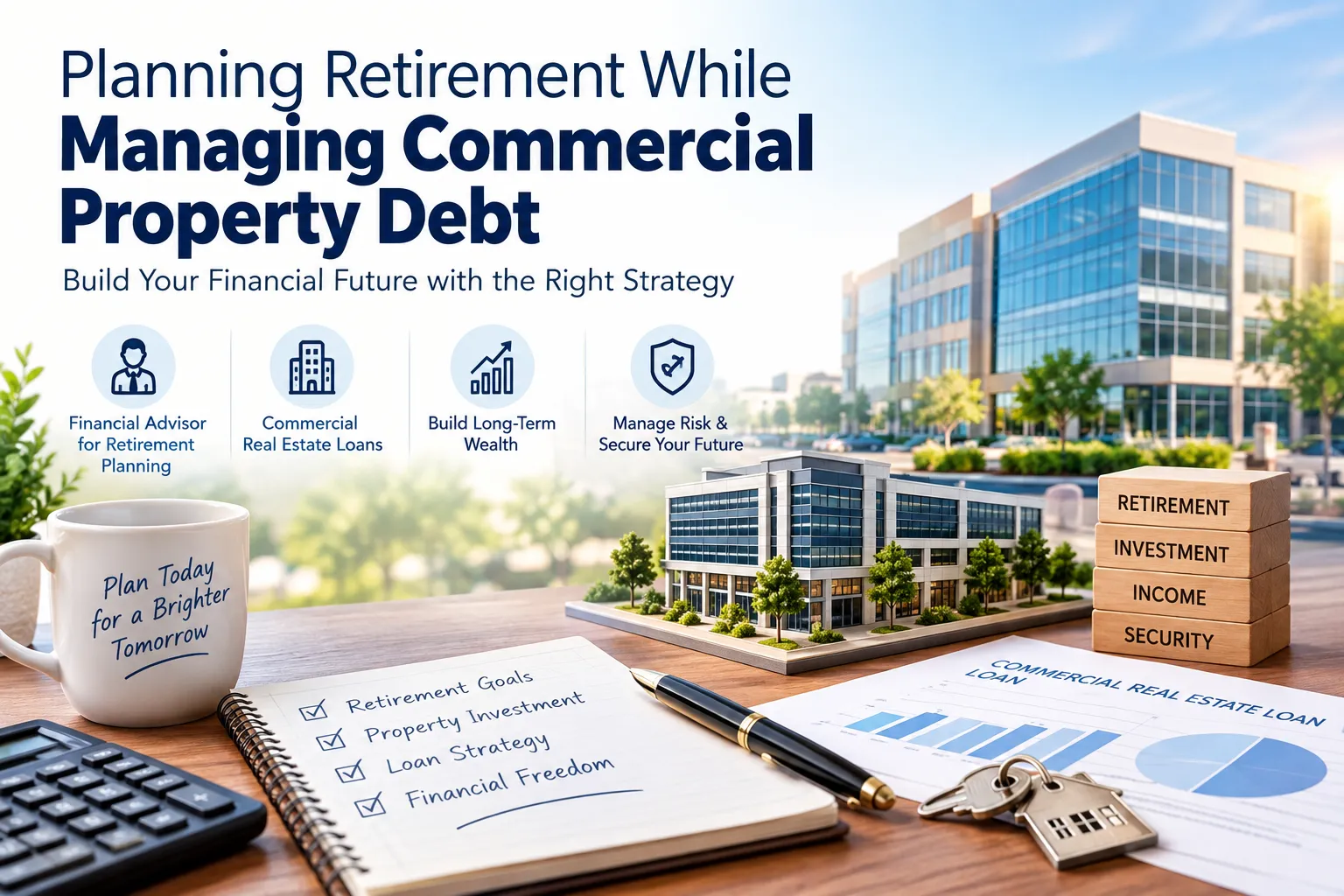
Owning commercial real estate can be a way to build long-term wealth, but property financing also creates financial responsibilities that may continue well into retirement. Monthly loan payments, maintenance expenses, vacancies, and changing interest rates can all affect the money available for future living costs. Without a clear plan, investors may find themselves managing property debt at the same time they need dependable retirement income.
The key is to understand how a property fits into your entire financial picture. A building may generate rental income and increase in value, but neither outcome is guaranteed. Investors need to consider their savings, outstanding debt, expected expenses, and ability to handle unexpected changes before committing to a major financing decision.
A financial advisor for retirement planning can help property owners assess how their investment and borrowing decisions may affect their retirement goals. Here are practical steps to help you evaluate commercial property debt while protecting your long-term financial flexibility.
1. Calculate How Much Retirement Income You Will Need
Start by estimating your future monthly expenses. Include essential costs such as housing, food, utilities, healthcare, insurance, transportation, and taxes. Then account for discretionary spending, travel, hobbies, and other personal goals.
Compare this estimate with the income you expect from retirement accounts, Social Security, pensions, investments, and other sources. If you plan to receive rental income from a commercial property, use a conservative estimate rather than assuming that every month will be profitable.
For example, a property may produce regular rental income today but experience vacancies or unexpected expenses in the future. Your retirement budget should remain workable even if property income temporarily falls.
A clear income target helps you determine how much money you need to save and whether additional property debt could make your retirement plan harder to maintain.
2. Understand the Full Cost of Commercial Property Financing
Commercial Real Estate Loans are used to finance various income-producing properties, including office buildings, retail spaces, industrial facilities, and certain multifamily properties. The financing process involves more than comparing interest rates.
Before choosing a loan, review the complete cost structure, including:
-
Down payment and closing costs
-
Interest rate and repayment schedule
-
Loan term and amortization period
-
Origination and servicing fees
-
Property appraisal and legal expenses
-
Potential prepayment penalties
-
Balloon payments or refinancing requirements
For instance, a loan with a relatively low initial payment may include a balloon payment at maturity. This can create a substantial financial obligation later, particularly if refinancing becomes difficult.
Make sure you understand when payments are due, how the outstanding balance changes over time, and what could happen if your financial circumstances change.
3. Separate Property Cash Flow From Personal Retirement Savings
One common planning challenge is using personal savings to support a property when rental income falls short. While this may sometimes be necessary, relying on retirement funds to cover recurring operating losses can put long-term financial goals under pressure.
Create separate financial accounts or budgets for property operations and personal spending. Estimate the property's net operating income after ordinary expenses, then account for loan payments and reserves.
A simplified illustration:
Example: Monthly commercial property cash flow
Illustrative figures, not a forecast or typical return
| Rental income | $10,000 |
| Operating expenses | −$3,000 |
| Mortgage payment | −$4,500 |
| Monthly reserve contribution | −$1,000 |
|
Remaining cash flow |
$1,500 |
The remaining cash flow is not necessarily the amount available for personal use. Income taxes, major capital improvements, and other obligations may reduce it further.
4. Maintain a Reserve for Vacancies and Repairs
A property can appear financially stable until a major repair or tenant departure creates an unexpected expense. A reserve fund can help you manage these events without immediately relying on personal retirement savings.
Consider preparing for:
-
Several months of potential vacancy
-
Emergency repairs and equipment replacement
-
Roof, plumbing, and structural maintenance
-
Insurance deductibles
-
Tenant improvements and leasing costs
-
Temporary shortfalls in rental income
The amount to reserve depends on the property's condition, tenant stability, operating expenses, and financing arrangements. A building with older equipment may require a different reserve strategy from a recently renovated property.
Review the reserve regularly and adjust it when operating costs or property risks change.
5. Plan for Loan Maturity Before Retirement
Some commercial mortgages have repayment terms that differ from their amortization schedules. As a result, an investor may still owe a substantial balance when the loan reaches maturity.
This can be a concern if the maturity date falls close to retirement. Refinancing may require additional income documentation, property equity, and approval under the lender's current requirements. Interest rates and property values may also differ from the conditions that existed when the original loan was issued.
Review your loan maturity date early. Calculate the expected outstanding balance and consider possible ways to address it, such as making additional principal payments, selling the property, or refinancing if suitable terms are available.
Do not assume refinancing will always be possible. Building a plan around more than one potential outcome can help reduce the risk of being forced into a rushed financial decision.
6. Avoid Depending on Rental Income Alone
Commercial real estate can be one part of a retirement income strategy, but it may not provide consistent cash flow every month. Tenant turnover, economic conditions, local demand, and unexpected operating expenses can affect returns.
Consider how much of your retirement wealth is concentrated in real estate. If a large share of your assets is tied to one property or a particular commercial sector, a change in that market could affect your overall financial position.
Other assets, such as retirement accounts, cash savings, and diversified investments, may provide different sources of financial support. Each has its own risks, costs, and tax considerations.
A financial professional can help you examine how your property fits with your other assets without relying on any single investment to meet all your retirement needs.
7. Adjust Your Financing Strategy as Retirement Approaches
Your financial priorities may change as you get closer to retirement. Earlier in your career, you may have more time to manage fluctuations in income and property values. Later, dependable cash flow and access to liquid savings may become more important.
Review your financing strategy periodically. Consider whether your current loan payments remain manageable, whether your property requires substantial upcoming repairs, and whether your expected retirement income can cover personal expenses without depending on optimistic property projections.
A financial advisor for retirement planning can help organize your financial goals, assess debt obligations, and review potential retirement income sources. For property-specific decisions, consider working with qualified lending, tax, and legal professionals as needed.
8. Use Stress Testing to Identify Financial Weaknesses
A financial plan should account for more than the expected outcome. Stress testing allows investors to examine how a property might perform under less favorable conditions.
Consider several scenarios:
-
Rental income falls because a tenant leaves.
-
Operating expenses rise faster than expected.
-
The property needs an expensive repair.
-
Interest rates increase before refinancing.
-
The property's market value declines.
-
Personal income decreases earlier than anticipated.
For each scenario, calculate whether you could continue making loan payments and meeting personal expenses. Identify which reserves or alternative options would be available if the property performed below expectations.
This exercise does not eliminate uncertainty, but it can reveal where your financial plan may need more flexibility.
Make Commercial Property Debt Work Within Your Long-Term Plan
Commercial real estate financing should be evaluated in the context of your retirement timeline, personal savings, and future income needs. A property may offer rental income and potential appreciation, but it also creates obligations that require careful management.
Focus on realistic cash-flow projections, loan repayment conditions, emergency reserves, and refinancing risks. Review these factors regularly as your financial circumstances evolve.

 English
 Arabic
 French
 Spanish
 Portuguese
 Turkish
 Dutch
Dutch
 Italiano
 Russian
 Romaian
 Portuguese (Brazil)
 Greek
Greek
