


Japanese Bath Towels: What Makes Them Different From Regular Towels?
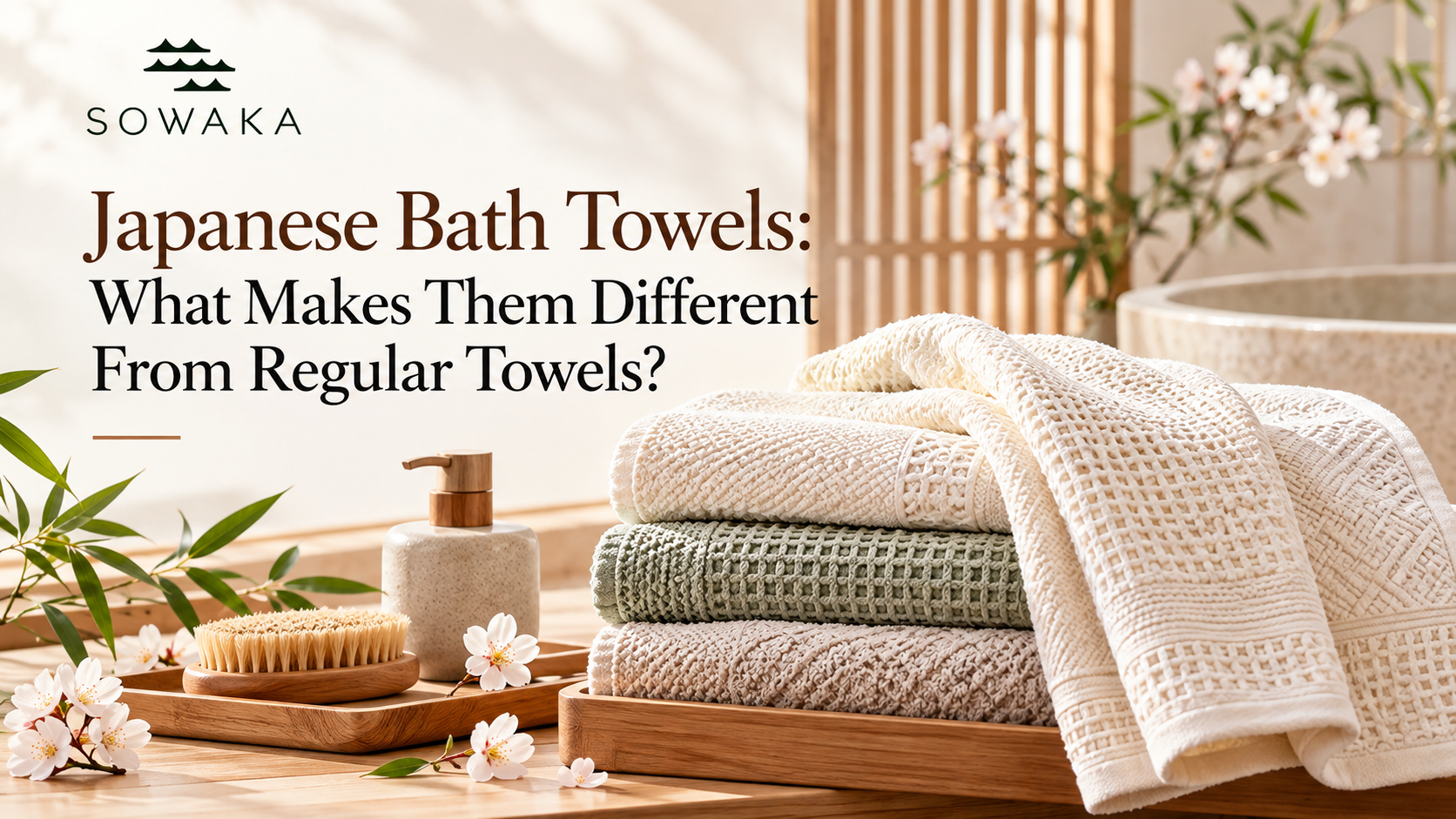
Most people choose a towel the way they choose a pillow: by squeezing it. Softness and thickness usually win. But a plush towel that stays damp until the next afternoon does little for a small bathroom, and a thin towel isn't automatically a poor performer. Material, weave, weight and drying behavior matter just as much. That is where many Japanese towels part ways with the dense terry most Western shoppers know.
What Makes Japanese Towels Different?
Many Japanese towels are lighter, thinner and quicker to dry than heavy Western-style terry. The design focus tends to be how a towel performs across the whole day, not only how it feels in the first second.
In practice, that can mean a shorter, tighter pile, layered gauze, or a flat weave with no pile at all. Japan also has recognized towel-making regions. Imabari, in Ehime Prefecture on the island of Shikoku, is the best known. Senshu, in the Osaka area, has a long history of cotton towel weaving. Each region has its own methods, and plenty of Japanese towels come from neither. "Japanese" describes where a towel is made or designed, not a single fabric.
Are Japanese Towels More Absorbent?
Not automatically. Absorbency depends on the fiber, the yarn and how the loops or layers are constructed, not on how thick a towel looks. Cotton is naturally absorbent, and well-prepared cotton yarn takes up water readily. Imabari's quality certification, for example, includes a water-absorbency test in which a sample is expected to sink within about five seconds.
A thicker towel can hold more water in total, but it also holds it longer. A thinner one may absorb quickly, then need a second pass on longer hair or after a long soak. Neither is wrong. They suit different habits.
Why Do Japanese Towels Dry Quickly?
Usually because there is less fabric holding water. A lighter towel with an open or flat construction carries less moisture and lets air move through it more easily. That helps in humid bathrooms, shared spaces, small apartments and travel bags.
The trade-off is feel. A thinner towel is less cushiony than a thick hotel-style one, and some people miss that heft. If drying speed and storage space matter more to you than plushness, a lighter towel is worth considering.
Different Materials Serve Different Purposes
Cotton is the most common material in Japanese bath towels, but it isn't the only one. Sasawashi is a different kind of fabric. It is made from washi, traditional Japanese paper spun into yarn, blended with kumazasa, a bamboo-leaf plant. The maker describes the result as absorbent and distinctly textured, with natural deodorizing and antibacterial qualities associated with kumazasa.
Cotton and Sasawashi aren't interchangeable. They feel different, behave differently and are often meant for different jobs.
Where Does a Sasawashi Mesh Body Scrub Towel Fit?
A sasawashi mesh body scrub towel is a cleansing tool, not a drying towel. Its open mesh construction is meant for use in the bath or shower with soap or body wash, where it helps build lather and gives light exfoliation. You wouldn't wrap yourself in it afterward.
The texture is deliberate. People with sensitive skin may prefer a softer, less textured towel and should adjust use according to personal comfort. Pressure matters as much as the material, and a scrub towel is a matter of preference, not a treatment for any skin concern.
How Should You Choose a Japanese Towel?
Start with what you need the towel to do.
For everyday drying, look for a cotton bath towel with a weight and weave you find comfortable. If you dislike damp towels, lean lighter. For travel, a thin, flat-woven or gauze towel packs small and dries fast. If softness is the priority, choose a finer cotton pile and accept that it may take longer to dry. For textured cleansing, a mesh body towel is the separate item you want, and it works alongside your drying towel, not in place of it.
Specialty retailers make comparing easier, since they usually stock several constructions side by side. Sowaka NYC, for instance, carries Japanese bath and body-care products, including towels for different purposes. Product descriptions that name the fiber and construction are more useful than ones that only say "soft."
How Do You Care for Japanese Towels?
Follow the care label first, because construction changes the rules. Cotton terry usually handles a regular wash with a mild detergent, while gauze and mesh pieces tend to do better on a gentle cycle and without crowding the drum. Wash new towels before first use, and separate colors early on.
Drying matters as much as washing. Hang towels so air reaches the whole surface, and let a mesh scrub towel dry fully between uses. A towel that dries quickly still needs room to do it, and one bunched on a hook stays damp longer. Check the label on detergent, temperature and any additives, since recommendations vary by material.
The Short Version
Judge a Japanese towel by its material, weave, weight, absorbency, drying behavior and intended use, not by thickness or softness alone. A body scrub towel and a bath towel do different jobs, and a lightweight towel isn't a lesser one. Once you know what you want from it, the choice gets much easier.

 English
 Arabic
 French
 Spanish
 Portuguese
 Deutsch
 Turkish
 Dutch
Dutch
 Italiano
 Russian
 Portuguese (Brazil)
 Greek
Greek
