


Network Installation Services: Stop Small Cabling Issues From Becoming Major Problems
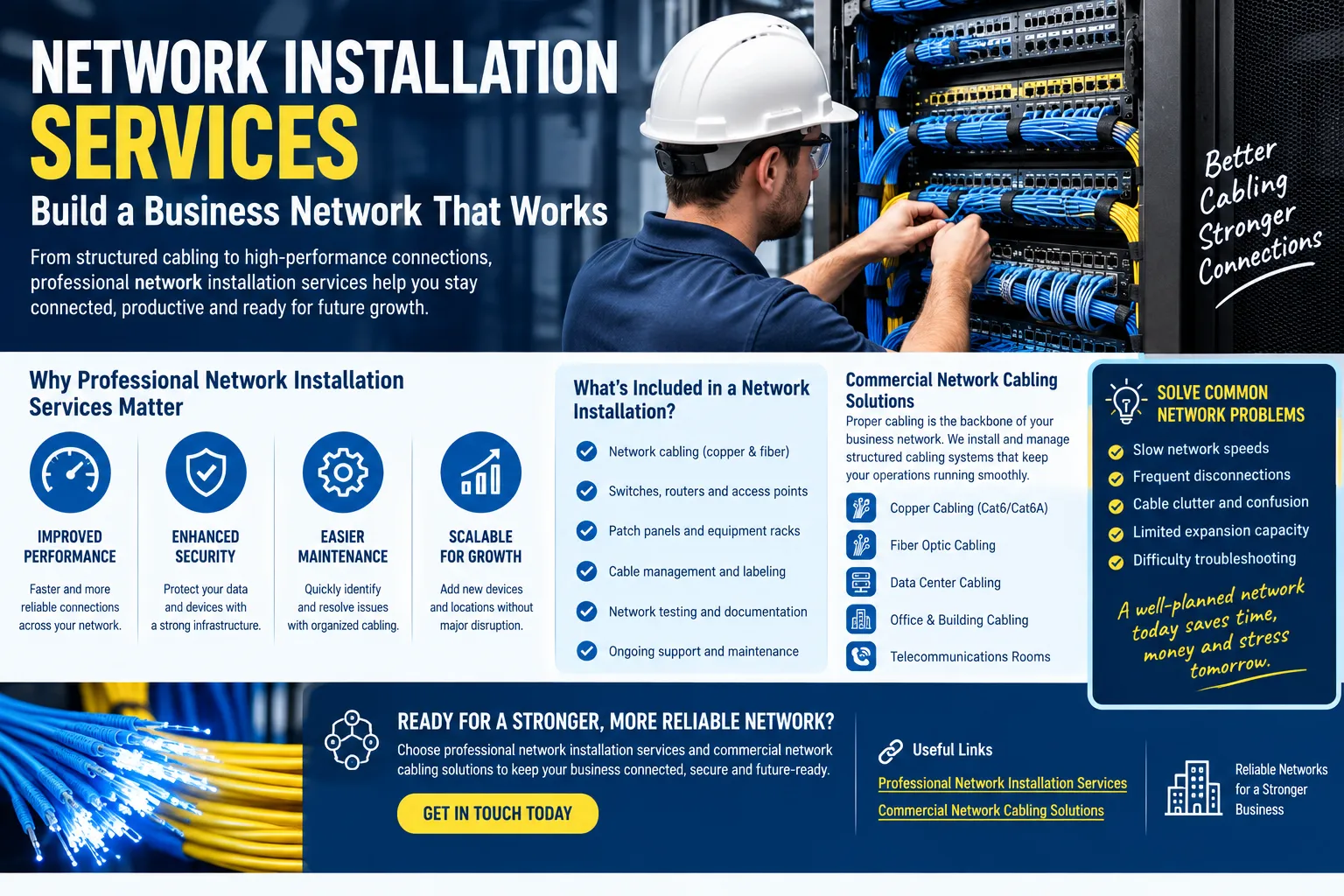
A network problem does not always begin with a complete connection failure. Sometimes it starts with an intermittent connection, a damaged cable, an overcrowded network rack, or a workstation that regularly loses access to the network.
These issues may seem minor when they affect only one employee. However, repeated connectivity problems can consume IT resources, interrupt communication, slow productivity, and make everyday operations more difficult.
The physical infrastructure behind the network deserves attention because cables, connectors, patch panels, racks, and network outlets form the foundation on which business technology depends.
Professional network installation services can help businesses identify infrastructure weaknesses and create an organized system that is easier to maintain and expand.
Why Network Cabling Problems Are Often Difficult to Find
Network infrastructure is frequently hidden behind walls, ceilings, floors, and equipment racks. This can make physical problems difficult to identify without proper testing and documentation.
A connection that keeps dropping could be caused by a damaged cable, poor termination, an incorrect connection, interference, or another infrastructure issue. Simply restarting networking equipment may not address the underlying cause.
Businesses can save time by approaching recurring connectivity issues systematically.
An infrastructure assessment can examine cable routes, connection points, patch panels, network closets, and equipment locations to determine whether physical cabling is contributing to the problem.
What Professional Network Installation Services Can Address
A professional installation can cover much more than basic cable placement. Depending on the facility, the project may involve:
- Structured cabling
- Ethernet network installation
- Fiber optic cabling
- Network outlets
- Patch panels
- Data racks
- Cable trays and pathways
- Server room organization
- Wireless access point cabling
- Cable labeling
- Network testing
- Infrastructure documentation
The exact solution should depend on the business environment rather than following a one-size-fits-all approach.
For example, a small office may require a straightforward copper cabling upgrade, while a larger facility could need fiber backbone connections and multiple telecommunications rooms.
How to Choose the Right Cabling Company
Selecting a cabling company should involve more than comparing installation prices. Businesses should consider how carefully the provider evaluates the building, existing infrastructure, technology requirements, and future expansion plans.
Important questions to ask include:
- Will the existing cabling be inspected?
- Which cable types are appropriate for the project?
- Will connections be properly labeled?
- Are installed cables tested?
- Will the network layout be documented?
- Can the infrastructure support future expansion?
- How will cables be routed and protected?
- Can the provider work around the company's operating schedule?
Clear answers to these questions can help businesses understand the quality and scope of the proposed installation.
Structured Cabling Makes Troubleshooting Easier
Unorganized cabling can turn a simple repair into a time-consuming investigation.
When every connection is clearly labeled and routed through an organized infrastructure, technicians can more easily identify where a cable begins and ends. Patch panels and properly arranged racks can also make equipment changes easier.
Structured cabling provides a consistent framework for connecting devices throughout a facility. This can benefit businesses that regularly add workstations, move employees, install new equipment, or expand into additional areas.
The goal is not simply to make the network closet look cleaner. Organization can directly improve maintainability.
When Fiber Optic Cabling Can Solve Distance Problems
Some businesses need network connections across longer distances or between different areas of a property. In these situations, fiber optic cabling may be an appropriate part of the infrastructure.
Fiber is commonly used for high-bandwidth connections and backbone links. It can connect network closets, floors, buildings, or other locations where distance and signal considerations make it useful.
However, fiber is not automatically necessary for every connection. A qualified installer can determine where fiber and copper cabling each make practical sense.
Using the appropriate combination can provide a balanced network infrastructure without introducing unnecessary costs.
Cable Management Can Reduce Maintenance Headaches
Cable management is another area where small improvements can have a significant practical impact.
A crowded rack with tangled cables can make it difficult to identify connections, replace equipment, or troubleshoot failures. Poor cable organization may also restrict airflow around networking equipment.
A well-organized installation can include cable trays, patch panels, appropriate cable lengths, labels, and clearly defined pathways.
Good documentation should complement physical organization. A business should ideally know which ports and cable runs serve specific areas or devices.
Working With a Cabling Contractor in Colorado Springs
Businesses searching for a cabling contractor in Colorado Springs should consider the type and complexity of their facility.
Commercial network projects can involve offices, warehouses, retail locations, medical facilities, educational spaces, industrial environments, and multi-floor buildings. Each setting presents different cabling challenges.
A contractor should consider the building's layout, equipment locations, cable pathways, network requirements, and plans for future growth.
For an existing facility, the contractor may also need to work around employees and business operations. Careful scheduling and installation planning can reduce disruption during the project.
Testing Should Be Part of the Installation Process
A cable that has been installed does not automatically mean the connection is performing correctly.
Network testing can help identify wiring faults, termination problems, damaged connections, and other issues before they affect users.
Testing is especially important for larger projects because identifying problems after employees begin using the network can create unnecessary downtime.
Businesses should also request appropriate documentation when applicable. Records of cable runs, ports, and infrastructure can make future troubleshooting considerably easier.
Plan for the Devices You Expect to Add
Network requirements can change as businesses grow. New employees may require additional workstations, while security cameras, VoIP phones, wireless access points, printers, servers, and other connected systems can increase infrastructure demands.
Installing exactly enough connections for today's devices may create limitations later.
A better approach is to consider reasonable future requirements during the design stage. This does not necessarily mean installing unnecessary cables. It means creating an infrastructure that can accommodate practical expansion without requiring a complete redesign.
Signs Your Existing Cabling Needs Attention
Businesses should consider a network infrastructure assessment when they experience recurring problems such as:
- Intermittent network connections
- Frequent cable failures
- Slow or inconsistent connectivity
- Limited network outlets
- Unlabeled cables
- Overcrowded racks
- Difficulty tracing connections
- Problems adding new devices
- An upcoming office expansion
- A planned relocation or renovation
These signs do not always mean the entire network must be replaced. In many cases, targeted improvements can resolve specific infrastructure weaknesses.
How Professional Planning Prevents Future Problems
The most effective network projects begin before the first cable is installed.
A proper plan considers where equipment will be located, how cables will travel through the building, how connections will be labeled, how the network will be tested, and how future changes can be accommodated.
This planning stage can also help identify potential obstacles such as difficult cable pathways, insufficient network closets, limited rack space, or incompatible infrastructure.
By addressing these factors early, businesses can reduce the risk of expensive changes later.
Final Thoughts
Network reliability depends on more than an internet service plan or the latest networking equipment. The physical cabling infrastructure plays an important role in how easily a business can connect, troubleshoot, maintain, and expand its technology.
Professional network installation services can help address recurring connectivity issues, disorganized cabling, inadequate network capacity, and difficult maintenance.
Whether a business needs structured cabling, fiber optic connections, additional network outlets, or a complete infrastructure upgrade, careful planning and proper testing can create a more dependable foundation.
For companies evaluating their current network or planning a new facility, working with an experienced cabling company and an appropriately qualified local contractor can help turn a collection of cables into a structured infrastructure designed around real business needs.

 English
 Arabic
 French
 Spanish
 Portuguese
 Deutsch
 Turkish
 Italiano
 Russian
 Romaian
 Portuguese (Brazil)
 Greek
Greek
