


How Small Businesses Can Build a Marketing Strategy That Actually Works
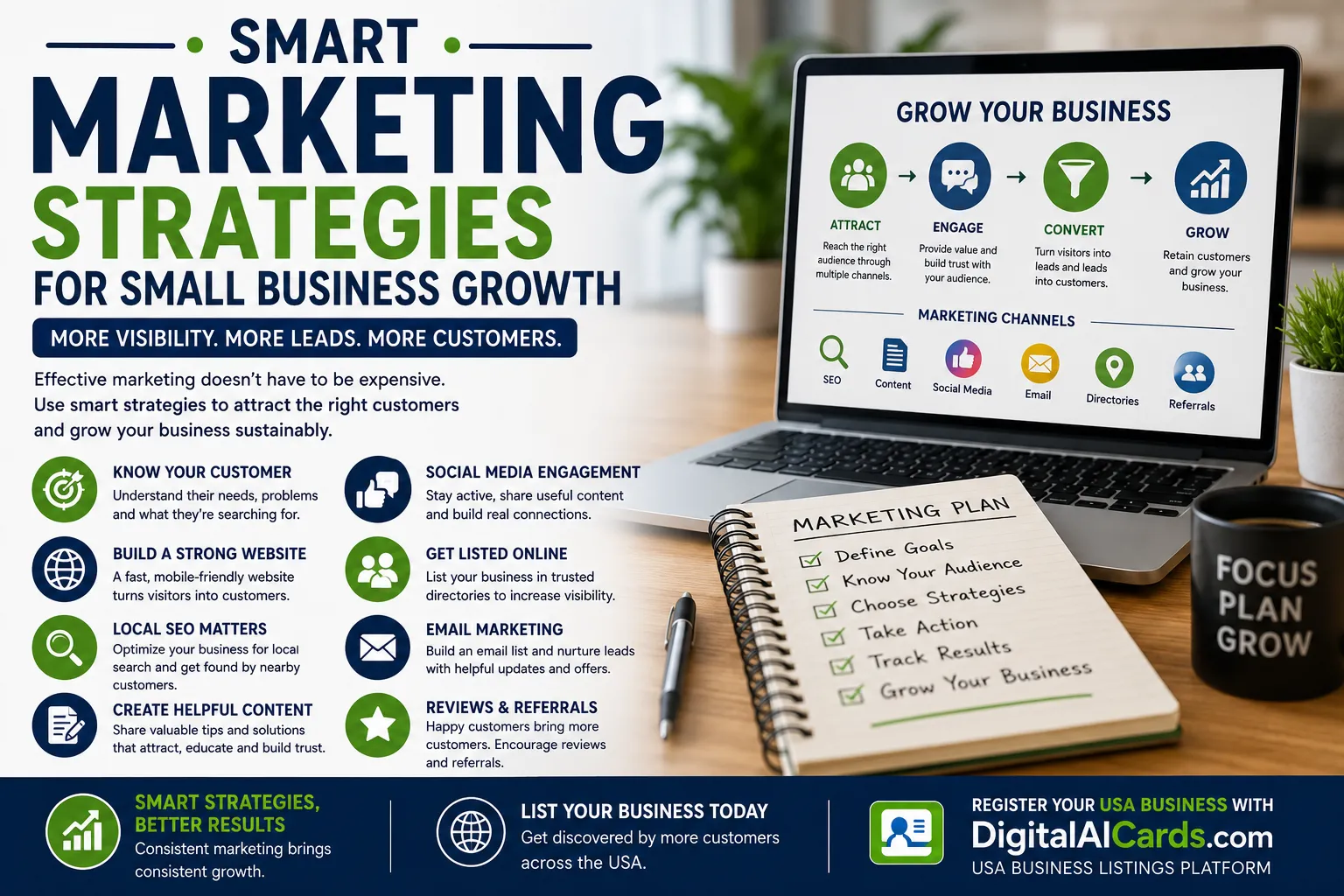
Small businesses often know they need marketing, but the bigger challenge is deciding where to start. Limited budgets, small teams, changing customer behavior, and competition from larger companies can make marketing feel overwhelming.
The solution isn't to use every marketing channel available. A better approach is to create a focused plan based on your customers, business goals, available resources, and the problems your products or services solve.
Effective marketing strategies should help a company become easier to discover, communicate its value clearly, generate qualified leads, and turn existing customers into repeat buyers. With a practical strategy, even a small business can build consistent visibility without wasting time and money.
Start With a Specific Marketing Goal
Marketing becomes difficult to manage when the objective is simply "get more customers."
A useful marketing goal should identify what you want to accomplish and how you will measure progress. Depending on the business, the objective could be:
- Generate more qualified leads
- Increase website inquiries
- Improve local visibility
- Increase online sales
- Build brand awareness
- Attract repeat customers
- Promote a new service
- Grow an email subscriber list
A specific goal makes it easier to choose appropriate marketing channels. A local service provider looking for phone calls may need a different strategy from an online store trying to increase product sales.
Identify the Customers You Want to Reach
One of the most valuable marketing tips for small business is to avoid trying to appeal to everyone.
Define the people most likely to benefit from what you offer. Consider their needs, location, purchasing behavior, common concerns, budget, and the questions they ask before making a decision.
Customer conversations are an excellent source of information. Pay attention to the language customers use to describe their problems. Those phrases can help shape website copy, advertisements, blog topics, social media posts, and service descriptions.
Understanding your audience also makes your marketing messages more specific and useful.
Explain the Problem Your Business Solves
Customers are usually more interested in solving a problem than hearing a list of company features.
Instead of focusing entirely on what your business sells, explain how your product or service helps customers.
For example, a business offering bookkeeping services could emphasize easier financial organization, clearer reporting, and less administrative work. A home repair company could focus on helping homeowners address maintenance problems efficiently.
Your value proposition should answer a simple question: Why should someone choose this business instead of continuing their search?
A clear answer can make marketing materials much more effective.
Make Your Website Your Marketing Foundation
Your website should support nearly every other marketing activity.
Whether visitors arrive through search engines, social media, email, referrals, or advertising, they need a clear place to learn about your business.
Review your website from a customer's perspective. Important information should be easy to find, including:
- Products or services
- Pricing information when appropriate
- Service areas
- Contact details
- Business hours
- Customer reviews
- Frequently asked questions
- Clear calls to action
Make sure important pages work properly on mobile devices. A visitor who cannot easily navigate your website or contact your business may leave before becoming a lead.
Use Local SEO to Reach Nearby Customers
Local search can be particularly valuable for businesses serving specific geographic areas.
Start by making sure your business information is accurate and consistent online. Your business name, address, phone number, website, hours, and service information should be kept up to date.
Create useful service and location content rather than producing pages that simply repeat a city name. A good location page should provide information that is genuinely relevant to people in that area.
Customer reviews, local business listings, relevant citations, useful content, and a well-maintained business profile can all support a broader local marketing strategy.
Create Content Around Customer Questions
Content marketing can be especially useful for small businesses because it gives potential customers helpful information before they make a purchase.
Start with questions your customers already ask.
For example, a roofing company could publish content about signs that a roof may need repair. A financial service provider could explain common budgeting mistakes. A marketing agency could discuss how businesses can evaluate their online visibility.
Useful content can include:
- Blog articles
- How-to guides
- FAQs
- Checklists
- Tutorials
- Case studies
- Comparison articles
- Industry explanations
- Customer education resources
The objective isn't to publish content simply to add more pages to a website. Every piece should have a clear purpose and provide information that helps the reader make a decision or solve a problem.
Choose Social Media Platforms Carefully
Small businesses don't need to maintain an active presence on every social network.
Research where your customers spend time and select platforms that fit your business. A professional consulting company may have different social media priorities from a restaurant, clothing retailer, or home service provider.
Use social media to demonstrate expertise, answer questions, show behind-the-scenes activity, introduce team members, highlight customer experiences, and share useful content.
Promotional posts can be part of the strategy, but constantly asking people to buy can make a business account less useful to followers.
Build Relationships Through Email Marketing
Email marketing provides an opportunity to communicate directly with people who have voluntarily shown interest in your business.
A small company can use email to send:
- Helpful tips
- New product announcements
- Special offers
- Company updates
- Educational content
- Appointment reminders
- Customer resources
Avoid sending irrelevant messages simply to maintain a schedule. A smaller number of useful emails can be more valuable than frequent messages that subscribers ignore.
Always use appropriate permission-based practices and provide recipients with a clear way to manage their subscriptions.
Encourage Reviews and Recommendations
Trust can have a major influence on purchasing decisions. Genuine customer reviews give potential buyers insight into other people's experiences.
Ask satisfied customers for honest feedback after completing a purchase or service. Make the process straightforward and never create fake reviews or ask customers to make misleading claims.
Referral marketing can also help. If customers are happy with your service, make it easy for them to recommend your business to friends, colleagues, or other organizations.
Strong customer service is the foundation of this strategy. Marketing can attract attention, but a positive experience gives customers a reason to return and recommend the business.
Use Partnerships to Expand Your Reach
Small businesses can sometimes reach new audiences by developing relationships with complementary businesses.
For example, a wedding photographer may build relationships with venues, planners, florists, and other wedding professionals. A property maintenance company might connect with real estate professionals or property managers.
These partnerships can lead to referrals, joint promotions, educational events, or collaborative content.
The key is to find businesses that serve a similar audience without directly competing with your core offering.
Don't Ignore Customer Retention
Acquiring a new customer can require considerable effort. Existing customers already know your business, so retention deserves a place in your marketing plan.
Follow up after purchases, provide useful support, offer relevant recommendations, and make customers feel valued.
Depending on the business model, loyalty programs, maintenance reminders, personalized emails, exclusive offers, or customer appreciation campaigns may encourage repeat business.
Retention marketing can also reveal what customers value most, helping you improve both your service and future campaigns.
Track the Numbers That Matter
Marketing decisions should be based on more than likes, impressions, or website visits.
Track metrics that connect marketing activity to business outcomes. These may include:
- Qualified leads
- Conversion rate
- Phone calls
- Form submissions
- Sales
- Repeat purchases
- Customer acquisition cost
- Email engagement
- Revenue generated
- Website conversions
For example, a campaign generating 1,000 visitors but only one qualified lead may deserve less attention than another campaign generating 100 visitors and 15 strong inquiries.
The right metrics depend on your business model and marketing objective.
Avoid Spreading Your Budget Too Thin
One of the biggest challenges for small businesses is trying too many strategies simultaneously.
A company may start paid advertising, social media marketing, blogging, email marketing, video production, influencer marketing, and several other campaigns without having enough time or budget to manage any of them properly.
Choose a small number of channels that match your audience and goals. Build a consistent process before expanding.
A focused strategy is easier to measure, improve, and maintain.
Test, Learn, and Improve
No marketing plan should remain unchanged forever.
Review campaign performance regularly. Look for pages that generate leads, content that attracts visitors, advertisements that produce conversions, and customer questions that appear repeatedly.
You can test different headlines, offers, calls to action, landing page layouts, email subjects, and content formats.
Small improvements can add up over time. The purpose of testing isn't to change everything at once but to learn which approaches work better for your specific audience.
Build a Sustainable Marketing Routine
Successful marketing is usually the result of consistent activity rather than one large campaign.
Create a realistic schedule for your business. You might publish one useful article each month, send two valuable emails, update important website pages, request genuine customer reviews, and review marketing performance at the end of each month.
A manageable routine is more sustainable than an ambitious plan that becomes impossible to maintain after a few weeks.
Final Thoughts
Effective marketing strategies for small business don't require a huge budget or a complicated collection of tools. They require a clear understanding of customers, a useful offer, consistent communication, and careful measurement.
Start by defining your audience and business objective. Build a website that supports conversions, strengthen your local presence, create helpful content, use appropriate social platforms, develop customer relationships, and track the results that actually matter.
The best marketing tips for small business are the ones that can be applied consistently. Rather than chasing every new marketing trend, focus on activities that help your customers discover your business, understand its value, trust your company, and take the next step. Over time, that focused approach can create a stronger marketing foundation and more sustainable business growth.

 English
 Arabic
 French
 Spanish
 Portuguese
 Deutsch
 Dutch
Dutch
 Italiano
 Russian
 Romaian
 Portuguese (Brazil)
 Greek
Greek
