


EHS Management Software for Workplace Safety and Compliance
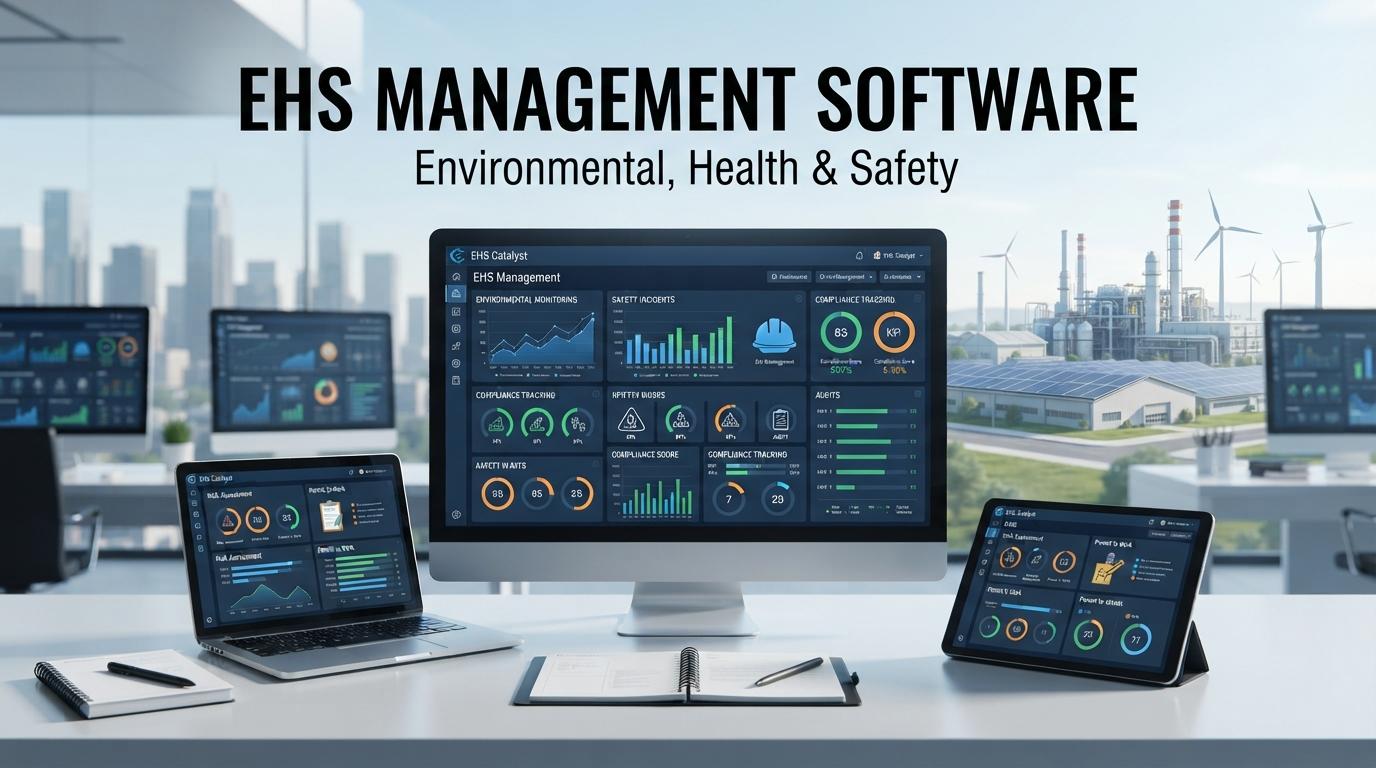
An EHS Management Software can help organisations manage workplace safety, environmental responsibilities, incidents, inspections, and compliance activities from one central system. When safety information is kept in spreadsheets, emails, paper forms, and separate files, it can become difficult for teams to keep track of what needs attention. With a central platform, safety teams can record incidents, monitor risks, assign corrective actions, and keep important records organised. For many businesses, this can make daily safety work more structured and give managers a clearer view of what is happening across the workplace.
What Is EHS Management Software
EHS stands for Environmental, Health, and Safety. An EHS management system is designed to help businesses manage activities related to employee safety, workplace health, environmental responsibilities, and regulatory compliance.
Instead of managing every safety task separately, organisations can use EHS software to bring different processes into one platform. The exact features vary from one solution to another, but a system may include:
- Incident and accident reporting
- Risk assessments
- Safety inspections
- Hazard reporting
- Corrective action tracking
- Employee training records
- Compliance management
- Environmental monitoring
- Safety documentation
- Audit management
- Emergency response records
- Safety performance reporting
This central approach can make it easier for safety managers and employees to access the information they need. It also gives management a more complete picture of workplace safety activities.
Why Businesses Need Workplace Safety Software
Workplace safety involves much more than responding after an accident occurs. Teams need to identify hazards, assess risks, conduct inspections, train employees, and follow up on corrective actions.
When these activities are handled manually, some information may be difficult to find or follow up on. For example, a safety inspection may identify a hazard, but the corrective action could be recorded in a separate spreadsheet. Someone may then have to check emails later to find out whether the issue was resolved.
Workplace safety software can connect these activities. A reported hazard can be assigned to a responsible employee, given a deadline, and monitored until the required action is completed.
This gives teams a clearer process and reduces the chances of important safety tasks being overlooked.
Managing Workplace Risks
Risk management is one of the main areas where an EHS platform can support safety teams. Before work begins, organisations can identify potential hazards and assess the risks associated with them.
Risk management software can help teams record information such as:
- Identified hazards
- Potential consequences
- Existing controls
- Risk levels
- Responsible employees
- Recommended actions
- Review dates
For example, a manufacturing company may identify machinery, chemicals, electrical equipment, or working at height as potential sources of risk. The organisation can document the relevant controls and assign actions to the employees responsible for maintaining them.
Risk assessments should not simply be completed once and forgotten. Work environments change, equipment is replaced, procedures are updated, and new hazards can appear. A digital system can make it easier to review and update risk information when required.
Incident Management and Reporting
Accidents, near misses, injuries, and other safety incidents need to be recorded properly. A consistent reporting process helps organisations keep accurate records and investigate what happened.
Incident management software can allow employees or safety teams to report incidents through a standard process. Depending on the system, users may be able to add information such as:
- Date and location
- People involved
- Incident type
- Description of what happened
- Injuries or damage
- Immediate actions
- Supporting documents or images
- Investigation findings
- Corrective actions
Once an incident has been reported, the relevant team can investigate the circumstances and identify actions that may reduce the chance of a similar event happening again.
Near-miss reporting is also important. A near miss may not result in an injury or property damage, but it can still highlight a workplace hazard that needs attention.
Safety Inspections and Audits
Regular inspections allow organisations to check whether workplace conditions and safety procedures are being followed.
With safety management software, teams can create inspection checklists and record findings digitally. Employees can use the system to document issues while carrying out inspections instead of relying entirely on paper forms.
For example, an inspection may cover:
- Emergency exits
- Fire safety equipment
- Personal protective equipment
- Machinery conditions
- Electrical systems
- Housekeeping
- Workplace signage
- Storage areas
If an issue is found, the system can create a corrective action and assign it to the appropriate person.
Audits can follow a similar process. Instead of keeping audit findings in separate documents, businesses can maintain them within the same platform and monitor the status of outstanding actions.
EHS Compliance and Regulatory Records
Compliance is another important part of workplace safety management. Organisations may need to maintain records, complete inspections, provide employee training, and demonstrate that appropriate safety procedures are in place.
Safety compliance software can help businesses organise compliance-related information and track tasks that need to be completed.
A central system may help teams monitor:
- Compliance requirements
- Internal policies
- Inspection schedules
- Training records
- Certificates
- Audit findings
- Corrective actions
- Important deadlines
The software itself does not make a business compliant. Organisations still need to identify the requirements that apply to their operations and put appropriate controls and procedures in place.
However, having organised records can make it easier for teams to monitor their responsibilities and provide documentation when required.
Employee Training and Safety Awareness
Employees need the right training to perform their jobs safely. Depending on the industry, training may cover equipment operation, emergency procedures, hazardous materials, personal protective equipment, first aid, or other workplace risks.
An EHS platform can help organisations maintain employee training records and monitor upcoming or expired training.
For example, a safety manager may be able to see:
- Which employees completed required training
- Which courses are pending
- When certifications expire
- Which employees need refresher training
- Training history for individual employees
This can reduce the need to search through separate spreadsheets or paper records when checking employee training information.
Environmental Health and Safety Software
EHS responsibilities are not limited to employee safety. Environmental management can also be an important part of an organisation's operations.
Environmental health and safety software can help businesses manage information related to environmental activities, depending on the features provided by the platform. These activities may include waste management, environmental inspections, emissions records, chemical handling, and other relevant processes.
For businesses operating in industries with environmental responsibilities, keeping these records organised can help teams monitor their activities and identify areas that require attention.
The specific environmental requirements will depend on the organisation's industry, location, operations, and applicable regulations.
Corrective Action Management
Finding a problem is only the first step. Organisations also need to make sure that identified issues are addressed.
For example, suppose a workplace inspection identifies damaged safety equipment. Recording the issue alone does not solve the problem. Someone needs to be responsible for replacing the equipment, and the safety team may need to confirm that the action has been completed.
An EHS system can connect findings with corrective actions. Teams can assign responsibilities, set due dates, add comments, and monitor progress.
This creates a clear record from the original finding through to its resolution.
Using Data to Improve Safety Decisions
One advantage of digital safety management is the amount of information that can be collected over time. Instead of reviewing individual documents, managers can use reports and dashboards to identify patterns.
For example, a company may track:
- Number of incidents
- Near misses
- Open corrective actions
- Inspection findings
- Training completion rates
- High-risk activities
- Incident frequency
- Recurring hazards
When a particular type of incident or hazard appears repeatedly, the safety team can investigate why it is happening and decide whether existing controls need to be changed.
This does not mean that every safety decision should be based only on software reports. Employees, supervisors, safety professionals, and management still need to consider the circumstances behind the data.
Choosing the Right EHS Software
Every organisation has different safety requirements, so the same EHS platform may not suit every business.
Before selecting a solution, you can consider factors such as:
- Incident reporting
- Risk assessments
- Safety inspections
- Corrective action tracking
- Compliance management
- Employee training
- Environmental management
- Reporting and dashboards
- Mobile access
- User permissions
- Document management
- System integrations
- Data security
- Scalability
- Technical support
It is also useful to consider how employees will actually use the system. If reporting an incident requires too many steps, employees may be less likely to use it consistently. A practical interface and straightforward workflows can make adoption easier.
Businesses should also check whether the software can integrate with systems they already use, such as HR, ERP, maintenance, or document management platforms.
How EHS Management Software Supports a Safer Workplace
The main purpose of an EHS system is not simply to store safety records. It can help connect the different activities that contribute to workplace safety.
A typical process may look like this:
- An employee identifies a hazard or reports an incident.
- The information is recorded in the system.
- A safety professional reviews the report.
- The relevant risk is assessed.
- Corrective actions are assigned.
- Employees complete the required actions.
- The safety team verifies the results.
- Management reviews the relevant data and reports.
When these steps are connected, everyone involved can see what has been reported, who is responsible, and what still needs to be completed.
Final Thoughts
EHS Management Software can give organisations a more structured way to manage workplace safety, environmental responsibilities, risk assessments, incidents, inspections, training, and compliance records. Instead of relying on disconnected spreadsheets, emails, and paper documents, teams can keep important safety information within one central platform.
The value of EHS software depends on how well it fits the organisation's actual processes. A company should look beyond the number of features and consider whether employees can use the system easily, whether managers can access useful reports, and whether safety teams can track actions from identification through completion.
With the right approach, workplace safety and compliance become easier to monitor because teams have clearer records and a consistent process for handling risks and incidents. The software does not replace safety professionals or workplace procedures, but it can give them better tools to organise information, follow up on issues, and make informed decisions about workplace safety.

 English
 Arabic
 French
 Spanish
 Portuguese
 Deutsch
 Dutch
Dutch
 Italiano
 Russian
 Romaian
 Portuguese (Brazil)
 Greek
Greek
