


Access Control System UAE: A Complete Guide for Businesses in Dubai and the UAE
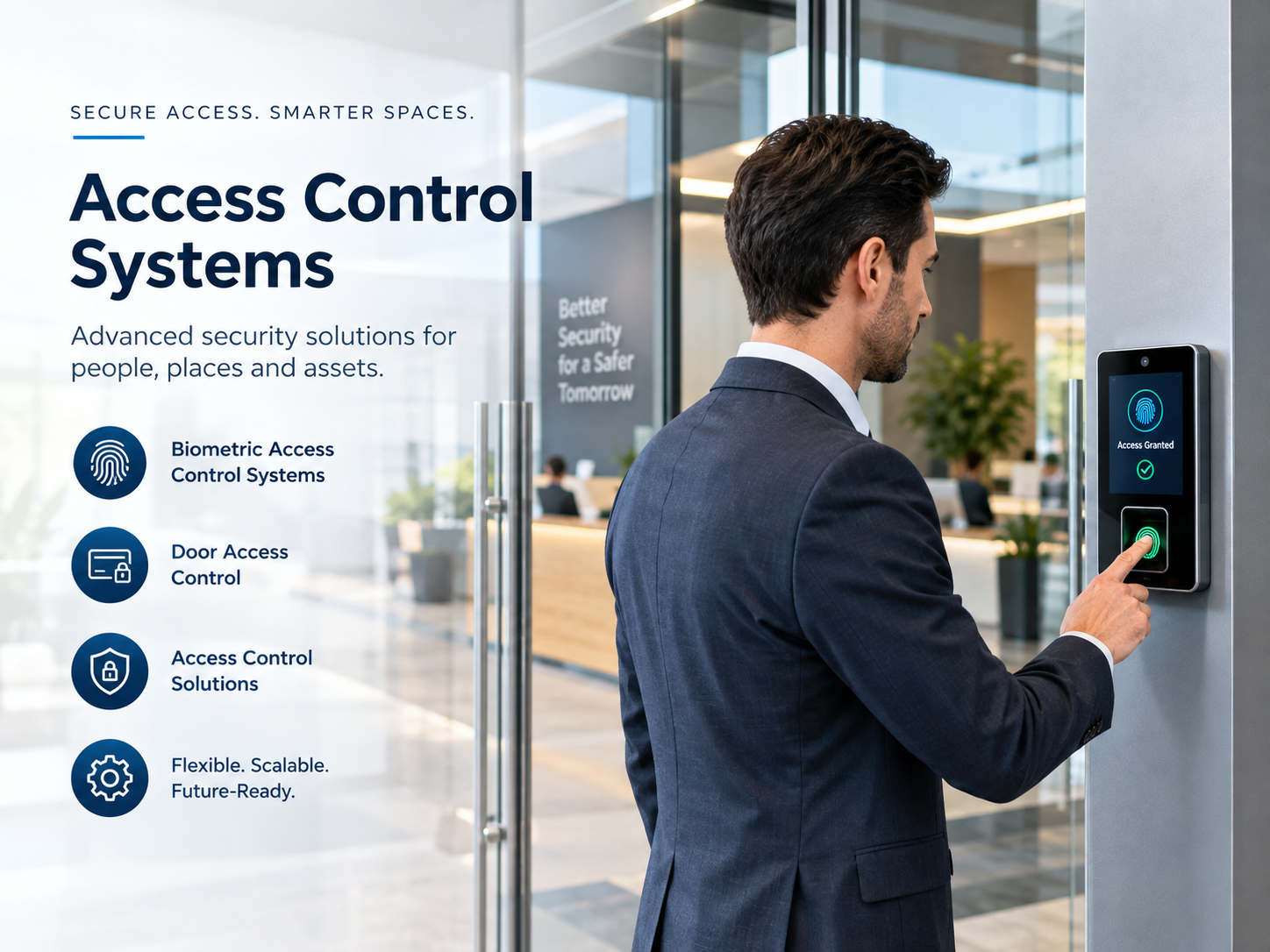
Security is an important part of modern business operations in Dubai and across the UAE. Offices, hospitals, schools, hotels, warehouses, financial institutions, government facilities, and commercial buildings all need reliable ways to control who can enter their premises. An Access Control System UAE solution helps businesses manage entry permissions, protect restricted areas, monitor access activity, and support overall physical security.
Traditional keys can be difficult to manage when a business has many employees, departments, doors, and locations. Modern access control technology provides a more organised way to manage entry by using RFID cards, PINs, fingerprints, facial recognition, mobile credentials, and electronic locks. These technologies allow businesses to create specific access permissions for different users and areas.
For organisations in Dubai and other parts of the UAE, choosing the right access control solution can improve security while supporting daily operations. This article explains what an Access Control System is, the main types available, its benefits, its importance for UAE businesses, important features to consider, and why choosing a professional provider is valuable.
What Is an Access Control System?
An Access Control System is a security solution designed to control who can enter a building, room, office, facility, or restricted area. Instead of relying only on traditional keys, an access control system verifies a person's authorised credential before allowing entry.
Depending on the system, users can authenticate themselves through an RFID card, PIN, fingerprint, facial recognition, mobile credential, or another supported method. The system checks the user's permissions and determines whether access should be granted or denied.
A typical access control system can include management software, access controllers, card readers, biometric readers, electronic locks, door sensors, exit buttons, and other security equipment. These components work together to manage access points and record relevant access events.
A modern Security Access Control System can provide more than basic door security. It can also become part of a wider security infrastructure by integrating with CCTV, visitor management, alarms, building management systems, and other technologies where supported.
Types of Access Control Systems
Businesses have different security requirements depending on their industry, building size, number of employees, and restricted areas. A small office may require a simple card-based system, while a large corporate building, hospital, data centre, or industrial facility may require biometric authentication and centralised management.
Understanding the different types of Access Control Systems can help businesses choose a solution that matches their security and operational requirements.
Access Control Solutions
Access Control Solutions include different technologies and methods used to manage entry into a facility. These solutions can range from RFID card systems to advanced biometric, mobile, and multi factor authentication technologies.
RFID access control allows authorised users to present a card or tag to a reader installed near an entrance. The system checks the credential and grants access if the user has the required permission.
Biometric access control uses physical characteristics such as fingerprints or facial features to verify identity. Mobile access can allow supported smartphones to act as digital credentials.
The appropriate Access Control Solution depends on the organisation's security requirements, budget, number of users, building environment, existing infrastructure, and future expansion plans.
Access Control Device
An Access Control Device is a physical component used to authenticate users or control an entry point. Examples include RFID readers, fingerprint scanners, facial recognition terminals, access controllers, electronic locks, door sensors, exit buttons, and mobile access readers.
For example, a fingerprint reader may be installed at the entrance to a restricted room. When an authorised employee presents their fingerprint, the device communicates with the access controller. If the credentials match the configured permissions, the electronic lock can release.
Businesses should select Access Control Devices according to factors such as expected usage, installation environment, authentication requirements, compatibility, reliability, and future expansion.
Security Access Control System
A Security Access Control System combines access control hardware and software to create a structured method of managing entry. It can manage multiple doors, users, access permissions, and security events from a central platform.
For larger organisations, the system can provide different access levels for employees, managers, contractors, visitors, and security personnel. For example, employees may be allowed to enter general office areas, while only authorised IT personnel can access server rooms.
A Security Access Control System can also integrate with CCTV, visitor management, alarms, and other security technologies. The exact integration options depend on the products and software selected.
Access Control System UAE
An Access Control System UAE solution can help organisations in Dubai, Abu Dhabi, Sharjah, and other emirates manage entry into their facilities through modern access technologies.
Different businesses have different requirements. A corporate office may focus on employee access and restricted departments, while a hospital may require separate permissions for medical staff, administrative employees, contractors, and visitors.
A school may need to manage access for teachers, students, staff, parents, and authorised visitors. A warehouse may require controlled access to storage and loading areas.
A professional provider can assess these requirements and recommend suitable hardware, software, authentication methods, and integrations.
Importance of Access Control System UAE for Businesses
Businesses across Dubai and the UAE operate in many sectors, including finance, healthcare, hospitality, education, retail, logistics, construction, manufacturing, technology, and government. These organisations often have different levels of security and multiple categories of users.
An Access Control System UAE solution can help businesses establish structured access policies rather than relying entirely on physical keys or manual security processes.
Supporting Business Security
Modern access control can help businesses restrict access to sensitive areas such as server rooms, finance departments, laboratories, storage areas, executive offices, and research facilities.
Administrators can assign access rights according to job roles, departments, locations, and schedules. This provides a more controlled approach to managing physical entry.
Access Control in Dubai
Dubai has a large number of corporate offices, hotels, hospitals, educational institutions, warehouses, commercial properties, and technology companies. Many of these facilities manage employees, contractors, visitors, suppliers, and other users.
A Door Access Control System can help businesses manage individual entry points and create different permissions for different users. This can be useful for organisations with multiple departments or restricted areas.
For growing businesses, a scalable system can also make it easier to add additional doors, users, readers, and locations as requirements increase.
Benefits of an Access Control System
Improved Security and Controlled Entry
One of the main benefits of an access control system is the ability to restrict entry to authorised users. Instead of allowing anyone with a physical key to enter a particular area, organisations can assign individual credentials and permissions.
This can help businesses control access to sensitive locations and create a more structured physical security process.
Better Access Management
Access control software can allow administrators to create different permissions for different users. Access rights can be based on departments, job roles, locations, doors, or working schedules.
If an employee changes departments, their permissions can be updated. If an employee leaves the organisation, their access credential can be disabled according to company procedures.
Access Monitoring and Records
Modern access control systems can record access events, including information such as the user, access point, date, and time. These records can help authorised security and administrative teams review access activity.
Businesses should establish suitable policies regarding who can access these records and how long information should be retained.
Reduced Dependence on Physical Keys
Managing physical keys can become difficult as an organisation grows. Keys can be lost, copied, or difficult to track.
Electronic access credentials provide a more centralised approach to managing entry. When access requirements change, administrators can modify digital permissions without necessarily replacing physical locks.
Support for Multiple Locations
Businesses with offices or facilities in different UAE locations may benefit from centralised access management. Depending on the selected system, authorised administrators can manage users and access points across multiple sites.
This can be useful for companies operating across Dubai, Abu Dhabi, Sharjah, and other locations.
Biometric Access Control for Modern Businesses
Biometric Access Control uses physical characteristics to verify a person's identity. Fingerprint recognition and facial recognition are common examples.
Biometric authentication can reduce reliance on physical access cards and provide an additional method of identity verification. It can be useful for restricted areas where organisations require controlled access based on individual identity.
Businesses should evaluate biometric technology according to factors such as environmental conditions, user experience, privacy requirements, accuracy, system compatibility, and data management.
For sensitive areas, organisations may also consider combining biometric authentication with another credential as part of a multi factor security approach where the selected system supports it.
Key Features to Look for in an Access Control System
Multiple Authentication Methods
A flexible access control platform can support authentication methods such as RFID cards, PINs, fingerprints, facial recognition, and mobile credentials.
Having multiple options allows businesses to select an authentication method according to the security requirements of each area.
Centralised Management Software
Centralised software allows authorised administrators to manage users, credentials, doors, permissions, and access records through a common platform.
This can simplify administration for businesses with multiple departments, buildings, or locations.
Real Time Monitoring
Real time monitoring can help security teams view access activity and system status. Depending on the platform, administrators may configure notifications for selected events such as denied access attempts.
This can help security personnel respond to access related events more efficiently.
CCTV and Security Integration
Integration with CCTV can provide additional information around an access event. For example, when an authorised credential is used at a particular door, associated camera footage may provide additional context depending on the system configuration.
Access control can also integrate with visitor management, alarms, and other security technologies where compatible.
Scalable System Design
Businesses should consider future growth when selecting an access control system. A suitable solution should ideally allow the organisation to add users, doors, readers, and locations as requirements increase.
A scalable system can reduce the need for major infrastructure changes as the business expands.
Reliable Access Control Devices
The quality and suitability of an Access Control Device are important for system performance. Readers, biometric terminals, controllers, electronic locks, and door sensors should be selected according to the installation environment and expected usage.
Outdoor installations may require devices designed for suitable environmental conditions, while indoor offices may have different hardware requirements.
Why Choose a Professional Access Control Provider?
Choosing a professional provider is an important part of implementing a reliable access control solution. Purchasing hardware alone does not guarantee that the system will meet an organisation's security requirements.
A professional provider can assess the building layout, number of entry points, user categories, restricted areas, existing security infrastructure, and future requirements. Based on this assessment, the provider can recommend appropriate access control technologies.
Professional installation is also important. Incorrect wiring, poor device placement, or incorrect configuration can affect system performance. A qualified provider can install and configure controllers, readers, electronic locks, software, and integrations according to the project requirements.
Ongoing technical support is another important consideration. Businesses should ask providers about installation services, maintenance, warranties, software updates, replacement devices, staff training, and technical support before selecting a solution.
Why Choose Tektronix LLC for Access Control System UAE?
Businesses looking for a professional Access Control System UAE solution can consider Tektronix LLC for access control technologies designed for different business environments.
Tektronix LLC provides access control solutions that can include Biometric Access Control, RFID access, Door Access Control System solutions, and other access management technologies depending on project requirements.
For businesses in Dubai and across the UAE, selecting the right system should be based on factors such as the number of users, doors, locations, authentication requirements, existing infrastructure, integration requirements, and future expansion plans.
A professional assessment can help organisations identify an access control configuration that aligns with their security and operational requirements.
Conclusion
An Access Control System provides businesses with a structured way to manage entry into buildings, rooms, and restricted areas. Modern Access Control Solutions can use RFID cards, biometric authentication, mobile credentials, PINs, and other technologies to verify authorised users.
For businesses in Dubai and across the UAE, an Access Control System UAE solution can support controlled entry, access monitoring, user management, and integration with wider security systems. From Biometric Access Control to a Door Access Control System, organisations can select technologies based on their specific requirements.
Choosing a professional provider is equally important. Proper site assessment, system design, installation, configuration, integration, training, and ongoing support can help businesses establish a reliable access management solution.
FAQ’S
1. What is an Access Control System?
An Access Control System is a security solution that controls who can enter a building, room, door, or restricted area. It can use RFID cards, PINs, fingerprints, facial recognition, mobile credentials, or other authentication methods to verify users.
2. What is Biometric Access Control?
Biometric Access Control uses a person's biometric characteristics, such as fingerprints or facial features, to verify identity. It can reduce dependence on physical access cards and may be suitable for areas requiring controlled identity verification.
3. What is a Door Access Control System?
A Door Access Control System controls entry through individual doors using technologies such as RFID readers, biometric terminals, electronic locks, controllers, and access management software. Different users can receive different permissions according to their roles and requirements.
4. Why do businesses in Dubai need an Access Control System?
Businesses in Dubai can use an Access Control System UAE solution to manage authorised entry, restrict sensitive areas, monitor access events, and support wider physical security procedures. The exact requirements depend on the organisation's industry, building, users, and security policies.
5. How should I choose an Access Control System UAE provider?
Businesses should consider the provider's experience, technology options, hardware quality, software capabilities, integration support, scalability, installation services, maintenance, training, and technical support. A professional provider should understand the organisation's requirements before recommending a suitable access control solution.

 English
 Arabic
 French
 Spanish
 Portuguese
 Deutsch
 Turkish
 Italiano
 Russian
 Romaian
 Portuguese (Brazil)
 Greek
Greek
