


A Practical Guide to Preparing for Moving Day
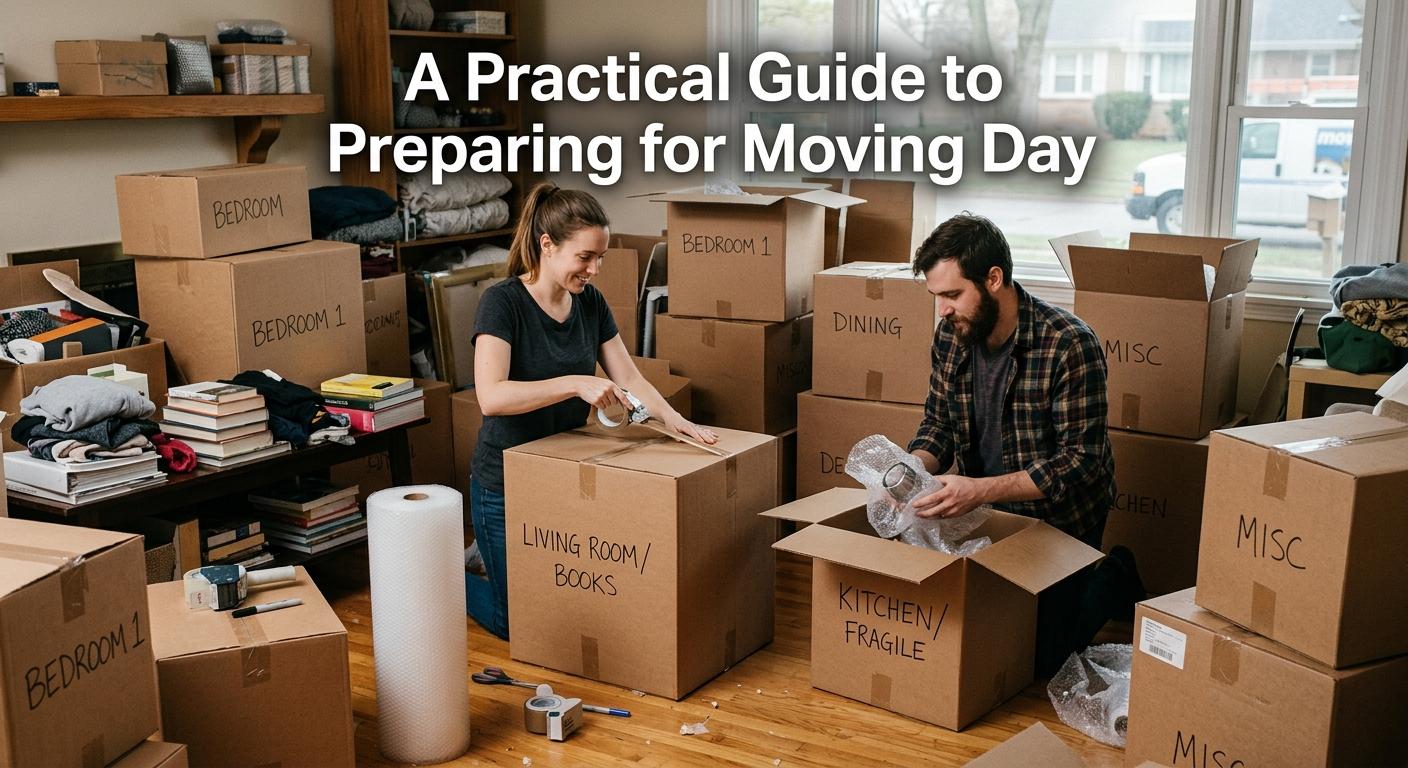
Moving day can become stressful when small tasks are left until the last minute.
A clear plan helps households stay organized, protect their belongings, and avoid unnecessary delays.
The best preparation starts weeks before the moving truck arrives.
Moving involves more than putting belongings into boxes. Utilities need attention, important documents must remain accessible, furniture may require preparation, and everyone involved needs to understand the schedule.
A practical moving-day plan brings these details together and makes the transition from one home to another easier to manage.
Start Planning Before the Final Week
Waiting until the last few days to organize a move can create avoidable problems. Packing takes longer than many households expect, especially when belongings have accumulated over several years.
A basic moving timeline should be created as soon as the moving date is confirmed. Larger tasks can then be divided across several weeks instead of being compressed into a few exhausting days.
Early preparation may include:
-
Confirming the moving date
-
Hiring and verifying a moving company
-
Sorting unwanted belongings
-
Collecting packing materials
-
Measuring large furniture
-
Updating important addresses
-
Scheduling utility transfers
-
Planning transportation for children and pets
People comparing movers or researching relocation requirements can also use a moving directory and resource website such as My Moving Journey to research moving-related information before making arrangements.
The goal is not to complete everything immediately. It is to make sure every major responsibility has a place on the schedule.
Declutter Before Packing Begins
Packing items that will be thrown away or donated after the move creates extra work and may increase moving costs.
The U.S. Environmental Protection Agency estimates that municipal solid waste generation in the United States amounts to hundreds of millions of tons annually. Household moves provide a useful opportunity to reconsider what actually needs to travel to the next home.
Each room can be divided into four categories:
-
Keep
-
Donate
-
Sell
-
Discard or recycle
Large furniture deserves particular attention. A sofa, desk, or cabinet that does not fit the new property should not be transported simply because it already exists in the current home.
Decluttering first also provides a clearer picture of how many boxes and packing materials will actually be needed.
Gather the Right Packing Supplies
Running out of boxes or tape halfway through packing can interrupt progress and encourage rushed packing decisions.
Basic supplies usually include sturdy cardboard boxes, packing tape, permanent markers, cushioning material, labels, and protective covers. Specialty boxes can also be useful for wardrobes, televisions, dishes, mirrors, and other fragile possessions.
Avoid Using One Box Size for Everything
Different belongings require different box sizes.
Small boxes work well for books, canned goods, tools, and other dense objects. Medium boxes are useful for general household items, while larger boxes are better suited to lightweight belongings such as bedding and pillows.
Overloading a large box with heavy items increases the risk of the bottom failing or the box becoming difficult to carry safely.
Create a Room-by-Room Packing System
Packing without a system creates confusion at both ends of the move.
Instead of randomly filling available boxes, households can work through one room or category at a time. Items that are rarely used should generally be packed first, while everyday essentials remain available until closer to moving day.
Every box should include a clear destination label.
For example:
Kitchen — Pots and Pans — Heavy
is considerably more useful than simply writing:
Kitchen
Some households also number their boxes and maintain a simple inventory. This makes it easier to notice whether something is missing after unloading.
Estimate How Many Boxes Will Be Needed
The number of boxes required depends on the size of the home, number of occupants, storage habits, and amount of decluttering completed before packing.
A lightly furnished one-bedroom apartment and a heavily furnished one-bedroom apartment can require very different quantities of supplies.
Rather than relying entirely on guesswork, households can use a moving box calculator to estimate packing requirements based on their move and household needs.
Buying or collecting boxes gradually can also prevent a last-minute search for packing materials.
Keep Box Weight Manageable
A box should not be filled simply because empty space remains.
Books are a common example. Filling a large carton entirely with books may create a box that is difficult for one person to lift safely. Heavy objects are generally better distributed among smaller boxes, with lighter items used to fill remaining space where appropriate.
Reasonable box weights also make loading and unloading more efficient.
Protect Fragile and Valuable Belongings
Fragile items require more than a "Fragile" label.
Glassware, dishes, electronics, artwork, mirrors, and decorative objects should be packed with enough cushioning to prevent movement inside the box. Empty spaces can allow items to shift during braking, turning, or loading.
Plates are often safer when packed vertically rather than stacked flat, provided they are individually protected and placed inside a sturdy container.
High-value possessions require additional consideration.
Jewelry, passports, financial documents, prescription medications, identification, small electronics, and irreplaceable personal items are generally better kept with the owner rather than loaded into a moving truck.
Prepare Furniture Before Movers Arrive
Furniture preparation can consume a surprising amount of moving-day time.
Where practical, furniture that requires disassembly should be prepared before the movers arrive. Bed frames, tables, shelving units, and modular furniture may need to be taken apart for safe transportation.
Bolts, screws, brackets, and other hardware should be placed in labeled bags.
Those bags can either remain securely attached to the corresponding furniture or be stored together in a clearly marked hardware container.
Drawers and cabinets should also be emptied when their contents make the furniture unnecessarily heavy or could move around during transportation.
Confirm Details With the Moving Company
A household should not assume that every arrangement remains unchanged simply because a booking was made weeks earlier.
A few days before moving day, the customer should reconfirm:
-
Arrival window
-
Pickup address
-
Destination address
-
Contact information
-
Parking requirements
-
Expected services
-
Payment arrangements
-
Large or unusual items
-
Building access restrictions
For interstate moves in the United States, consumers can also verify applicable mover information through the Federal Motor Carrier Safety Administration. Interstate household-goods movers are subject to federal requirements, making verification an important part of preparing for the move.
Any uncertainty about pricing, services, or responsibility for specific items should be addressed before loading begins.
Prepare an Essentials Box
Not everything belongs on the moving truck.
An essentials box or overnight bag should contain the items the household will need immediately after arriving at the new home.
Useful items can include:
-
Phone chargers
-
Basic toiletries
-
Toilet paper
-
Towels
-
A change of clothes
-
Medications
-
Bottled water
-
Snacks
-
Basic cleaning products
-
Paper towels
-
Important documents
-
Basic tools
-
Pet supplies
-
Children's necessities
This box should remain easily accessible.
Nobody wants to search through 30 sealed cartons at midnight just to find a toothbrush or phone charger.
Handle Utilities and Address Changes in Advance
Electricity, water, gas, internet, and other essential services should be coordinated before the move.
The objective is to prevent services from being disconnected too early at the old home or activated too late at the new property.
Mailing addresses may also need to be updated with organizations such as:
-
Banks and credit card providers
-
Insurance companies
-
Employers
-
Subscription services
-
Government agencies
-
Healthcare providers
-
Schools
-
Online retailers
Mail forwarding can provide a temporary safety net, but important accounts should still be updated individually.
Make a Plan for Children and Pets
Moving environments can be noisy and unpredictable.
Open doors, stacked boxes, unfamiliar workers, and frequent movement through the property can be particularly challenging for pets and young children.
When possible, households can arrange for them to stay with a trusted relative, friend, or caregiver during the busiest part of the move.
If that is not possible, a quiet and secure room can be designated away from loading activity.
Pet food, carriers, medication, identification, leashes, and water should remain accessible rather than being packed deep inside the moving truck.
Prepare the Property for Moving Day
A little preparation can make the physical move safer and faster.
Walkways should be cleared before movers arrive. Rugs, loose cables, boxes, and other obstacles should be removed from major traffic areas.
Floors, walls, doors, and stair railings may also need protection, particularly when large furniture is being carried through narrow spaces.
For apartment buildings or managed communities, residents should check whether elevators, loading docks, or parking areas need to be reserved.
Failing to arrange building access can cause delays even when every box is packed and ready.
Keep Important Information Accessible
Moving-day information should not be buried inside packed boxes.
The person coordinating the move should have quick access to the moving company's contact details, reservation information, addresses, payment records, inventory documents, and any relevant building instructions.
Digital copies can be useful, but important documents may also be stored in a physical folder.
Having information organized in one place reduces the need to search through emails, screenshots, paperwork, and boxes while movers are waiting.
Complete a Final Walkthrough
Before leaving the old property, someone should inspect every room.
Closets, cabinets, drawers, garages, attics, basements, balconies, sheds, and outdoor storage areas are easy to overlook.
A final walkthrough should also check:
-
Windows are secured
-
Faucets are turned off
-
Appliances are empty where necessary
-
Lights are switched off
-
Nothing remains behind doors
-
Keys are handled according to the lease or sale agreement
Taking photographs of the property's condition can also be useful, particularly for renters documenting how the home was left.
Keep Moving Day Flexible
Even a carefully organized move can encounter delays.
Traffic, weather, elevator availability, parking difficulties, additional loading time, or unexpected access problems can change the schedule.
A practical plan should therefore include some flexibility rather than scheduling every task with no margin for disruption.
Keeping water, snacks, chargers, important phone numbers, and essential documents nearby can make minor delays easier to manage.
Conclusion
A successful moving day depends less on rushing and more on preparation.
Decluttering early, organizing boxes by room, protecting valuables, confirming mover details, preparing furniture, and keeping essential items accessible can prevent many common moving-day problems.
When the work is spread across several weeks and the final day is reserved mainly for loading, transportation, and basic coordination, the move becomes much easier to manage. A clear system also helps everyone involved understand what needs to happen, where belongings belong, and what should remain accessible throughout the transition.

 English
 Arabic
 French
 Spanish
 Portuguese
 Deutsch
 Turkish
 Dutch
Dutch
 Italiano
 Romaian
 Portuguese (Brazil)
 Greek
Greek
