


The Role of Layered Gear Systems in Extended Motorcycle Touring
Long-distance motorcycle touring places riders in constantly changing environmental conditions, including temperature fluctuations, sustained wind exposure, moisture buildup, and extended physical fatigue. Unlike short urban commutes, touring often spans multiple climate zones within a single trip, making a well-planned apparel system essential for maintaining safety, endurance, and overall comfort.
Layering functions as a structured clothing approach that helps regulate body temperature, control moisture, and preserve protection across varying riding conditions. It is widely recognized within the riding community and supported by safety organizations such as the Motorcycle Safety Foundation, as well as scientific principles like Thermoregulation. By combining multiple layers, riders can adapt more effectively to environmental changes without compromising protective performance.
This article presents a detailed, expert-level analysis of the importance of layering in long-distance motorcycle touring. It explores the underlying science of temperature control, moisture management, impact protection, and material efficiency, while also examining how gear options such as rugged leather vests for men and lightweight summer textile vests can be integrated into a practical and effective touring system.
The Science Behind Layering in Motorcycle Touring
Thermoregulation Under Riding Conditions
Thermoregulation refers to the body’s ability to maintain a stable internal temperature despite environmental changes. When riding at highway speeds, wind chill significantly amplifies heat loss. According to research cited in National Highway Traffic Safety Administration materials, wind exposure dramatically increases convective cooling, even in moderate climates.
At 60 mph (96 km/h), perceived temperature can drop substantially below ambient air temperature. Without a layered system:
-
Core body temperature may decline.
-
Muscular fatigue increases.
-
Reaction time slows.
-
Cognitive alertness decreases.
Layering creates thermal zones that trap insulating air while allowing moisture to escape.
The Three-Layer Touring System
Professional riders and gear engineers typically structure layering into three functional categories:
1. Base Layer (Moisture Management Layer)
The primary purpose of a base layer in long-distance motorcycle touring is to wick sweat away from the skin, prevent excessive evaporative cooling, and reduce skin irritation during extended riding hours. By drawing moisture outward through capillary action, the base layer helps maintain a stable microclimate between the body and outer garments.
Common materials include polyester performance fabrics engineered for rapid moisture transfer, merino wool known for its natural thermoregulation and odor resistance, and advanced synthetic moisture-wicking blends designed for durability and quick drying. Without a proper base layer, perspiration accumulates against the skin, which can accelerate heat loss during wind exposure and significantly increase overall fatigue risk.
2. Mid Layer (Insulation Layer)
The mid layer in a motorcycle touring system is designed to retain body heat, maintain core warmth during early morning departures or high-altitude mountain riding, and provide thermal adaptability as environmental conditions change. Acting as the primary insulation component, it traps warm air generated by the body while allowing moisture from the base layer to pass outward.
Common materials include fleece for lightweight warmth and breathability, softshell composites that combine stretch with moderate wind resistance, and lightweight down or synthetic insulation for enhanced thermal efficiency without excessive bulk. For optimal performance, the mid layer must not restrict upper-body movement or become compressed beneath protective gear, as compression reduces insulation efficiency and may interfere with armor positioning and rider mobility.
3. Outer Layer (Protection & Weather Shield)
Purpose:
-
Abrasion resistance.
-
Wind blocking.
-
Impact protection compatibility.
-
Environmental shielding.
This is where touring vests play a significant role.
Role of Vests in Long-Distance Touring Systems
Vests provide core insulation while preserving arm mobility, a critical factor in reducing shoulder fatigue during extended rides.
Men Rugged Leather Vest in Touring Systems
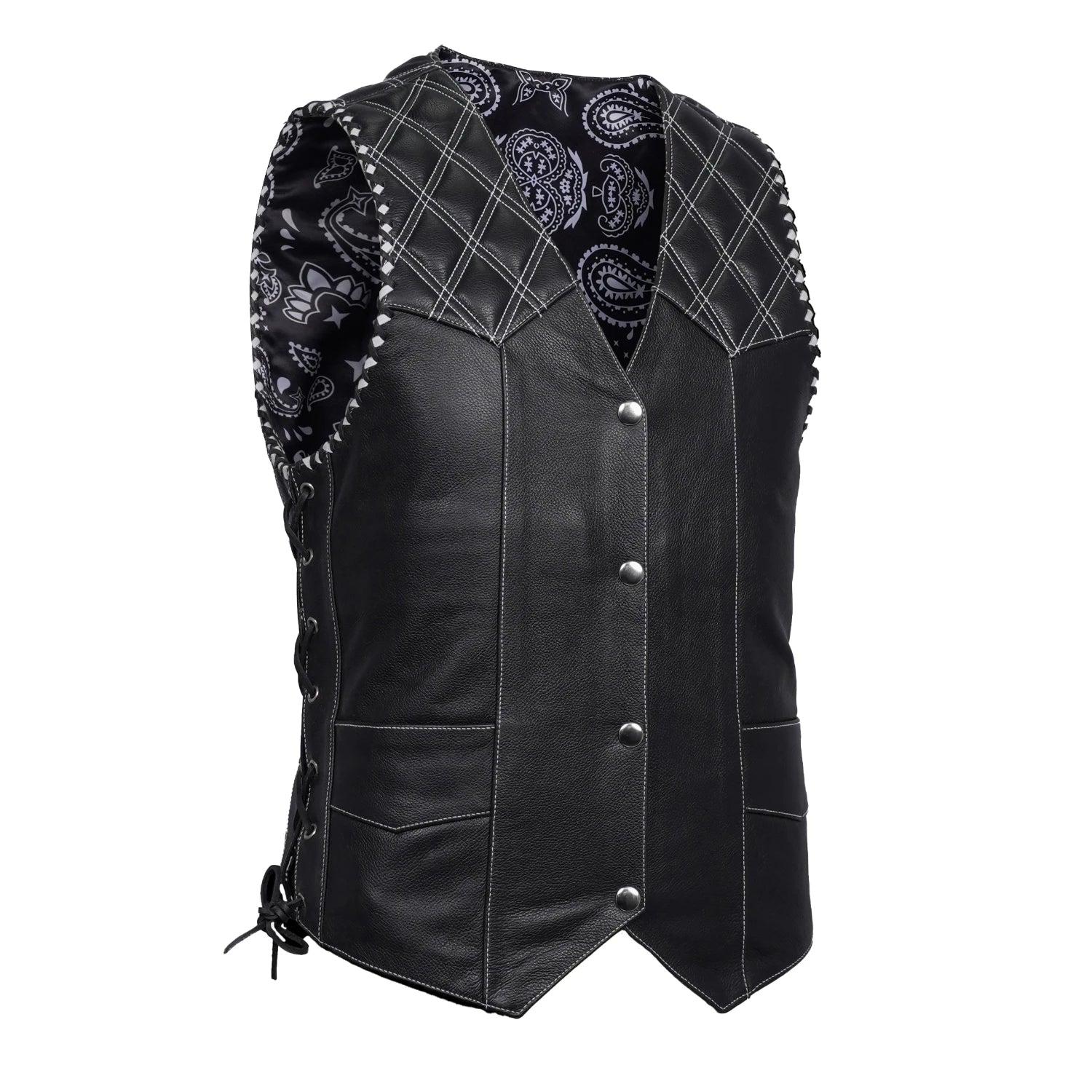
A men rugged leather vest serves as a durable outer or mid-outer layer, depending on conditions.
Leather, particularly full-grain or top-grain cowhide, offers:
-
High abrasion resistance.
-
Wind resistance.
-
Structural durability.
-
Thermal retention.
In long-distance touring scenarios:
-
Leather reduces convective heat loss at highway speeds.
-
The vest design preserves ventilation at the arms.
-
It adds protection over armored jackets without bulk.
Professional touring riders often layer leather vests over textile jackets for added wind blocking in cooler conditions without restricting shoulder articulation.
Men Summer Textile Vest in Warm-Weather Touring
A men summer textile vest functions differently. Engineered textile vests often include:
-
Mesh ventilation panels.
-
Abrasion-resistant synthetic fibers.
-
Lightweight construction.
-
Moisture-permeable fabrics.
Textile systems excel in:
-
High-temperature touring.
-
Humid environments.
-
Stop-and-go riding conditions.
Modern textile materials frequently incorporate advanced fibers such as Cordura® or high-denier polyester blends, referenced in technical textile literature on DuPont innovations.
The result is airflow optimization without compromising structural integrity.
Wind Management: The Critical Touring Variable
Wind is the most underestimated factor in long-distance fatigue.
Effects of Continuous Wind Exposure
Continuous wind exposure during long-distance motorcycle touring can accelerate dehydration, increase muscular tension, and disrupt the body’s thermal balance, ultimately reducing rider endurance. These physiological effects become more pronounced over time, particularly at sustained highway speeds where convective heat loss is significantly amplified. A well-structured layering system helps counter these challenges by creating insulating microclimate pockets between garments, limiting excessive airflow, and stabilizing core body temperature.
Maintaining thermal stability reduces strain on the body’s energy reserves and supports consistent physical performance over extended rides. In this context, a leather vest serves as an effective barrier against wind penetration, helping retain warmth in cooler or high-speed conditions. Conversely, a summer textile vest promotes controlled ventilation during hot-weather riding, reducing the risk of overheating. The choice between leather and textile should be guided by factors such as ambient temperature, humidity, ride duration, and terrain, ensuring the overall apparel system is aligned with environmental conditions and touring requirements.
Moisture Management and Sweat Evaporation
Extended motorcycle tours generate sustained perspiration as a result of prolonged sun exposure, radiant engine heat, and the continuous muscular effort required for physical stabilization and balance. Without a properly engineered layering system, trapped moisture accumulates against the skin, increasing the risk of skin maceration, friction-related chafing, and sudden cooling shock during rest stops when airflow decreases but damp fabric remains in contact with the body.
A breathable textile vest enhances evaporation by promoting airflow through ventilation panels and moisture-permeable fabrics. Conversely, a leather vest paired with a high-performance moisture-wicking base layer helps preserve warmth in cold conditions by reducing wind penetration while still allowing controlled moisture transfer. Effective moisture management maintains skin integrity, stabilizes thermal equilibrium, and supports long-term comfort throughout extended touring distances.
Impact Protection and Layer Integration
Vests used in long-distance motorcycle touring must integrate seamlessly with CE-rated armor systems, back protectors, and full touring jackets to maintain protective integrity. According to protective gear standards established by the European Committee for Standardization for motorcycle apparel, garments must not shift during movement or compromise the positioning of certified impact protectors.
Improper layering can lead to misaligned impact zones, reduced protective efficiency, and restricted upper-body mobility, all of which increase risk during a crash scenario. Professional gear selection emphasizes a snug but non-restrictive fit, structural compatibility between all layers, and balanced weight distribution to ensure that armor remains correctly positioned while preserving rider comfort and operational control.
Long-Distance Fatigue Reduction
Fatigue during touring is influenced by:
-
Core temperature fluctuations.
-
Muscle stiffness.
-
Dehydration.
-
Wind exposure.
A properly layered system:
An effective layering system reduces energy expenditure required for temperature regulation by stabilizing the rider’s core body temperature across changing environments. By limiting exposure to cold wind at highway speeds, it minimizes muscular tightening and stiffness that commonly develop in the shoulders, chest, and upper back during prolonged rides. This thermal stability helps maintain a consistent and ergonomic riding posture, which is essential for long-distance endurance and control.
Leather vests contribute structural wind blocking that protects against convective heat loss, while textile vests promote controlled airflow to enhance cooling in warmer conditions. When selected according to climate and riding intensity, both options play a significant role in mitigating fatigue and sustaining rider performance over extended touring distances.
Expert Best Practices for Layered Touring
1. Climate Zoning Strategy
Professional tourers plan apparel based on predicted climate transitions.
2. Modular Adaptability
Garments should be removable without dismantling protective armor systems.
3. Breathability-to-Protection Balance
Summer textile vests for airflow.
Rugged leather vests for wind-heavy environments.
4. Proper Fit Calibration
Compression reduces airflow; oversizing disrupts insulation efficiency.
5. Test Before Long Routes
Short-distance evaluation ensures compatibility and comfort.
Common Mistakes in Touring Layering
Over-Reliance on a Single Heavy Jacket
Heavy insulated jackets cause overheating in transitional climates.
Ignoring Wind Chill
Riders underestimate the cooling effect of highway speeds.
Poor Moisture Control
Cotton base layers retain sweat, leading to temperature instability.
Layer Bulk Without Structure
Uncoordinated layering interferes with protective gear positioning.
Conclusion
Layering is not merely a comfort strategy; it is a structured safety and performance system essential for long-distance motorcycle touring. By integrating moisture management, insulation control, and abrasion-resistant outer layers, riders maintain thermal stability, reduce fatigue, and preserve protective efficiency.
A men rugged leather vest provides wind resistance and structural durability suited for cooler, wind-heavy touring conditions. A men summer textile vest enhances ventilation and moisture control during high-temperature rides. When incorporated strategically into a layered system, both garments serve distinct, professional functions within modern touring frameworks.
Long-distance motorcycle touring demands preparation, environmental awareness, and intelligent apparel selection. Layering remains one of the most effective methods for ensuring endurance, protection, and rider performance across extended journeys.
FAQs
1. Why is layering more important for touring than commuting?
Touring exposes riders to prolonged environmental variability, extended wind exposure, and multi-climate transitions. Layering provides adaptability that single-layer systems cannot.
2. Does leather overheat in summer touring?
Leather can retain heat; however, when paired with moisture-wicking base layers and worn in moderate climates, it effectively blocks wind without excessive insulation.
3. When should a summer textile vest be preferred?
In high-temperature, high-humidity conditions where airflow and sweat evaporation are primary concerns.
4. Can a vest replace a full touring jacket?
No. Vests complement jackets by enhancing core protection and thermal management but do not replace full abrasion and armor systems.
5. How does wind chill affect rider endurance?
Wind chill accelerates heat loss, increasing muscular tension and fatigue, particularly during highway travel.
6. What materials are best for base layers?
Synthetic moisture-wicking fabrics and merino wool provide optimal sweat transfer and thermal stability.
7. How tight should a touring vest fit?
Snug enough to prevent flapping at speed, but not restrictive enough to impede breathing or armor alignment.

 English
 Arabic
 French
 Spanish
 Portuguese
 Deutsch
 Dutch
Dutch
 Italiano
 Russian
 Romaian
 Portuguese (Brazil)
 Greek
Greek
