


Access Control System: A Complete Guide for Businesses in Oman and Muscat
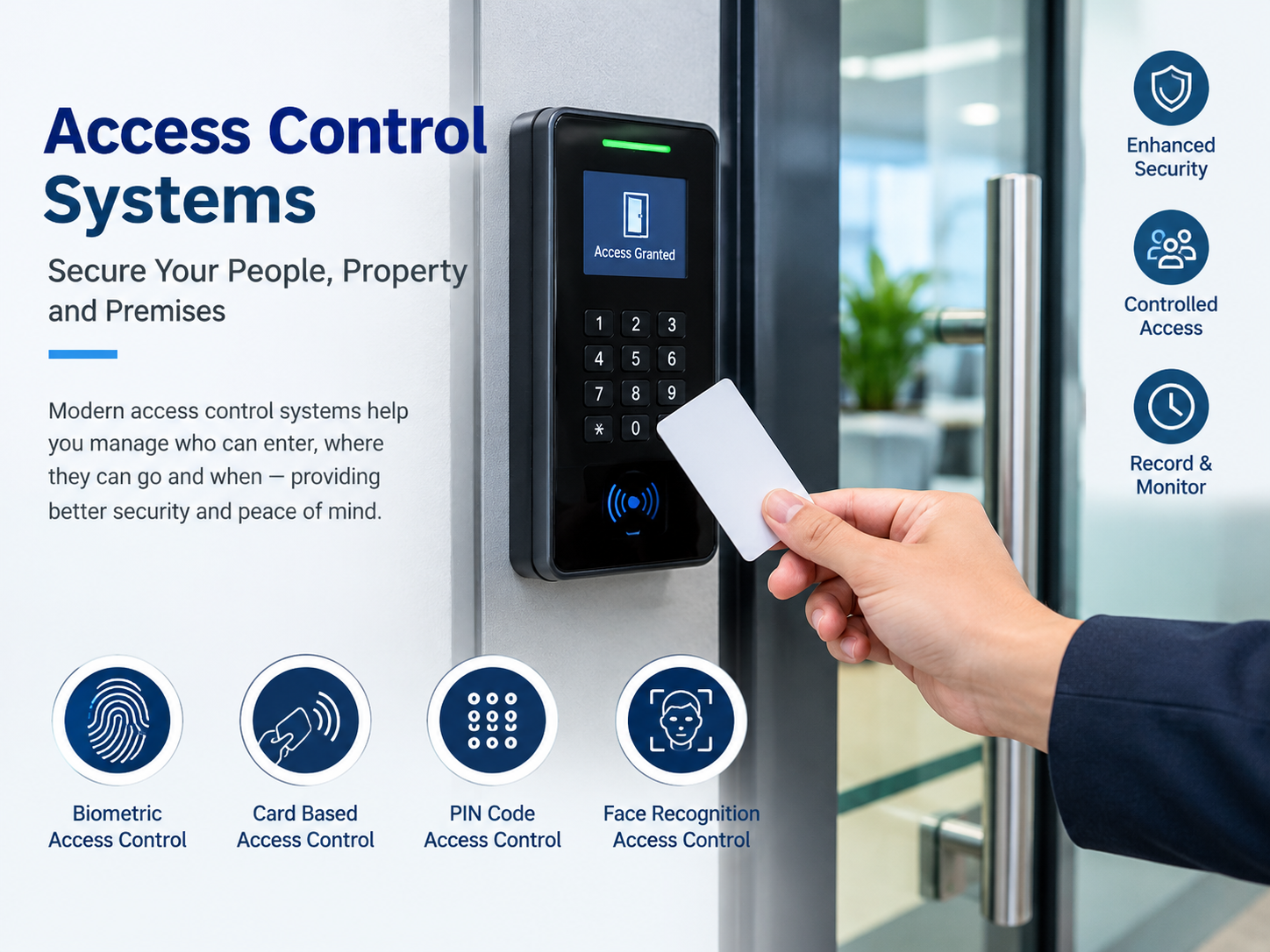
Security is an important part of every modern business. Offices, warehouses, hotels, hospitals, schools, residential buildings, and industrial facilities all need to control who can enter their premises and restricted areas. Traditional locks and keys can provide basic protection, but they do not offer detailed information about who entered, when they entered, or which areas they are allowed to access. This is where an Access Control System becomes valuable.
An access control system uses electronic technology to identify authorized users and allow or deny entry based on predefined permissions. Modern systems can use RFID cards, PINs, fingerprints, facial recognition, mobile credentials, or a combination of authentication methods. They can also integrate with CCTV, alarms, time attendance, visitor management, and other security platforms.
For businesses looking for reliable security, an Access Control System Oman solution can provide better control, monitoring, and flexibility while reducing the challenges associated with traditional keys.
What Is an Access Control System?
An Access Control System is an electronic security solution designed to manage entry into a building, room, facility, or restricted area. Instead of depending only on a traditional key, the system verifies a person's identity or credential before unlocking the door.
For example, an employee may use an access card to enter the office in the morning. A manager may have permission to enter both the office and server room, while a visitor may only be allowed into the reception area. The system can apply different access permissions depending on the person, door, date, and time.
A typical system includes access readers, controllers, electronic locks, exit buttons, credentials, and management software. Professional installation requires these components to be selected according to the door, security requirements, number of users, and building infrastructure.
This makes an Access Control System Oman solution suitable for businesses that need controlled and traceable access rather than simply locking a door.
Types of Access Control Systems
There are several types of access control technologies available today. The right option depends on the size of the business, the number of users, the required security level, and the type of premises.
Card and RFID Access Control
Card-based access control is widely used in offices, commercial buildings, hotels, educational institutions, and other workplaces. Employees receive RFID or smart cards that are registered in the access control software. When the card is presented to the reader, the system checks the user's permission and either grants or denies access.
One advantage is that lost cards can usually be disabled without replacing the door lock. However, businesses should consider the possibility of cards being lost, shared, or copied and select an appropriate credential technology for sensitive areas.
Biometric Access Control
Biometric Access Control identifies people using unique physical characteristics such as fingerprints or facial features. Some advanced systems can also support technologies such as iris or palm-vein recognition.
Biometric systems can reduce the problem of employees sharing access cards because authentication is linked to the individual. They are particularly useful for offices, warehouses, restricted rooms, industrial facilities, and areas where stronger identity verification is required.
Facial recognition can also provide a touchless access experience, which can be useful at busy entrances where employees need to move through doors quickly.
PIN and Keypad Access Control
A keypad system allows users to enter a personal or authorized PIN to unlock a door. It can be a simple solution for selected doors or can be combined with another credential, such as a card or biometric authentication.
PIN-based access can be convenient, but businesses should carefully manage codes because shared or easily guessed PINs can reduce security.
Mobile Access Control
Modern systems can allow smartphones to act as digital credentials through technologies such as Bluetooth or NFC. Employees can use their mobile devices instead of carrying physical cards.
Mobile access can be particularly useful for modern offices and smart buildings. However, businesses should consider backup access methods for situations such as a lost phone, discharged battery, or device compatibility issue.
Door Access Control System
A Door Access Control System is designed to secure individual doors or groups of doors. It normally combines a reader, access controller, electronic lock, exit device, and management software.
For example, a company may install door access control at the main entrance, server room, HR department, finance office, warehouse, and management area. Each door can have different access rules depending on employee roles.
Professional system design is important because the correct lock, reader, controller, and exit mechanism can vary according to the door type and its security and safety requirements.
Access Control Solutions for Businesses in Oman
Businesses in Oman have different security requirements depending on their industry and facility. An office may need employee access management, while a warehouse may need restricted access to storage areas. A hotel may require access control for staff-only areas, while a large industrial facility may need multiple controlled entrances.
Modern Access Control Solutions can be designed for single-door installations as well as large multi-door and multi-site facilities. Systems can also integrate with CCTV, alarm systems, time attendance, visitor management, and other security technologies.
A scalable system allows businesses to start with important access points and expand as their requirements grow.
Access Control Devices Used in a Security System
An Access Control Device is one of the physical components used to identify users or operate the access system. Depending on the solution, devices may include RFID readers, fingerprint terminals, facial recognition readers, PIN keypads, access controllers, electromagnetic locks, electric strikes, exit buttons, and other door hardware.
The access reader is responsible for receiving the user's credential, while the controller processes the access rules and communicates with the locking mechanism. Management software allows authorized administrators to add users, assign permissions, review access records, and manage schedules.
Choosing compatible hardware is important because not every reader, controller, lock, or software platform works in exactly the same way.
Security Access Control System: Why It Matters
A Security Access Control System provides more than a locked entrance. It gives businesses greater visibility over access to their premises.
Instead of giving employees physical keys that can potentially be copied or shared, businesses can issue individual credentials. If an employee leaves the company, their access can be revoked without changing every door lock.
Access records can also help security teams understand who accessed a particular area and when. When integrated with CCTV, access events can be matched with video footage for better incident investigation.
Benefits of an Access Control System
One of the biggest benefits of access control is improved security. Businesses can restrict sensitive areas and ensure that only authorized employees can enter. This is especially important for server rooms, financial departments, storage areas, laboratories, warehouses, and other restricted locations.
Another important benefit is centralized management. Instead of managing many physical keys, administrators can manage users and permissions through access control software. Access can be added, changed, or removed when employee roles change.
Access control can also improve accountability. Individual credentials create access records that can help businesses review entry activity when necessary.
The technology can improve convenience as well. Employees do not have to carry multiple keys, and biometric or mobile systems can provide quick authentication. Some systems can also combine access control with time attendance, helping businesses manage workplace access and attendance from related infrastructure.
Importance of Access Control System in Oman and Muscat
Muscat is home to offices, commercial buildings, hotels, healthcare facilities, educational institutions, warehouses, retail businesses, and industrial operations. Each type of facility may have different access requirements.
A properly designed Access Control System Oman solution can help businesses create different security zones within the same property. Employees can receive access based on their responsibilities, while visitors and contractors can receive temporary or limited permissions.
For growing businesses, scalability is also important. A system that supports additional doors, users, credentials, and integrations can reduce the need for a complete security replacement when the organization expands. Oman-based providers commonly offer solutions ranging from individual doors to larger enterprise installations.
Features to Look for in an Access Control System
When choosing an access control solution, businesses should consider authentication options, system scalability, access reporting, software usability, and integration capabilities.
A good system should support the authentication method appropriate for each door. Depending on the security requirements, this could include RFID cards, PINs, fingerprints, facial recognition, or mobile credentials.
Centralized management is another useful feature. Administrators should be able to add users, remove credentials, create access schedules, and manage different access levels without complicated procedures.
Integration is also important. Businesses may want their access control system to work with CCTV, alarms, time attendance, visitor management, elevator controls, or building management systems.
Businesses should also consider reporting and audit capabilities. A system that maintains access records can provide useful information during security reviews and investigations.
Why Choose a Professional Access Control Provider?
Choosing the right hardware is only one part of implementing an effective access control solution. Professional design and installation are equally important.
A qualified provider can assess the building, identify important entry points, understand the required security levels, and recommend appropriate readers, locks, controllers, and software. Different doors may require different hardware, so a one-size-fits-all approach may not always be suitable.
Professional providers can also handle installation, system configuration, user enrollment, testing, training, integration, maintenance, and technical support. This is particularly important for businesses that depend on their security system every day.
When selecting a provider in Oman, businesses should look for technical experience, quality hardware, proper installation practices, integration expertise, after-sales support, and maintenance services. A professional local team can also provide ongoing assistance when the system needs upgrades, troubleshooting, or expansion.
Access Control System Oman for a More Secure Workplace
The right access control solution can transform the way a business manages physical security. Instead of simply locking doors, businesses can control who has access, define when access is allowed, monitor entry activity, and restrict sensitive areas.
Whether you need a basic Door Access Control System, advanced Biometric Access Control, RFID access, mobile credentials, or a complete enterprise security solution, the system should be designed around your actual business requirements.
For businesses in Muscat and across Oman, working with an experienced access control provider can help ensure that the technology is correctly selected, installed, integrated, and maintained.
Frequently Asked Questions
1. What is an Access Control System?
An Access Control System is an electronic security solution that controls entry to buildings, rooms, doors, or restricted areas. It can use cards, PINs, biometrics, mobile credentials, or other authentication methods to verify users before granting access.
2. What is the difference between RFID and Biometric Access Control?
RFID access control uses cards or tags to identify users, while Biometric Access Control verifies a person's physical characteristic, such as a fingerprint or face. RFID can be convenient and cost-effective, while biometrics can reduce the risk of credentials being shared between people.
3. Is an Access Control System suitable for small businesses in Oman?
Yes. Access control can be designed for small businesses with a single controlled door as well as larger organizations with many doors and users. The system can be expanded as the business grows.
4. Can an Access Control System integrate with CCTV?
Yes. Many modern systems can integrate with CCTV and other security technologies. This can allow businesses to associate access events with video footage, providing greater visibility when reviewing security incidents.
5. How do I choose the right Access Control System Oman provider?
Look for a professional provider that offers site assessment, system design, quality access control devices, proper installation, software configuration, integration, training, maintenance, and technical support. The provider should also be able to recommend a solution based on your building, number of doors, users, security requirements, and future expansion plans.
Conclusion
An Access Control System is an important part of modern business security. It gives organizations greater control over who can enter their premises while providing flexibility, access records, and better management of restricted areas. From RFID cards and PINs to Biometric Access Control, facial recognition, and mobile credentials, businesses can select technology according to their operational and security requirements.
For companies in Muscat and across Oman, investing in a properly designed Oman solution can provide a practical way to strengthen workplace security and simplify access management. Professional installation and ongoing support are essential to ensure that the system performs reliably and can grow with the business.
Looking for a reliable Access Control System in Oman?
Contact a professional security solutions provider today to discuss your requirements, assess your premises, and get a customized access control solution for your office, commercial building, warehouse, hotel, or industrial facility.

 English
 Arabic
 French
 Spanish
 Deutsch
 Turkish
 Dutch
Dutch
 Italiano
 Russian
 Romaian
 Portuguese (Brazil)
 Greek
Greek
