


Pilot Training in India: Steps, Costs and Choosing the Right Institute
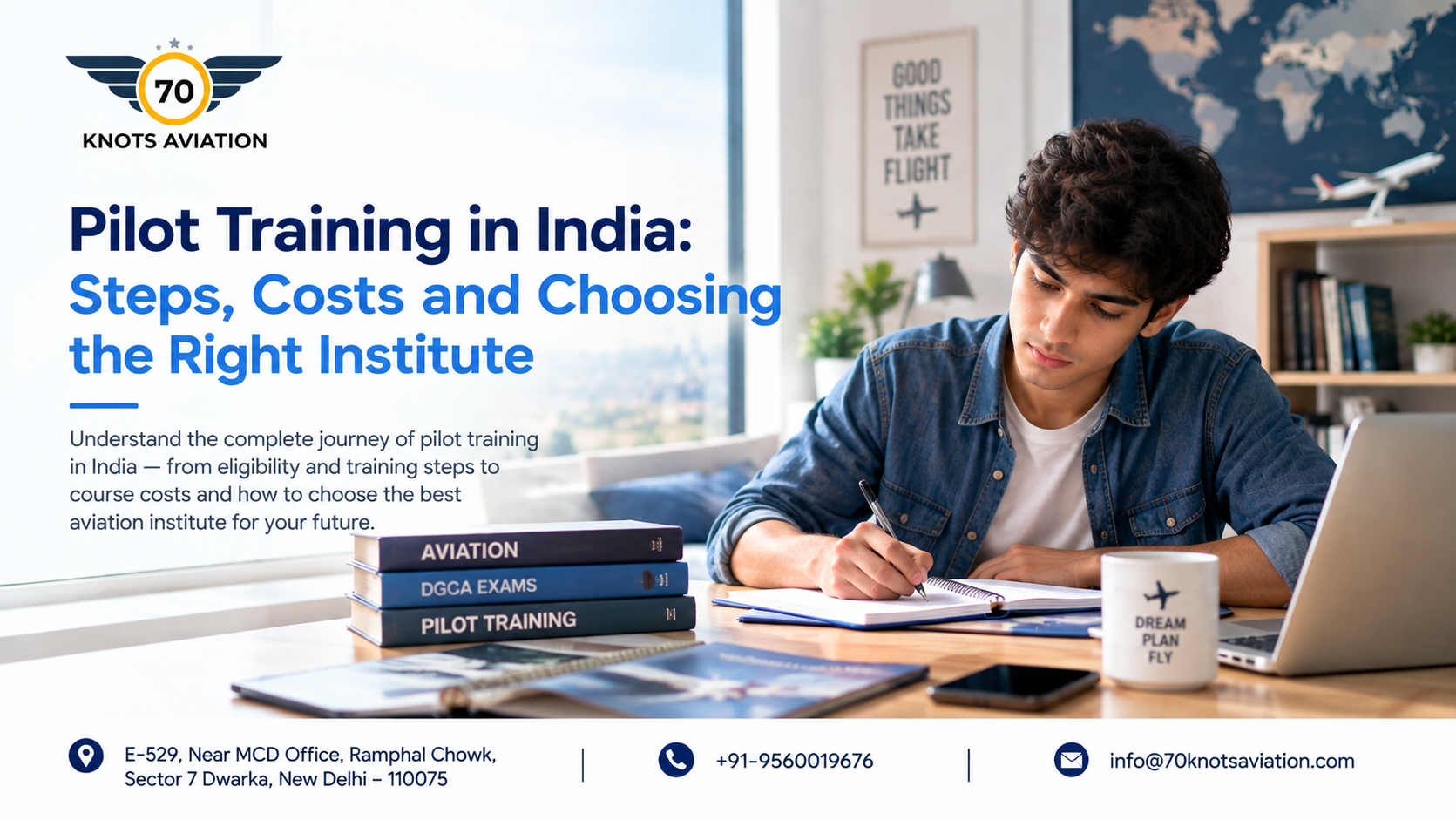
A career in aviation requires more than an interest in flying. Aspiring pilots need to understand the eligibility requirements, examination process, medical standards, ground training and practical flight training involved in becoming a professional pilot. Having a clear roadmap can help students prepare for each stage with greater confidence.
Starting Your Journey Towards a Pilot Career
Many students begin researching aviation careers after completing their schooling. One of the first questions they ask is How to become a pilot in India and what steps they need to complete before they can begin flying professionally.
For students aiming for a Commercial Pilot Licence (CPL), the journey generally involves meeting the required educational criteria, completing the applicable medical examinations, preparing for DGCA examinations, undertaking ground training and completing the required flight training.
Students should understand that pilot training is a structured process. Completing one stage does not automatically mean that the next stage can be skipped. Proper planning from the beginning can help avoid unnecessary delays.
Educational Requirements for Aspiring Pilots
Students planning a professional flying career should first check whether they satisfy the applicable educational requirements. Physics and Mathematics at the 10+2 level are generally important for students pursuing the commercial pilot pathway.
If a student does not have the required subjects, they should understand the available options before enrolling in flight training. It is also important to verify current requirements directly through the applicable DGCA rules because aviation regulations and procedures can change.
The Importance of DGCA Ground Training
Ground training is a major part of pilot education. Before students can confidently apply their knowledge during flight training, they need to understand the theoretical concepts behind aviation operations.
Subjects can involve areas such as navigation, meteorology, aviation regulations, aircraft-related technical knowledge and other examination requirements.
70Knots Aviation focuses on ground school preparation for students working towards DGCA CPL and ATPL examinations. Its approach is centred on helping aspiring flight crew develop the theoretical knowledge required during their aviation training journey.
Understanding Pilot Course Fees in India
Finances are another major consideration for students and their families. Pilot course fees in India can differ based on the flight school, training location, aircraft used, number of flying hours, training requirements and other associated expenses.
The total expenditure may also include costs beyond the basic training package. These can include medical examinations, DGCA examination fees, accommodation, travel, study material, licence-related expenses and additional flying hours where applicable.
For this reason, students should request a detailed fee structure before enrolling. Rather than comparing only the headline course fee, it is better to understand what the quoted amount includes and which expenses may need to be paid separately.
How to Select a Pilot Training Institute
Choosing a training institute is an important part of the process. Students may find numerous options while researching aviation education, but every institute may have a different teaching structure and support system.
Students looking for the Best Pilot training school in Delhi should examine practical factors such as the experience of instructors, ground-training structure, examination preparation, learning resources, student guidance and overall approach to aviation education.
It can also be useful to speak with existing or former students where possible and understand their experience with the training process.
Student and Counsellor Conversation
Student: I have decided that I want to become a commercial pilot, but the process seems complicated.
Counsellor: It can seem complicated initially, but the journey becomes easier to understand when you divide it into different stages such as eligibility, medical requirements, ground training, examinations and flight training.
Student: Should I start with flying lessons?
Counsellor: Before making that decision, you should first check your eligibility and medical requirements. You should also understand the complete training pathway and associated costs.
Student: I am particularly worried about the expenses.
Counsellor: That is understandable. You should compare the complete pilot course fees in India rather than looking only at the basic flying fee. Ask about additional expenses as well.
Student: There are many institutes in Delhi. How do I compare them?
Counsellor: Look at the faculty, course structure, DGCA examination preparation, study support and the overall learning environment. The institute should match your educational requirements and training goals.
Student: What should I focus on during ground training?
Counsellor: Focus on understanding concepts rather than simply memorising information. A strong theoretical foundation can help you throughout your examinations and later stages of pilot training.
Building the Right Foundation
Students often concentrate heavily on the flying component of pilot training, but theoretical preparation should not be overlooked. Aviation involves procedures, regulations, technical concepts and decision-making that require a strong knowledge base.
Consistent study can make examination preparation more manageable. Students should create a realistic study schedule, revise regularly and seek clarification whenever they find a difficult concept.
At 70Knots Aviation, aspiring pilots can receive structured support for their DGCA ground examination preparation. The objective is to help students approach their aviation studies in a more organised manner.
Planning Your Pilot Training Carefully
Before enrolling in a programme, students should prepare a checklist covering their academic qualifications, medical requirements, expected expenses, training duration and examination requirements.
They should also consider practical matters such as accommodation and travel if the training location is different from their hometown.
Aviation training is a significant commitment, so making an informed decision at the beginning can help students manage their time, finances and expectations more effectively.
Frequently Asked Questions
1. What is the first step towards becoming a commercial pilot?
The first step is to understand the applicable eligibility and medical requirements. Students can then plan their ground training, examinations and flight training according to the required licensing pathway.
2. Is Mathematics important for pilot training?
Mathematics is relevant to the educational eligibility requirements for the commercial pilot pathway and also supports understanding of certain aviation concepts. Students should check the current eligibility requirements before beginning their training.
3. Why does pilot training cost vary between institutes?
Costs can vary because of differences in flying hours, aircraft, location, training structure, accommodation and other associated expenses. Students should compare complete fee structures rather than only advertised starting prices.
4. What should I look for in a pilot training institute?
Consider faculty experience, ground-training structure, DGCA examination support, learning resources, student guidance and the overall training environment before making a decision.
5. Can ground classes help with DGCA examinations?
Yes. Structured ground classes can help students understand the required subjects, follow a study plan and prepare systematically for their DGCA examinations.

 English
 Arabic
 French
 Spanish
 Portuguese
 Deutsch
 Turkish
 Dutch
Dutch
 Italiano
 Russian
 Portuguese (Brazil)
 Greek
Greek
