


The Rise of Commercial Off-The-Shelf Solutions and the Evolution of the Space Semiconductor Market Segment for Earth Observation
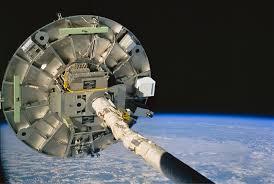
One of the most transformative shifts in the satellite industry is the adoption of COTS (Commercial Off-The-Shelf) components in the Space Semiconductor Market segment dedicated to Earth Observation. In the past, taking a picture of Earth from space required a specialized, "hardened" camera system that was years behind the technology available on the ground. Today, companies are taking high-end industrial sensors and "ruggedizing" them for space. This allows satellites to capture hyperspectral images that can identify different types of crops, detect methane leaks, or even count the number of cars in a parking lot. By using updated terrestrial semiconductors, Earth observation companies can offer "real-time" data that is fresh every few hours, rather than every few days. This is a game-changer for industries like agriculture, insurance, and global logistics, which rely on up-to-the-minute information.
However, using COTS semiconductors in space requires a process known as "upscreening." This involves taking a batch of standard chips and putting them through a series of "torture tests" to see which ones are the most durable. Only the top 1% that survive the heat, vibration, and radiation tests are actually sent into orbit. This approach is much cheaper than designing a space-grade chip from scratch, but it requires a high degree of expertise in semiconductor physics. As the "COTS-to-Space" pipeline becomes more refined, we are seeing a blur between consumer tech and space tech. This is fostering a "fail-fast" mentality in orbital startups, where they launch quickly and use software to patch any hardware quirks. This agility is the driving force behind the "digital transformation" of our planet, as we build a real-time, high-resolution mirror of Earth in the cloud.
What is "upscreening" a chip? It's like an Olympic tryout for electronics; engineers take thousands of regular chips and put them through extreme tests, only picking the very best ones to go into space.
Why would anyone want to count cars from space? Retailers and investors use that data to track how busy stores are or how many products are being moved, giving them a secret "edge" in understanding the economy.
➤➤➤Explore MRFR’s Related Ongoing Coverage In Semiconductor Industry:
Medical Device Compliance Consulting Market
Medical Research And Innovation Consulting Services Market
Mergers And Acquisitions (M&A) Consulting Services Market
Mobile App Marketing Services Market
Municipal Water Treatment Services Market
Nutritional Analysis Services Market
Online Reputation Management Services Market
Organizational Development Consulting Services Market
Packaging And Distribution Consulting Services Market
Patent Portfolio Management Consulting Services Market

 English
 Arabic
 French
 Spanish
 Portuguese
 Deutsch
 Turkish
 Dutch
 Italiano
 Romaian
 Portuguese (Brazil)
 Greek
