


Smart Data Center Security for High-Security Facilities in Saudi Arabia
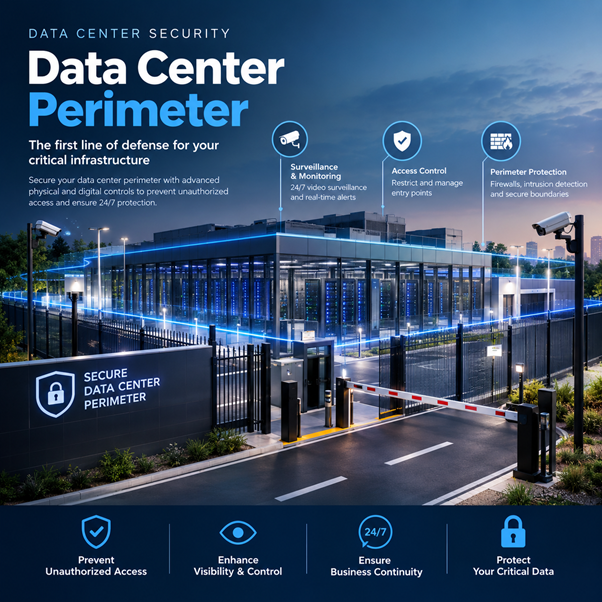
Modern Data Center Security in Saudi Arabia means protecting servers, networks, people and physical spaces as one connected system. As the Kingdom expands its digital economy, banks, government bodies, telecom operators and cloud providers need facilities that stay secure around the clock. This guide explains the layers involved and how Tektronix helps organizations build them.
Why High-Security Facilities in the Kingdom Need a Layered Approach
Saudi Arabia is investing heavily in cloud services, artificial intelligence, digital government and smart cities under Vision 2030. All of these ambitions depend on data centers that remain available, confidential and trustworthy. A single breach, outage or insider incident can interrupt national services, damage customer trust and trigger regulatory consequences.
High-security facilities face two kinds of risk at once. Physical threats include forced entry, tailgating, sabotage, theft of hardware and misuse by authorized staff. Digital threats include malware, ransomware, credential theft, denial of service and attacks on management networks. These risks overlap, because a person who gains physical access can often bypass software protections, and a remote attacker can disable doors, cameras or alarms through a poorly protected network.
For this reason, security architects design in layers, often described as defence in depth. The outer perimeter, building entrance, data hall, rack row and individual cabinet each receive their own controls, and the digital stack is protected in the same way, from the network edge down to the data itself. If one layer fails, the next one still stands.
Building Blocks of Smart Data Center Security
A smart facility combines connected sensors, identity systems, analytics and monitoring so that security teams see the whole picture in one place. The following building blocks form the core of a well designed program, and each one is explored in the sections below.
Perimeter and Site Protection
Security starts outside the building. Fencing, vehicle barriers, controlled gates, lighting and standoff distances slow down an intruder and give guards time to respond. Many sites add radar, thermal cameras or fence sensors for early warning. Visitor and delivery areas are separated from critical zones so that vendors and contractors never walk straight into sensitive spaces.
Identity, Authentication and Zoning
Inside the building, access is divided into zones such as lobby, loading bay, network operations center, data hall, cage and cabinet. Each zone has stricter rules than the last. People move inward only when their identity, role and schedule allow it, and every movement is recorded.
Conclusion
Saudi enterprises that depend on uptime and confidentiality should invest in Data Center Security KSA solutions designed around local regulation and climate. Operators planning Data Center Security Riyadh projects gain speed and accountability when they choose a partner with regional engineering presence. A disciplined Data Center Access Control policy keeps every zone, credential and visitor under verified control. Reliable Data Center Surveillance turns every corridor and cabinet row into evidence that supports investigation and compliance. Contact Tektronix to build resilient Data Center Security that protects your people, systems and reputation.

 English
 French
 Spanish
 Portuguese
 Deutsch
 Turkish
 Dutch
Dutch
 Italiano
 Russian
 Romaian
 Portuguese (Brazil)
 Greek
Greek
