


Data Center Security: A Complete Guide for Businesses in Riyadh and KSA
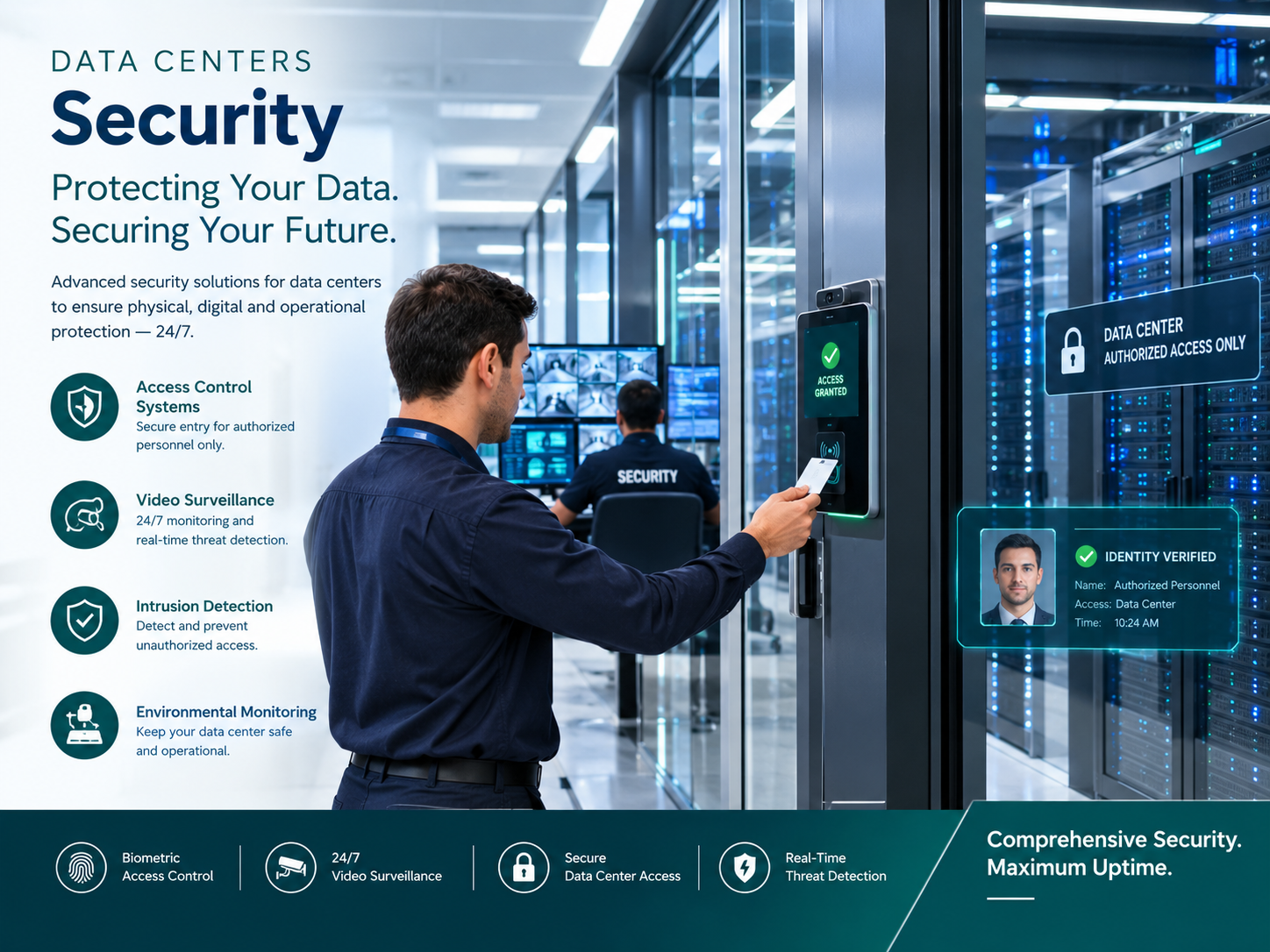
Data has become one of the most valuable assets for modern businesses. Companies in banking, healthcare, telecommunications, government, retail, logistics, manufacturing, and other industries depend on data centers to store and process critical business information. As the amount of digital information continues to grow, protecting data center infrastructure from cyber threats, unauthorized access, equipment failures, and physical risks has become increasingly important. This is where Data Center Security plays a critical role.
A data center contains servers, networking equipment, storage systems, applications, databases, and other technologies that support important business operations. A security failure can result in data loss, service disruption, financial damage, and reputational problems. For businesses operating in Riyadh and across the Kingdom of Saudi Arabia, a comprehensive Data Center Security KSA strategy should address both digital and physical security.
Saudi Arabia's National Cybersecurity Authority (NCA) has established cybersecurity controls covering areas such as essential cybersecurity, data cybersecurity, cloud cybersecurity, and critical systems. The NCA's Data Cybersecurity Controls are designed to help organizations protect data throughout its lifecycle, while the Essential Cybersecurity Controls provide a broader cybersecurity baseline for information and technology assets.
What Is Data Center Security?
Data Center Security is the combination of technologies, policies, processes, and physical security measures used to protect a data center and the information and systems it contains. It covers everything from controlling who can physically enter a server room to protecting networks from malware, ransomware, unauthorized connections, and other cyber threats.
Modern data center protection normally requires multiple layers of security. Physical security can include surveillance cameras, security barriers, access control doors, visitor management, alarms, and environmental monitoring. Digital security can include firewalls, encryption, intrusion detection, endpoint protection, network segmentation, vulnerability management, and continuous monitoring.
A strong security strategy does not depend on a single technology. Instead, it creates several layers that work together. If one security layer is bypassed, another layer can help detect, prevent, or limit the impact of the incident.
Why Data Center Security Is Important for Businesses
Businesses depend on data centers to keep applications, databases, websites, communication platforms, and internal systems available. A security incident can affect business continuity and prevent employees or customers from accessing important services.
Data center security helps organizations reduce the risk of unauthorized access and data breaches. It also helps protect sensitive information such as customer records, financial information, employee information, business documents, and intellectual property.
Another important benefit is business continuity. Data center security should work together with backup, disaster recovery, monitoring, and incident response processes so that organizations can respond to security events while maintaining essential services.
For businesses in Saudi Arabia, cybersecurity requirements and expectations also make it important to understand the controls applicable to their specific sector and infrastructure. The NCA describes itself as Saudi Arabia's national authority and reference for cybersecurity matters, and it maintains cybersecurity frameworks and controls for different environments.
Types of Data Center Security
Cybersecurity for Data Center
Cybersecurity for Data Center environments focuses on protecting servers, networks, applications, databases, and other digital assets against cyber threats. A modern data center can be targeted through malware, ransomware, phishing-related credential theft, exploitation of vulnerabilities, unauthorized network connections, and other attack methods.
Cybersecurity measures can include network monitoring, endpoint protection, intrusion detection and prevention, vulnerability management, secure configuration, identity management, and incident response. Security teams can also use centralized monitoring platforms to identify unusual activities and investigate potential incidents.
A layered cybersecurity approach is particularly important because data centers often connect many systems and users. Protecting only the external network perimeter may not be enough. Internal traffic, administrator accounts, applications, remote connections, and third-party connections should also be controlled and monitored.
Data Center Encryption
Data Center Encryption protects information by converting readable data into an encoded form that cannot be easily understood without the appropriate key. Encryption can be applied to data stored on servers and storage systems as well as information moving across networks.
Encryption is especially important for sensitive business information. If properly implemented, it can reduce the impact of unauthorized access to stored or transmitted data. Organizations should also establish appropriate encryption key management procedures because encryption is only effective when keys are securely generated, stored, accessed, and managed.
Saudi Arabia's NCA Data Cybersecurity Controls focus on protecting data throughout its lifecycle, making data protection an important part of an organization's broader cybersecurity program.
Data Center Firewalls
Data Center Firewalls provide an important layer of network protection. They control traffic entering and leaving network environments according to predefined security rules. Modern firewall solutions can provide capabilities beyond basic traffic filtering, including application control, intrusion prevention, threat intelligence integration, and inspection of network activity.
Firewalls should be properly configured and regularly reviewed. Rules that are no longer required should be removed, while access should be restricted according to business requirements. Organizations can also use network segmentation to separate critical systems and limit unnecessary communication between different environments.
Data Center Access Control
Data Center Access Control protects the physical facility by ensuring that only authorized people can enter restricted areas. This is an essential part of overall data center protection because even strong cybersecurity controls can be undermined if unauthorized individuals gain physical access to servers or networking equipment.
Access control can include biometric authentication, RFID cards, smart cards, PINs, mobile credentials, security doors, turnstiles, and other authentication technologies. Access rights should be assigned according to roles and responsibilities, with sensitive areas requiring stronger authentication.
A modern Data Center Access Control system can also create access records that show who entered a restricted area and when. This information can support security investigations, audits, and compliance processes.
Data Center Threat Detection
Data Center Threat Detection involves identifying suspicious activities, vulnerabilities, and potential security incidents as early as possible. Early detection can help organizations respond before a security issue develops into a major disruption.
Threat detection can involve network monitoring, intrusion detection systems, security information and event management platforms, endpoint monitoring, access logs, vulnerability scanning, and automated alerts. Security teams can analyse these signals to identify unusual behavior.
For example, an unexpected login from an unusual location, repeated failed authentication attempts, unusual network traffic, or unauthorized changes to critical systems could indicate a potential security problem. A strong monitoring strategy allows security personnel to investigate these events and take appropriate action.
Data Center Threat Detection should also be connected to an incident response process. Detecting an event is only the first step; organizations need defined procedures for investigation, containment, recovery, and post-incident improvement.
Benefits of Data Center Security
A comprehensive Data Center Security strategy can provide several benefits to organizations. One of the most important is improved protection for sensitive business information. By combining physical security, cybersecurity, encryption, access control, and monitoring, businesses can create multiple layers of protection around their critical infrastructure.
Security can also improve business continuity. When threats and vulnerabilities are identified early, organizations have more opportunity to address them before they cause significant downtime.
Another benefit is better visibility. Centralized monitoring and access records can help security teams understand what is happening across the data center environment. This can make it easier to investigate incidents and identify unusual behavior.
Data center security can also support compliance requirements. Saudi Arabia has established multiple cybersecurity controls, including Essential Cybersecurity Controls, Data Cybersecurity Controls, Cloud Cybersecurity Controls, and controls for critical systems. The exact requirements applicable to a business depend on its activities, systems, sector, and regulatory scope.
Importance of Data Center Security in Riyadh and KSA
Riyadh is an important business and technology center in Saudi Arabia, and organizations across the Kingdom are investing in digital infrastructure. Saudi Arabia's Ministry of Communications and Information Technology has described data centers as core assets in the Kingdom's digital transformation strategy, with an objective stated in its investment material of reaching 1,300 MW of data center capacity by 2030.
As data center infrastructure expands, protecting these facilities becomes increasingly important. Businesses operating in Riyadh may manage sensitive financial, customer, operational, healthcare, government, or commercial information. They need security solutions that protect both the physical facility and the digital infrastructure.
The Saudi cybersecurity environment also continues to develop. In December 2025, the NCA announced cybersecurity controls for private-sector organizations that are not classified as critical infrastructure, establishing minimum cybersecurity controls intended to reduce risks from internal and external threats and protect information and technology assets.
For organizations using cloud infrastructure, the NCA's Cloud Cybersecurity Controls address cybersecurity requirements for cloud service providers and cloud service tenants within their scope.
These developments demonstrate why businesses in Riyadh and across KSA should approach data center security as an ongoing business requirement rather than a one-time technology installation.
Features to Look for in a Data Center Security Solution
When selecting a Data Center Security solution, businesses should first consider the overall security architecture. The solution should be capable of addressing physical security, cybersecurity, access management, monitoring, and incident response requirements rather than focusing on only one area.
Strong Data Center Access Control is important for restricting physical entry. Businesses should consider biometric authentication, RFID credentials, visitor management, access permissions, door monitoring, and audit trails according to their facility requirements.
Threat monitoring is another important feature. A suitable solution should provide meaningful alerts and visibility into suspicious network activity, unauthorized access attempts, vulnerabilities, and other potential threats.
Encryption capabilities should also be evaluated. Organizations should determine how data is protected at rest and in transit and how encryption keys are managed.
Businesses should also consider scalability. Data center environments can grow as organizations add servers, applications, users, storage, and network infrastructure. A security solution should be capable of expanding without requiring a complete redesign.
Integration is equally important. Data center security technologies may need to work with existing video surveillance, access control, fire detection, building management, network security, identity management, and monitoring platforms.
Why Choose a Professional Data Center Security Provider?
Data center security is a complex field that requires careful planning and technical expertise. A professional provider can assess the facility, identify security requirements, recommend appropriate technologies, and help integrate different security layers.
Professional implementation can also reduce configuration problems. Security systems that are poorly configured may create unnecessary vulnerabilities or operational difficulties. A qualified provider can help with system design, installation, testing, commissioning, documentation, and ongoing maintenance.
Organizations should also evaluate a provider's experience, technical capabilities, support services, and understanding of applicable Saudi cybersecurity requirements. For organizations operating in regulated or sensitive environments, it is important to verify whether the provider and proposed services meet the applicable regulatory and contractual requirements.
The NCA maintains registration and licensing information for cybersecurity solution and service providers in Saudi Arabia, and registration is a regulatory requirement for entities providing cybersecurity solutions, services, or products in the Kingdom. Organizations should therefore perform appropriate due diligence when selecting cybersecurity providers.
Conclusion
Data Center Security is essential for protecting the physical infrastructure, digital systems, networks, applications, and information that businesses depend on every day. A strong security strategy combines Cybersecurity for Data Center environments, Data Center Encryption, Data Center Firewalls, Data Center Threat Detection, and Data Center Access Control to create multiple layers of protection.
For organizations in Riyadh and across KSA, data center security is particularly important as Saudi Arabia continues to expand its digital infrastructure and strengthen its cybersecurity framework. The right solution should be designed around the organization's infrastructure, risk profile, operational requirements, and applicable regulations.
Choosing an experienced professional provider can help businesses design, implement, integrate, and maintain a reliable security environment that supports both current operations and future growth.
Protect Your Data Center with a Professional Security Solution
Is your organization looking to strengthen its Data Center Security KSA strategy? Contact Tektronix to discuss your data center security requirements and explore solutions for Data Center Access Control, Data Center Threat Detection, physical security, monitoring, and integrated protection. A professional assessment can help identify the right combination of technologies for your Riyadh or KSA facility.
Frequently Asked Questions
1. What is Data Center Security?
Data Center Security is the combination of physical security, cybersecurity, access control, monitoring, encryption, firewalls, policies, and processes used to protect data center infrastructure and the information stored or processed within it.
2. Why is Data Center Access Control important?
Data Center Access Control helps ensure that only authorized personnel can enter restricted areas of a data center. Technologies such as biometrics, RFID cards, PINs, smart cards, and mobile credentials can be used to control access and create records of entry activity.
3. What is Data Center Threat Detection?
Data Center Threat Detection is the process of identifying suspicious activity, unauthorized access, vulnerabilities, and potential cyber threats within a data center environment. It can use network monitoring, intrusion detection, security logs, endpoint monitoring, and automated alerts.
4. How does Data Center Encryption protect information?
Data Center Encryption converts readable information into an encoded format that requires an appropriate key to access. It can protect data stored on systems and data transmitted across networks, helping reduce the risk associated with unauthorized access.
5. What should businesses consider when choosing Data Center Security KSA solutions?
Businesses should consider physical access control, cybersecurity monitoring, encryption, firewalls, threat detection, system integration, scalability, maintenance, technical support, and applicable Saudi cybersecurity requirements. Organizations should also evaluate the provider's experience and relevant registration or licensing requirements before selecting a service provider.

 English
 Arabic
 French
 Spanish
 Deutsch
 Turkish
 Dutch
Dutch
 Italiano
 Russian
 Romaian
 Portuguese (Brazil)
 Greek
Greek
