


Best Logistics Services for Small Businesses in India
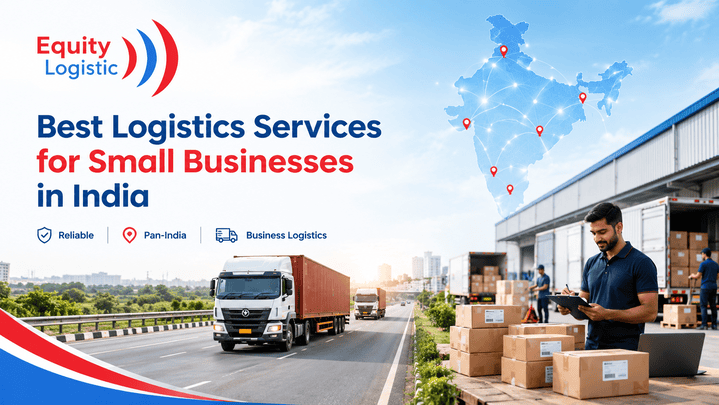
For small businesses across India, growth often runs into the same bottleneck: logistics. Whether you’re a manufacturer shipping finished goods to a new state, a distributor scaling up warehouse capacity, or a growing supplier moving specialised equipment to a client site, the right logistics partner can be the difference between smooth expansion and constant firefighting.
Unlike large enterprises with dedicated in-house logistics teams, small businesses typically need a partner who can flex across multiple needs, transport, storage, documentation, and reliability, without requiring a massive contract or complex onboarding. This guide breaks down the logistics services small businesses in India should be looking for, the challenges unique to smaller operations, and how to choose a partner that grows with you rather than holding you back.
Why Logistics Is Different for Small Businesses
Large enterprises can absorb inefficiencies with scale and negotiating power. Small businesses can’t. A single delayed shipment, a damaged consignment, or a warehousing gap can directly hit cash flow, customer relationships, and reputation in a way that’s much harder to recover from at a smaller scale.
At the same time, small businesses in India increasingly need to move goods across a genuinely wide range of scenarios: interstate distribution, moving machinery or equipment for a project, storing inventory between production and delivery, or shipping specialised, fragile, or high-value cargo that a general courier simply isn’t built to handle. This means the logistics services that actually matter to small businesses go well beyond simple parcel delivery.
Key Logistics Services Small Businesses in India Actually Need
1. Reliable Domestic Transport
At the core of almost every small business’s logistics needs is dependable interstate and intrastate transport, moving raw materials in, finished goods out, and everything in between without unpredictable delays. For small manufacturers, traders, and suppliers, domestic transport services that offer consistent transit times and clear tracking make it possible to commit to delivery dates with confidence, something that directly affects customer trust.
2. Warehousing and Staging
Not every small business needs a full-scale warehouse of its own, but almost every growing business eventually needs somewhere to store inventory between production and delivery, especially when serving customers across multiple regions or managing seasonal demand spikes. Warehousing and staging services allow small businesses to consolidate stock, release it in phases, and avoid the capital burden of setting up their own storage infrastructure.
3. Specialised Cargo Handling
Many small businesses deal with cargo that a standard courier or general transporter isn’t equipped to handle safely, fragile equipment, sensitive instruments, or high-value goods that need extra care in loading, securing, and transit. Special cargo handling services matter here far more than businesses often expect; a single damaged shipment of specialised equipment can cost far more than the transport itself.
4. Project-Based Logistics Coordination
Small businesses that supply into larger infrastructure, energy, or manufacturing projects, whether as an equipment vendor, subcontractor, or component supplier, often need logistics that’s sequenced around project milestones rather than a single one-off delivery. Project handling services coordinate multi-shipment programmes so deliveries land exactly when the site needs them, not before or after.
5. Over-Dimension and Heavy Cargo Movement
If your business manufactures, supplies, or installs machinery, industrial equipment, or oversized components, standard freight simply won’t work. Over-dimension consignment transportation, covering route surveys, permits, and the right specialised trailers, is essential for small businesses in engineering, industrial equipment, or renewable energy supply chains, even if they only need it occasionally.
6. Pan-India Reach, Including Remote Locations
A growing small business rarely stays confined to one region for long. Whether you’re expanding into a new state or fulfilling an order in a hard-to-reach location, a logistics partner with genuine pan-India coverage, including remote and high-altitude destinations, means you’re not turning down business because your current transporter can’t reach the delivery point.
Common Logistics Challenges Small Businesses Face in India
Inconsistent Transit Times- Without an established logistics relationship, small businesses often deal with unpredictable delivery windows, making it hard to give customers reliable commitments or plan inventory accordingly.
Limited Negotiating Power- Smaller shipment volumes mean less leverage with large logistics providers, who are often structured around high-volume enterprise contracts rather than flexible, smaller-scale needs.
Lack of Specialised Equipment Access- Many small businesses that occasionally need to move heavy, oversized, or fragile cargo don’t have the volume to justify their own specialised fleet, and general transporters often lack the right vehicles or handling expertise for these one-off needs.
Documentation and Compliance Complexity- Interstate transport, permits for oversized cargo, and insurance documentation can be genuinely confusing for a small business without a dedicated logistics or compliance team, leading to delays or costly mistakes.
Storage Constraints- Renting or building warehouse space is a significant capital commitment that doesn’t always make sense for a small or growing business, particularly if storage needs fluctuate seasonally or by project.
How to Choose the Right Logistics Partner as a Small Business
1. Look for Flexibility, Not Just Scale
A logistics provider built only for high-volume enterprise contracts may not prioritise smaller or occasional shipments. Look for a partner who treats your business as a genuine relationship, not just a line item, regardless of your current shipment volume.
2. Prioritise Transparency and Tracking
GPS tracking and clear status updates aren’t a luxury, they’re what lets you keep your own customers informed and build trust as your business grows. A logistics partner should give you visibility into every shipment, not just a tracking number that goes quiet after pickup.
3. Check for One-Stop Capability
Coordinating separate providers for transport, warehousing, and specialised cargo handling creates unnecessary complexity and points of failure for a small team already stretched thin. A single logistics solutions partner who can cover multiple needs under one accountable relationship simplifies operations significantly as you scale.
4. Confirm They Handle Documentation and Insurance
Ask directly how permits, transit insurance, and delivery documentation are handled. A logistics partner who builds this into their standard process, rather than treating it as an add-on, protects your business from disputes and unexpected costs.
5. Ask About Route and Destination Reach
If your growth plans include new regions, remote locations, or hard-to-reach delivery points, confirm your logistics partner can genuinely support that reach now, rather than discovering a gap later when a big order depends on it.
6. Evaluate Their Handling of Specialised or Sensitive Cargo
Even if most of your shipments are routine, ask how a provider handles the exceptions, fragile equipment, high-value goods, or oversized items, since this is usually where inexperienced transporters create the most costly problems.
Why an ISO-Certified, Accountable Partner Matters
Small businesses often assume specialised logistics providers, particularly those with expertise in heavy, high-value, or project cargo, are only relevant to large enterprises. In practice, many small and growing businesses, equipment suppliers, industrial component manufacturers, renewable energy vendors, and infrastructure subcontractors, deal with exactly this kind of cargo, just at a smaller, more occasional scale. Working with a provider that maintains ISO 9001:2015 certified quality processes, consistent documentation, and route-tested procedures means your business gets enterprise-grade reliability without needing enterprise-scale volume to access it.
Read more- https://www.equitylogistic.com/blogs/details/best-logistics-services-for-small-businesses-in-india/

 English
 Arabic
 French
 Spanish
 Portuguese
 Deutsch
 Turkish
 Dutch
Dutch
 Italiano
 Russian
 Romaian
 Portuguese (Brazil)
