


Ama Dablam Deaths: Fatalities, Major Causes & Safety Tips (1961–2026)
Ama Dablam Deaths
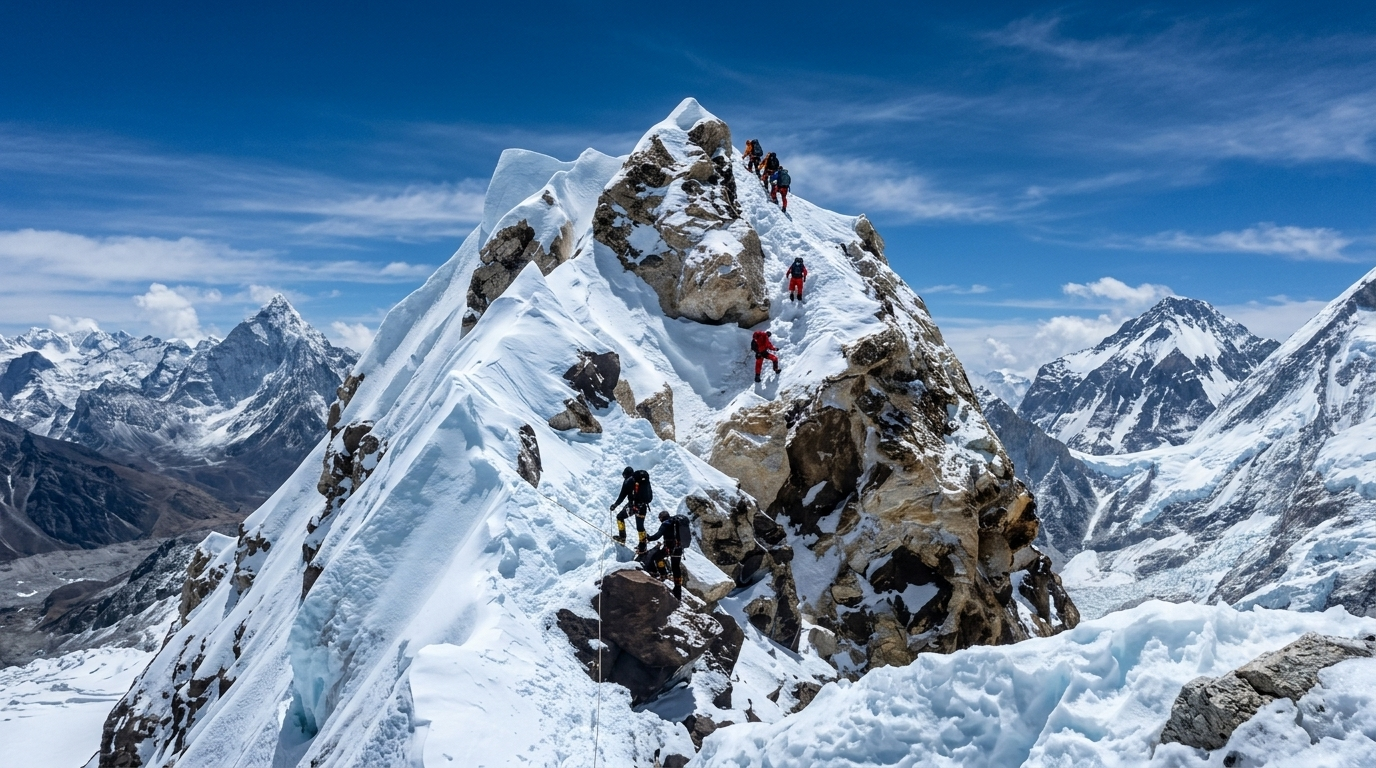
Ama Dablam is known for being one of the most beautiful mountains in the Himalaya. This 6812 meter peak rises up in the Nepalese region of Khumbu, drawing mountain climbers from all over the world. But behind the pristine beauty lies a dangerous challenge – Ama Dablam really is a technical mountain, where mistakes can be catastrophic.
Learning about Ama Dablam deaths is about more than just scary facts. Gaining awareness of this information means you know what to look out for, and can make smarter choices when preparing for your own Ama Dablam expedition.
In this post we cover exactly how many people have died on Ama Dablam, the major causes of death on the mountain, look at some of the most famous Ama Dablam accidents and what they mean. We'll also give tips for staying safe on Ama Dablam!
Important Things to Know About Ama Dablam Deaths
-
There have been approx 35-40 deaths on Ama Dablam since it was first climbed back in 1961.
-
The leading culprit for fatal Ama Dablam accidents is falling.
-
The largest Ama Dablam disaster took place in 2006, when a serac collapse and avalanche destroyed Camp 3, killing 6 climbers.
-
Altitude sickness, falling ice, and objective hazards also play a role in deaths on the mountain.
-
Modern day Ama Dablam expeditions have changed significantly to reduce risk and exposure to avalanche dangers.
-
Training and using a good operator are essential parts of reducing risk and staying safe on Ama Dablam.
Why is Ama Dablam Such a Challenging Mountain?
While trekking peaks offer a challenge, Ama Dablam climbing requires technical alpine skills due to steep rock sections, exposure and fixed ropes on the mountain. It's easy to underestimate Ama Dablam based on its beauty – but the mountain is actually an advanced grade climb.
This means you need:
-
Good fitness
-
Technical skills
-
Experience at high altitude
-
The ability to think clearly
-
Proper acclimitization
Many people complete Island Peak climbs and/or Lobuche East Ascents before taking on Ama Dablam climbing.
How Many People Have Died on Ama Dablam?
Since 1961, approximately 35 to 40 climbers have died on Ama Dablam. According to the Himalayan Database, despite its technical difficulty, the peak maintains a low overall fatality rate of under 1% compared to 8,000-meter Himalayan peaks.
Of course, any death on the mountain is unfortunate – but it's important to put this into perspective. There have been thousands of successful Ama Dablam summits, and the mountain has a good record compared to other 8000 meter peaks like Annapurna or K2.
The dangers of Ama Dablam climbing are real – but many deaths can be avoided by avoiding the common pitfalls of climbing the mountain.
The Main Causes of Ama Dablam Deaths
1. Falls – During Climbing and/or Descent
Falls are the most common cause of death on Ama Dablam.
This mountain has many exposed sections of climbing which require the climber to stay focused on using fixed ropes. Fatigue, errors while tying-in, and improper rope handling can all lead to a fall.
Interestingly, many accidents on Ama Dablam occur during descent rather than during the climb up!
Why are Falls Common During the Descent?
After reaching the summit, climbers tend to:
-
Be tired
-
More dehydrated
-
More exhausted mentally
-
And feel an increased sense of accomplishment – which may cause them to relax during the technical sections
2. Avalanches and Serac Collapse
The infamous Dablam which gives the mountain its name is a hanging glacier which regularly sees large seracs collapse – which can trigger avalanches on Ama Dablam. These are thankfully rare occurrences – but avalanches on Ama Dablam can impact multiple climbers, and there are even reports of them killing people in their tents.
As a result of this danger, the way that Ama Dablam climbing expeditions are run have changed significantly in the last few years.
3. Altitude Illness
The dangers of altitude illness are just as applicable to Ama Dablam climbing as they are to other Himalayan peaks.
Altitude Illnesses include:
Acute Mountain Sickness (AMS)
This is the mildest form of altitude illness, and presents with symptoms such as:
-
Headache
-
Nausea
-
Loss of appetite
-
Fatigue
However – AMS can escalate into more serious conditions:
High Altitude Pulmonary Edema (HAPE)
This life threatening condition results in fluid filling the lungs – and causes symptoms such as:
-
Coughing
-
Shortness of breath
-
Severe fatigue
High Altitude Cerebral Edema (HACE)
This condition is triggered by a lack of oxygen at high altitude, and causes the fluid in your brain to swell. It can cause:
-
Confusion
-
Loss of motor skills
-
Loss of coordination
The good news is that many altitude illnesses can be prevented by proper acclimatization – and treated quickly if they do occur.
4. Falling Ice and Rockfall
One of the objective dangers of Ama Dablam climbing is falling ice or rockfall. Due to the steepness of the mountain, chunks of ice can fall on climbers – particularly during the descent.
There have been several fatalities recently due to falling ice on Ama Dablam.
The 2006 Ama Dablam Disaster – Deadliest Accident in the Mountain's History
The deadliest accident on Ama Dablam occurred back in 2006, when a serac collapse triggered an avalanche which took out Camp 3 during the night – killing 6 climbers sleeping in their tents.
This shocking incident meant that many Ama Dablam operators changed the way that their expeditions were run – specifically, by limiting the amount of time that climbers spent at Camp 3.
Recent Ama Dablam Fatalities
Despite increased safety measures – Ama Dablam fatalities still occur.
Some of the dangers that have caused recent Ama Dablam deaths include:
-
Falls
-
Fatalities caused by falling ice
-
Altitude-related illnesses
-
Injuries during descent
Many of these incidents can be avoided by following safety measures during your own Ama Dablam expedition.
Safety Lessons for Climbing Ama Dablam
Practice Technical Skills Before Your Expedition
It's not enough to simply have general fitness – you need to have technical climbing skills before beginning your Ama Dablam climb.
This includes:
-
Fixed rope climbing
-
Jumar climbing
-
Rappelling
-
Glacier crossing
-
Self arrest
Prioritize Acclimatization Over Summit Day
Never sacrifice acclimatization for a summit day – your body needs time to adjust to the altitude.
Respect Turnaround Times
Many fatal accidents on Ama Dablam occur simply because climbers pushed on when they should have turned back. Remember – a summit is optional. Your safety is not.
Monitor Weather Conditions
Weather plays a big role in Ama Dablam climbing – and can change very quickly. Always keep this in mind when planning your expedition.
Choose a Reputable Operator
A reputable Ama Dablam operator will know how to keep you safe on the mountain.
Ama Dablam vs. Other Himalayan Peaks – What's the Death Rate?
Despite Ama Dablam being a technical climb – it actually has a lower death rate than some of the famed 8000 meter peaks in the Himalayas.
Compared to mountains such as K2, Annapurna I and Nanga Parbat – the dangers of Ama Dablam climbing are much lower. However – this doesn't mean that the mountain isn't a serious challenge. This mountain has a good safety record – but don't be deceived by the lower height – Ama Dablam climbs are much more technical than many realize.
Practical Tips for Staying Safe on Ama Dablam
Before You Climb Ama Dablam
-
Do a mountaineering course
-
Get fit for Ama Dablam climbing
-
Practice rope climbing
-
Climb smaller Himalayan peaks before Ama Dablam
During Your Expedition
-
Stay hydrated
-
Speak honestly about how you're feeling
-
Listen to your guides
-
Don't rush technical sections of the climb
On Summit Day
-
Go at your own pace
-
Check all of your rope attachments
-
Be focused during the descent
-
Know when to turn back
Ways to Learn More About Ama Dablam Deaths
If you'd like to learn more about Ama Dablam fatalities – including why people die on the mountain and how safety protocols have changed since then – I recommend reading our sister site TrekYaari's post about Ama Dablam deaths:
Ama Dablam Deaths – How Many Have Died, Causes and Our Safety Protocol
This blog also goes into more detail about the importance of choosing a certified operator for your Ama Dablam climb, as well as the risks associated with climbing the mountain.
Frequently Asked Questions
Is Ama Dablam more dangerous than Everest?
Ama Dablam is actually more technical than Everest's climbing route – but has a much lower death rate than Mount Everest.
What is the most common cause of death on Ama Dablam?
The most common cause of death on the mountain is falling.
What is the deadliest accident on Ama Dablam?
Unfortunately, the 2006 serac collapse and avalanche which took out Camp 3 and caused the deaths of 6 climbers is the deadliest incident on the mountain.
Is Ama Dablam a suitable climb for beginners?
No – Ama Dablam climbing is an advanced climb. You should have high altitude and technical climbing experience before attempting Ama Dablam.
Is Ama Dablam a safe mountain to climb?
The safety measures and precautions taken by operators today mean that climbing Ama Dablam is much safer than in previous years. But the mountain still presents a number of objective and technical hazards which should be taken into account.
Conclusion
The dangers of Ama Dablam climbing are sobering – but learning about the Ama Dablam deaths and how to avoid them can help you make smart decisions before your own expedition. With approx 35-40 deaths recorded since 1961 – there are indeed a number of dangers on the mountain. However – most of the fatalities on Ama Dablam are the result of common pitfalls, and can be avoided by proper acclimatization, training and knowledge of the mountain.
Ama Dablam deaths also show us that altitude illness and falls are the most common cause of death on the mountain. But the hard work and reward are well worth it – Ama Dablam offers some of the best views in the Himalayas for those who choose to climb it!

 English
 Arabic
 Spanish
 Portuguese
 Deutsch
 Turkish
 Dutch
Dutch
 Italiano
 Russian
 Romaian
 Portuguese (Brazil)
 Greek
Greek
