


Virtual CFO Services: A Flexible Financial Solution for Growing Businesses
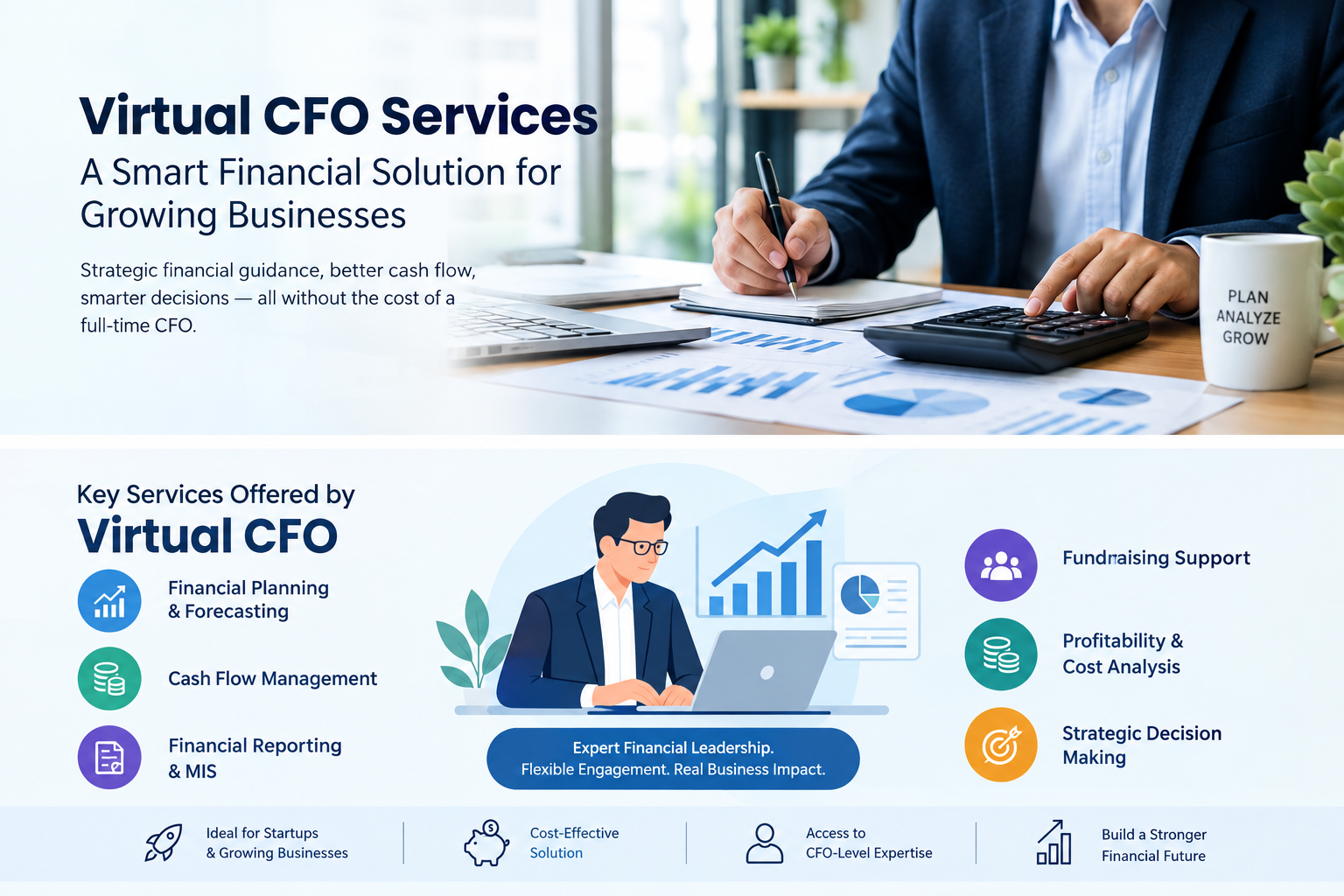
Financial management is one of the most important parts of building a successful business. As a company grows, managing accounts alone is not enough. Business owners also need accurate financial forecasts, better cash flow control, cost management, budgeting, and strategic financial advice. This is where Virtual CFO services can offer significant value.
A Virtual CFO provides professional CFO-level expertise without requiring a company to hire a full-time Chief Financial Officer. This makes the service especially useful for startups, small businesses, and growing companies that want experienced financial guidance while maintaining flexibility.
What Is a Virtual CFO?
A Virtual CFO is a qualified finance professional who provides senior-level financial management and advisory services on a remote, part-time, or fractional basis. The engagement can be structured according to the company's needs, making it different from hiring a permanent CFO.
The role focuses on more than accounting and bookkeeping. A Virtual CFO reviews financial data, evaluates business performance, monitors cash flow, prepares forecasts, and supports management with important financial decisions.
By having access to this expertise, business owners can better understand their company's financial position and plan for future growth.
Key Areas Covered by Virtual CFO Services
The exact responsibilities of a Virtual CFO depend on the business, but several services are commonly included.
Financial Planning and Budgeting
A clear financial plan helps a company allocate resources effectively. A Virtual CFO can prepare budgets, revenue projections, expense estimates, and financial forecasts based on business objectives.
These plans can help management identify upcoming financial requirements and prepare for different growth scenarios.
Cash Flow Management
Healthy cash flow is essential for everyday business operations. Delayed payments, unexpected expenses, and poor planning can create financial pressure even when a company is profitable.
A Virtual CFO can monitor cash inflows and outflows, identify potential gaps, and help management plan working capital more effectively.
Financial Reporting and Analysis
Financial reports become more useful when they provide insights rather than simply showing numbers. A Virtual CFO can develop management reports that highlight revenue, expenses, profitability, margins, and other important performance indicators.
These insights allow business owners to identify trends and make decisions based on reliable financial information.
Fundraising and Investment Support
Startups planning to raise capital need strong financial projections and well-prepared financial information. A Virtual CFO can assist with financial models, forecasts, investor reporting, valuation analysis, and financial due diligence preparation.
Professional financial preparation can also help businesses present their financial position more clearly to potential investors.
Cost and Profitability Management
Increasing sales does not automatically guarantee higher profits. A Virtual CFO can review operating expenses, pricing, margins, and cost structures to identify areas where financial performance can be improved.
This helps businesses focus not only on revenue growth but also on sustainable profitability.
Benefits of Hiring a Virtual CFO
One of the biggest advantages of a Virtual CFO is flexibility. Businesses can access senior financial expertise without necessarily taking on the cost of a full-time CFO.
This can be particularly beneficial for companies that are:
- Experiencing rapid growth
- Preparing for fundraising
- Expanding their operations
- Facing cash flow challenges
- Looking for better financial reporting
- Planning major investments
- Trying to improve profitability
A Virtual CFO can also work alongside existing accountants and finance teams, adding strategic expertise to the company's existing financial structure.
Virtual CFO vs. Traditional Accountant
An accountant and a Virtual CFO have different responsibilities. An accountant generally handles financial records, bookkeeping, reconciliations, tax-related work, and financial statements.
A Virtual CFO takes a broader strategic view. They use financial information to support forecasting, budgeting, cash flow planning, profitability analysis, fundraising, and business decisions.
For many companies, both roles are valuable. The accountant maintains accurate financial information, while the Virtual CFO helps management use that information to plan and grow.
How to Choose the Right Virtual CFO
Before hiring a Virtual CFO, businesses should consider their financial requirements, industry experience, scope of services, communication process, and level of involvement required.
The right professional should understand the company's goals and be able to translate financial data into practical business recommendations. A good Virtual CFO should function as a strategic financial partner rather than simply preparing reports.
Businesses looking for professional financial guidance can explore Virtual CFO Services to learn more about how flexible CFO support can help meet their financial and growth requirements.
Conclusion
Managing finances strategically can give businesses a stronger foundation for long-term growth. Virtual CFO services provide access to experienced financial expertise in a flexible and cost-effective way.
From budgeting and cash flow management to financial reporting, fundraising, and profitability analysis, a Virtual CFO can help business owners gain greater financial clarity and make better-informed decisions. For startups and growing companies, this type of strategic support can be an important step toward building a financially stronger and more sustainable business.

 English
 Arabic
 French
 Spanish
 Portuguese
 Turkish
 Dutch
Dutch
 Italiano
 Russian
 Romaian
 Portuguese (Brazil)
 Greek
Greek
