


Why Big Tech Is Betting Billions on Nuclear Power for AI — and What It Means for Energy Careers
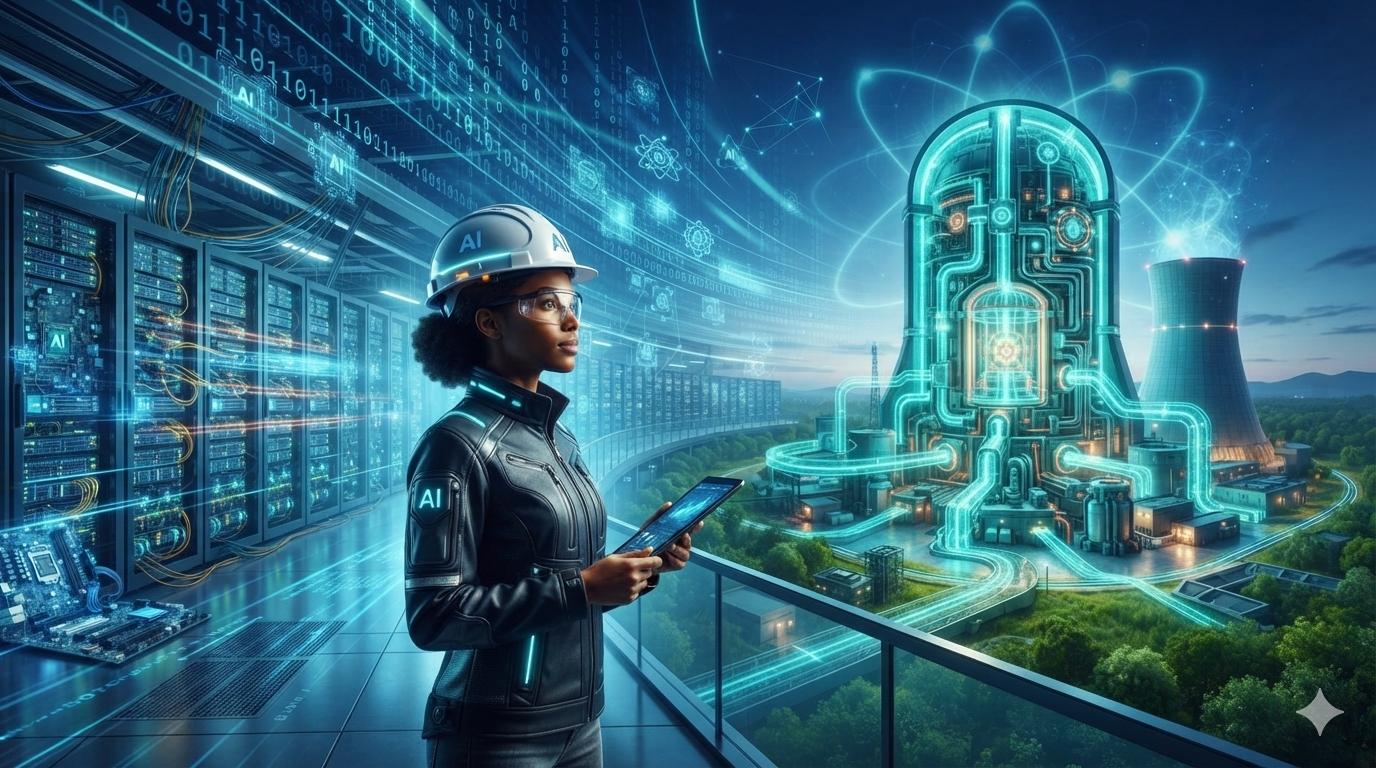
Nuclear power had been effectively stalled in the U.S. for 40 years before this. In 2026, every major AI hyperscaler — Microsoft, Meta, Amazon, and Google — signed at least one nuclear power deal, committing to more than a dozen agreements worth nearly 10 gigawatts of capacity combined, enough to power roughly 7 million homes. Collectively, the four companies have committed over $50 billion to nuclear projects specifically to power AI data centers. That's a genuinely unusual reversal for an industry that spent four decades struggling to get a single new reactor built.
The Deals, in Brief
Microsoft is putting $16 billion into restarting the Crane Clean Energy Center — the sister reactor to Three Mile Island — targeting 2027, dedicated specifically to its AI operations. Meta signed agreements in January 2026 with TerraPower, Oklo, and Vistra for up to 6.6 gigawatts, giving it immediate access to 2.1 gigawatts from existing reactors in Ohio and Pennsylvania, plus a separate 20-year agreement with Constellation Energy for 1.1 gigawatts from Illinois. Amazon struck a deal with Talen Energy for nearly 2 gigawatts through 2042 and led a $500 million funding round for X-energy, a small modular reactor developer. Google partnered with Kairos Power for site-specific reactors and separately contracted for 1,800 megawatts of new capacity.
Why Nuclear Specifically
The logic is straightforward: AI data centers need constant, high-density power around the clock, not the variable output solar and wind produce without storage. Nuclear is carbon-free and runs continuously, which matches a data center's actual load profile far better than intermittent renewables do on their own. It also requires a much smaller physical footprint than the solar or wind capacity needed to deliver equivalent output.
The Timeline Problem Nobody's Fully Solved
Here's the part that gets underplayed in most coverage of these deals: almost everything Meta, Amazon, and most of Google's bets are funding is small modular reactors — compact, factory-built designs, none of which have actually been completed commercially in the United States yet. The realistic deployment timeline runs from early demonstration units around 2027–2028, to initial commercial integration with data centers in the late 2020s, to broader commercial availability sometime in the mid-2030s.
That's a real mismatch worth naming honestly. AI-driven electricity demand is accelerating now. Nuclear policy researchers have pointed out directly that small modular reactors are unlikely to provide meaningful relief to data center power needs anytime soon — specifically during the years when AI-related demand is expected to grow fastest. The existing-reactor deals (Microsoft's Crane restart, Meta's Vistra agreement) deliver power sooner since they're not waiting on unproven new technology. The SMR-heavy bets are a longer-horizon wager, not a near-term fix.
The New Career Paths This Is Actually Creating
Whatever the near-term timeline looks like, the engineering and workforce implications are real and already forming:
Nuclear and SMR design engineering. Small modular reactors are a genuinely different design problem than traditional large-scale plants — smaller, modular, factory-manufactured — and the companies building them are actively hiring for exactly this specialization.
Licensing and regulatory expertise. Nuclear regulatory approval has historically been one of the slowest permitting processes in the energy sector. Engineers who understand both the technical design and the regulatory pathway are unusually valuable right now, precisely because that expertise has atrophied during four decades of minimal new nuclear construction.
Fuel supply chain roles. Many advanced reactor designs require different enrichment levels than conventional reactors, and the supply chain for that fuel is still being built out — a narrow but fast-growing specialization.
Grid interconnection for large new loads. This overlaps directly with the broader AI data center power story: connecting gigawatt-scale generation (nuclear or otherwise) to data centers at the pace the industry wants requires exactly the interconnection and grid-impact engineering skills that are already in short supply.
The Takeaway
The AI-driven nuclear renaissance is real in terms of dollars committed and deals signed, but it's not yet real in terms of electrons actually reaching a data center from a small modular reactor — that's still years out, and reasonable experts disagree about how much it'll matter in the near term. What's not in dispute is that it's creating engineering specializations — SMR design, nuclear licensing, advanced fuel supply chains — that barely had a job market three years ago. For students curious how these fast-moving technology shifts actually translate into day-to-day engineering work, Energy Mentors' resource videos break down exactly this kind of emerging trend, and Energy Mentors' mentorship program can connect you directly with professionals already working at this intersection of nuclear, AI infrastructure, and grid engineering.
FAQs
1. Why are tech companies suddenly investing in nuclear power?
AI data centers need constant, high-density electricity around the clock, and nuclear is the only carbon-free source that reliably matches that load profile without the storage and land footprint solar and wind would require at the same scale. Microsoft, Meta, Amazon, and Google have all signed nuclear deals in 2026 specifically to secure that kind of steady power for their AI operations.
2. Will small modular reactors actually power AI data centers soon?
Not immediately. Most of the newer deals are funding small modular reactor (SMR) designs that haven't been completed commercially in the U.S. yet. Realistic timelines put early demonstration units around 2027–2028, with broader commercial deployment likely not until the mid-2030s — meaning these bets are a longer-term play, not a near-term fix for today's AI power demand.
3. Are any of these nuclear deals delivering power right now?
The deals tied to existing, already-operating reactors are the fastest path to actual power — for example, Microsoft's restart of the Crane Clean Energy Center and Meta's agreements for capacity from existing plants in Ohio and Pennsylvania. Those are meaningfully different from the SMR-focused deals, which depend on unproven new technology still years from commercial operation.
4. What new energy engineering careers is this trend creating?
Several specializations are growing quickly: SMR design and manufacturing engineering, nuclear licensing and regulatory expertise (a skill set that atrophied during decades of minimal new reactor construction), advanced fuel supply chain roles, and grid interconnection engineering for connecting large new power sources to data centers.
5. Is nuclear power considered renewable energy?
No. Nuclear is low-carbon but not renewable — it relies on mined uranium, a finite resource, which is why most industry data (including the IEA's) tracks nuclear as its own separate category rather than grouping it with solar, wind, or hydro.

 English
 Arabic
 Spanish
 Portuguese
 Deutsch
 Turkish
 Dutch
Dutch
 Italiano
 Russian
 Romaian
 Portuguese (Brazil)
 Greek
Greek
