


Exploring Electronic Connection Technology, Assembly and Usability
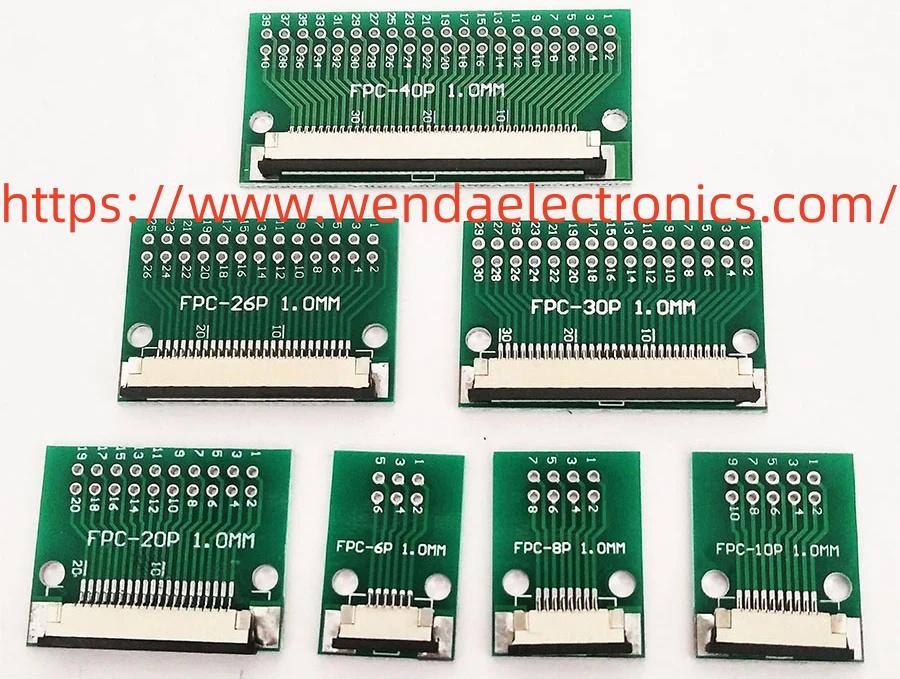
As electronic devices become more integrated, the connections between internal circuit boards play an increasingly important role in product development. When evaluating a BTB Connector, engineers and purchasing teams should consider contact materials, board alignment, electrical continuity, assembly requirements, and the physical layout of the complete device. Zhejiang Wenda Electronics Co., Ltd. develops precision electronic connectors for applications across consumer electronics, automotive systems, communication equipment, and other electronic products.
Material selection influences how a connector conducts electricity and withstands repeated use. Conductive metals such as copper alloys are commonly used for contact components because they combine electrical conductivity with useful mechanical characteristics. Surface finishes may help improve contact behavior or protect the underlying material, depending on the application. The choice should reflect the expected environment, connection frequency, and electrical requirements rather than appearance alone.
The insulating housing is another important part of connector construction. It separates conductive contacts and helps maintain their intended arrangement during installation and use. Engineering plastics are often selected for their insulating properties, formability, and suitability for compact structures. Buyers should also consider how the housing responds to heat, mechanical stress, and the conditions surrounding the assembled device. The contacts and housing need to function as a coordinated system.
Choosing a connector begins with understanding the product architecture. Some devices use stacked circuit boards to accommodate different functional modules, while others arrange boards in parallel or within a confined enclosure. The connection method must suit the board layout, available space, assembly direction, and intended relationship between electronic modules. Reviewing the complete design helps engineers avoid choosing a component that fits the circuit concept but creates difficulties during physical assembly.
Electrical requirements are equally important. Different applications place different demands on signal transmission, power delivery, and electrical isolation between neighboring contacts. Buyers should identify the type of circuits being connected and review the relevant requirements with their engineering team. Connector selection should also account for the surrounding components, routing paths, and potential sources of electrical interference within the device.
The technology behind board-to-board interconnection relies on carefully positioned conductive contacts that meet when the corresponding circuit boards are assembled. Contact geometry, spring behavior, alignment features, and housing structure influence how the connection is established and maintained. A suitable design can support a stable electrical interface while allowing manufacturers to arrange multiple functional modules within a shared enclosure.
Mechanical alignment deserves particular attention during product development. If the connecting boards are positioned incorrectly, the contacts may not engage as intended, or assembly may place unnecessary stress on the connector. Guide features, mounting arrangements, and the relationship between the board and housing can help control positioning. Engineers should assess how the connector behaves during the complete assembly process, not simply whether it can establish an initial electrical connection.
Manufacturing consistency is another consideration for electronic components. Contact forming, plating, housing molding, and final assembly all contribute to the finished product. Inspection can help identify issues involving contact condition, dimensional consistency, or assembly quality before connectors enter the next stage of production. Zhejiang Wenda Electronics Co., Ltd. describes its capabilities as including the design and development of precision electronic connectors, supporting projects that require coordination between product structure and manufacturing needs.
User experience in electronic equipment is often influenced by details that end users never see directly. A well-integrated connector can help simplify device assembly, support an orderly internal layout, and reduce unnecessary complexity when circuit boards are connected. For serviceable products, accessibility may also influence how easily a module can be inspected or replaced. These practical considerations can affect the work of production technicians, maintenance personnel, and product designers.
Durability should be assessed in relation to the intended use. Devices exposed to vibration, repeated handling, humidity, or temperature changes may require particular attention to contact stability and housing integrity. Buyers should communicate the actual operating environment so that the connector's construction can be evaluated appropriately. A component suitable for a stationary indoor device may not automatically be the right choice for mobile equipment or demanding industrial conditions.
The visual design of a connector is closely connected with its physical integration. Low-profile structures may help designers organize compact assemblies, while different mounting orientations can support alternative board layouts. A carefully arranged housing can make the connection easier to position during manufacturing and help maintain separation between adjacent components. Although the connector is usually hidden inside the finished product, its shape can influence the overall enclosure design and assembly workflow.
Customization may become useful when standard connector structures do not fit a product's architecture. Engineers may need a particular contact arrangement, mounting direction, housing configuration, or connection method. Early communication with the manufacturer can help clarify the intended application and identify design considerations before tooling and production decisions are finalized. Zhejiang Wenda Electronics Co., Ltd. provides electronic connector development and manufacturing services for different product categories, making technical coordination an important part of the sourcing process.
For more information about Zhejiang Wenda Electronics Co., Ltd., its board-to-board connectors, FPC connectors, wire-to-board products, and other electronic interconnection solutions, visit https://www.wendaelectronics.com.

 English
 Arabic
 French
 Spanish
 Portuguese
 Deutsch
 Dutch
Dutch
 Italiano
 Russian
 Romaian
 Portuguese (Brazil)
 Greek
Greek
