


RF Test Report for WPC: Requirements, Testing, and Documentation
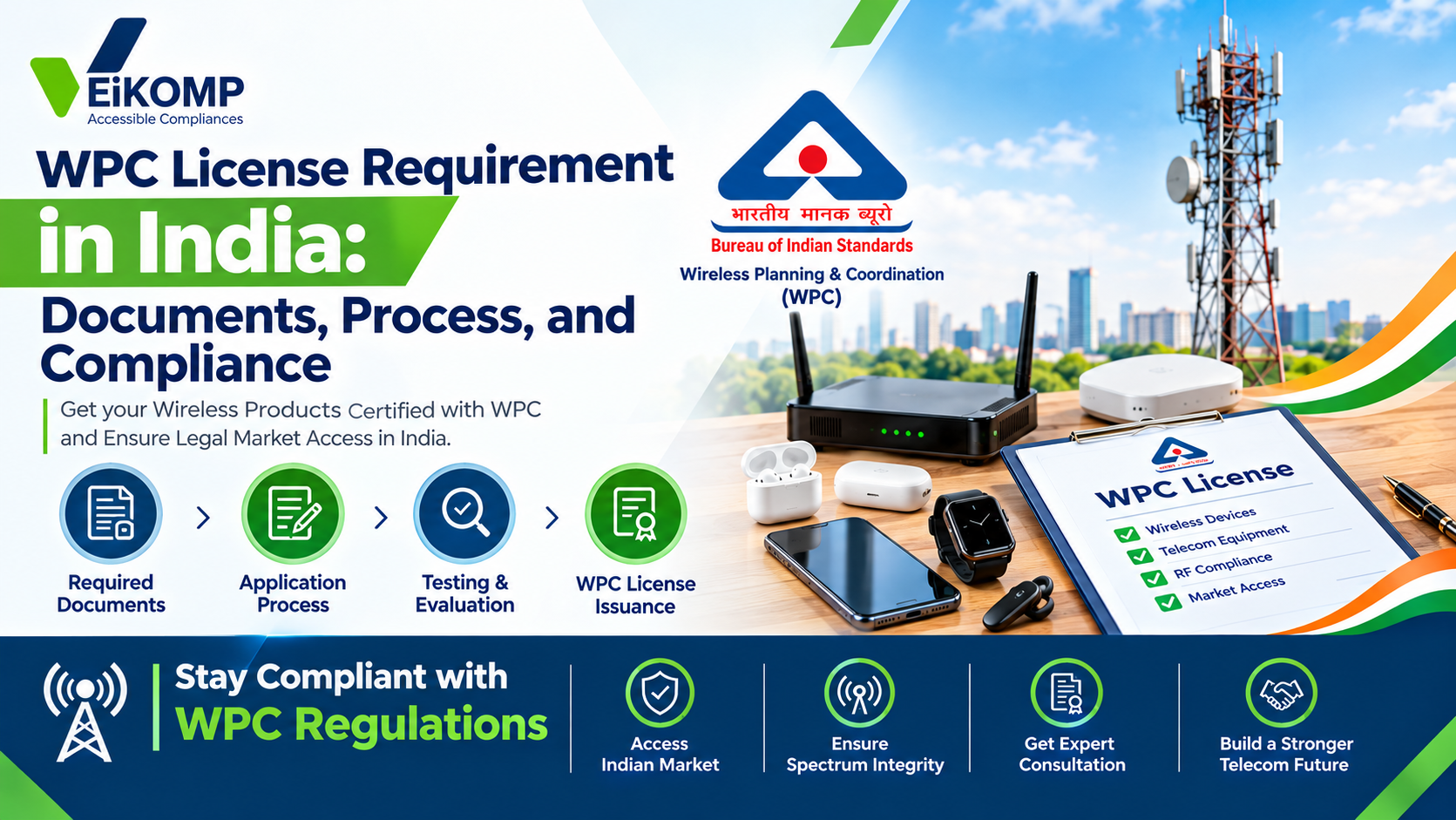
Wireless technology is widely used in products such as Bluetooth devices, Wi-Fi routers, smartwatches, wireless headphones, and other electronic equipment. Before introducing certain wireless products to the Indian market, manufacturers and importers must ensure that they comply with the applicable regulatory requirements. The Wireless Planning and Coordination (WPC) Wing, operating under the Department of Telecommunications (DoT), handles important aspects of wireless equipment regulation in India.
Understanding the WPC license requirement is essential for businesses involved in manufacturing, importing, or selling wireless-enabled products. Depending on the product's frequency band, technical specifications, and intended use, regulatory permission or an Equipment Type Approval (ETA) may be required. Proper documentation and testing help businesses avoid compliance delays and prepare their products for the Indian market.
What Is WPC Approval in India?
WPC approval is associated with compliance requirements for wireless and radiofrequency equipment in India. It helps ensure that applicable devices operate within permitted frequency bands and comply with relevant technical conditions.
WPC India approval is particularly important for products that use radiofrequency (RF) technology, including Bluetooth, Wi-Fi, and other short-range wireless communication systems. The specific approval pathway depends on the product category and the applicable regulations.
Businesses should identify the relevant frequency range and applicable requirements before importing or launching their products. This initial assessment helps determine whether ETA, a frequency authorization, or another regulatory permission is applicable.
Understanding the WPC License Requirement
The WPC license requirement varies according to the type of wireless equipment and the purpose for which it is used. Not every wireless product follows the same approval process, so businesses should not assume that one certificate covers all devices.
For many wireless products operating in delicensed frequency bands, an ETA may be the relevant approval route. Other equipment or spectrum uses may require different permissions under applicable rules.
Before beginning the application, manufacturers and importers should review:
-
The product's operating frequency and RF specifications.
-
The applicable frequency band and permitted operating conditions.
-
The manufacturer's details and product documentation.
-
The relevant test reports and technical information.
-
The applicable approval or authorization category.
A clear understanding of these requirements can reduce application errors and help businesses plan their compliance activities efficiently.
What Is WPC Certification India?
WPC Certification India refers broadly to the regulatory compliance process applicable to wireless products under the WPC framework. One important approval route is Equipment Type Approval, commonly known as ETA.
ETA is relevant to eligible wireless equipment, particularly devices operating in delicensed frequency bands, subject to the applicable requirements. It helps establish that the equipment meets the relevant technical conditions for its intended operation.
Products that may need assessment include wireless accessories, Bluetooth-enabled electronics, Wi-Fi devices, and certain smart electronic products. However, the exact requirement must be verified for each product rather than determined by product name alone.
Manufacturers, importers, and brand owners should confirm the applicable approval pathway before commercial distribution.
WPC ETA Product Approval Certificate: Why Is It Important?
A WPC ETA product approval certificate is relevant for eligible wireless devices that fall under the Equipment Type Approval framework. It supports compliance with applicable requirements for operating wireless equipment in India.
The ETA process generally involves identifying the product, reviewing its technical specifications, and submitting the required documents and supporting evidence through the applicable application procedure.
Commonly required information may include:
-
Product name, model number, and manufacturer details.
-
Technical specifications and operating frequency.
-
RF test report from an appropriate laboratory.
-
Supporting documents required for the application.
-
Applicant or importer details, where applicable.
The precise documentation depends on the product and the prevailing regulatory procedure. Businesses should verify current requirements before submitting an application to avoid unnecessary delays.
Role of a Radiofrequency Testing Lab
A Radiofrequency Testing Lab plays an important role in evaluating the wireless performance and technical characteristics of electronic products. RF testing helps determine whether a device's radiofrequency parameters comply with the relevant technical requirements.
Depending on the product and applicable standards, testing may examine operating frequency, transmitter power, occupied bandwidth, and other relevant RF characteristics.
Selecting an appropriate laboratory is important because the test report must be suitable for the intended approval process. Before testing, businesses should confirm the applicable test requirements, laboratory acceptability, and whether existing manufacturer test reports can be used.
Proper testing and documentation can help manufacturers and importers identify compliance issues before proceeding with regulatory applications.
Importance of an RF Test Report for WPC
An RF Test Report for WPC provides technical information about a wireless product's radiofrequency characteristics. It may be used as supporting evidence during an ETA application, depending on the applicable procedure.
The report should correspond to the relevant product model and accurately reflect its technical specifications. Differences in model numbers, frequency configurations, or product details may create difficulties during document review.
Businesses should check the following before submission:
-
Whether the report covers the relevant wireless functions.
-
Whether the tested model matches the application details.
-
Whether the report contains the required technical results.
-
Whether the issuing laboratory and report format meet the applicable requirements.
A complete and accurate report helps establish technical compliance and reduces the risk of application queries.
How WPC Certificate and RF Testing Consultants in India Can Help
Working with WPC certificate and RF testing consultants in India can simplify the compliance process for businesses unfamiliar with wireless product regulations. Consultants can help identify the likely approval route, coordinate testing, review documents, and assist with application preparation.
Their support may be particularly useful for importers handling multiple product models or manufacturers entering the Indian market for the first time.
A professional consultant may assist with:
-
Reviewing product specifications and identifying applicable requirements.
-
Coordinating RF testing with a suitable laboratory.
-
Checking test reports and technical documentation.
-
Preparing and submitting the required application.
-
Addressing regulatory queries and tracking application progress.
However, consultancy support does not guarantee approval. The outcome depends on product compliance, document accuracy, and the applicable regulatory process.
Steps to Obtain WPC Approval
Businesses can approach the process systematically by following these steps:
Step 1: Product assessment: Identify the wireless technology, operating frequencies, and product models.
Step 2: Requirement verification: Determine whether ETA or another regulatory authorization applies.
Step 3: RF testing: Arrange the required testing or verify whether existing reports are acceptable.
Step 4: Documentation: Prepare the technical documents and applicant information required for submission.
Step 5: Application submission: Submit the application through the applicable official process.
Step 6: Review and approval: Respond to any queries and obtain the relevant approval if all requirements are satisfied.
Requirements can change, so applicants should consult current official guidance before proceeding.
Conclusion
WPC compliance is an important consideration for businesses dealing with wireless electronic products in India. Understanding the applicable approval category, arranging suitable testing, and maintaining accurate documentation can make the process more efficient.
Whether a business needs ETA for a Bluetooth device, a Wi-Fi product, or another wireless electronic item, the first step is to verify the relevant regulatory requirements. Professional assistance can help coordinate testing and documentation, while careful preparation supports a smoother application process.

 English
 Arabic
 French
 Spanish
 Portuguese
 Deutsch
 Dutch
Dutch
 Italiano
 Russian
 Romaian
 Portuguese (Brazil)
 Greek
Greek
