


Complete Guide to BIS Registration for Electronics Manufacturers and Importers
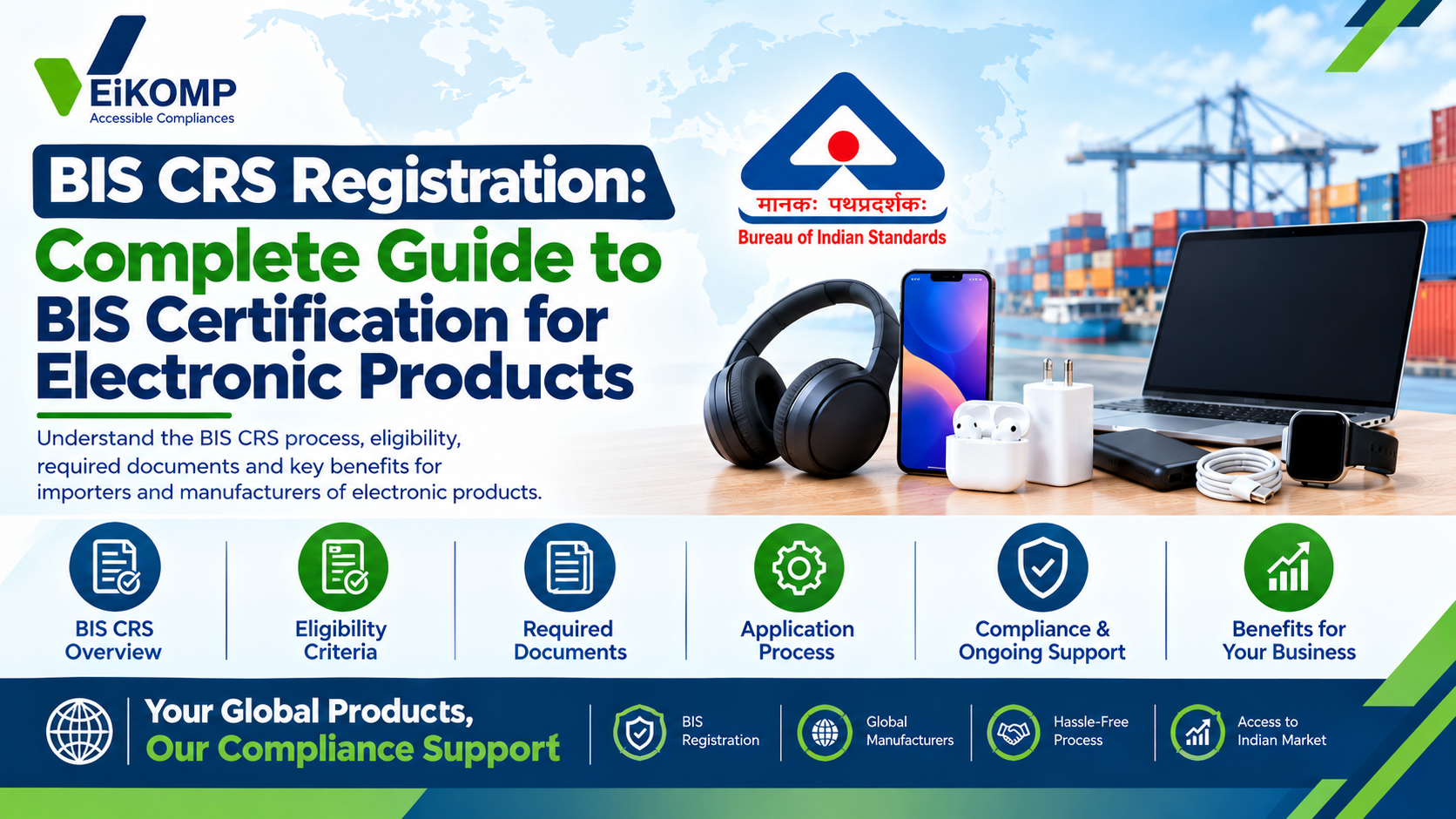
lectronic products play an essential role in everyday life, from mobile phones and laptops to LED lights, power adapters, and other consumer electronics. To ensure these products meet prescribed safety and quality standards, the Bureau of Indian Standards (BIS) has introduced the Compulsory Registration Scheme (CRS) for notified electronic and IT products.
BIS CRS Registration is an important compliance requirement for manufacturers whose products fall under the applicable Quality Control Orders (QCOs). It helps ensure that products meet the relevant Indian Standards before they are manufactured, imported, distributed, or sold in India, as applicable under the regulations.
Understanding the certification requirements, documentation, testing procedures, and application process can help manufacturers avoid delays and maintain regulatory compliance.
What Is BIS CRS?
BIS CRS stands for the Bureau of Indian Standards Compulsory Registration Scheme. It is a conformity assessment scheme under which specified electronic and IT products must be registered with BIS before being placed on the Indian market, subject to the applicable regulatory requirements.
Under this scheme, products are tested against their relevant Indian Standards in BIS-recognized laboratories. Once the product meets the prescribed requirements and the application is approved, BIS grants a registration number to the manufacturer.
The scheme covers various product categories, including certain information technology equipment, electronic devices, power supplies, and consumer electronics. However, the exact requirements depend on the product category and the applicable Indian Standard.
Why Is BIS Certification for Electronic Products Important?
BIS Certification for electronic products helps establish that a product complies with the applicable Indian safety standards. It is particularly important for manufacturers and importers planning to enter or expand their presence in the Indian market.
The major benefits include:
-
Regulatory compliance: Helps manufacturers meet applicable mandatory registration requirements.
-
Product safety: Ensures that covered products undergo testing against relevant safety standards.
-
Market access: Supports the lawful sale of regulated electronic products in India.
-
Consumer confidence: Demonstrates compliance with prescribed product requirements.
-
Business credibility: Strengthens trust among distributors, retailers, and customers.
Manufacturers should confirm whether their specific product is covered by the CRS or another BIS conformity assessment scheme before beginning the application process.
Which Products Require BIS CRS Registration?
BIS CRS applies to notified electronic and IT products listed under the relevant government orders. The product coverage may change as new categories are introduced or existing requirements are updated.
Common examples of products that may fall under the scheme include:
-
Mobile phones and certain electronic communication devices
-
Laptops, notebooks, and tablets
-
LED lamps and related lighting products
-
Power adapters and power supplies
-
Certain televisions and display equipment
-
Batteries and other notified electronic products
-
Selected information technology and consumer electronic equipment
Not every electronic product automatically requires CRS registration. Manufacturers must identify the correct product category, applicable Indian Standard, and current regulatory notification before applying.
BIS Registration for Electronics Products: Step-by-Step Process
The BIS Registration for Electronics Products process involves product identification, laboratory testing, document preparation, and submission of an application to BIS.
1. Identify the Applicable Indian Standard
The first step is to determine whether the product is covered by CRS and identify the relevant Indian Standard. The product's specifications, intended use, model, and technical characteristics may affect this determination.
2. Prepare the Required Documents
Manufacturers should arrange the necessary technical and business documents before submitting an application. Incomplete or inconsistent documentation can result in queries and processing delays.
3. Conduct Product Testing
The product must be tested in a laboratory recognized by BIS for the relevant standard and product category. The laboratory evaluates whether the product meets the applicable technical and safety requirements.
4. Submit the Online Application
After the required test report and supporting documents are available, the applicant submits the registration application through the applicable BIS online system. The details provided should match the product information and test documentation.
5. Application Review by BIS
BIS reviews the submitted application, supporting records, and test report. If clarification or additional information is required, the applicant must respond appropriately.
6. Grant of Registration
Once BIS is satisfied that the applicable requirements have been fulfilled, it grants registration. The manufacturer must then comply with the relevant marking, product identification, and ongoing regulatory requirements.
Documents Required for BIS CRS Registration
The documents required may vary depending on the product, manufacturer, and application circumstances. Commonly required documents include:
-
Manufacturer's business registration details
-
Factory address and contact information
-
Product specifications and technical details
-
Product photographs and identification information
-
Relevant laboratory test report
-
Authorization documents, where applicable
-
Trademark or brand-related documents, where required
-
Details of the authorized Indian representative for foreign manufacturers, when applicable
-
Undertakings and declarations prescribed by BIS
Applicants should verify the latest checklist and portal requirements before filing to ensure that all applicable documents are submitted correctly.
Role of a BIS CRS Consultant in India
A BIS CRS Consultant in India can assist manufacturers and businesses in understanding the applicable certification requirements and managing the registration procedure.
Consultancy support may include identifying the correct Indian Standard, coordinating product testing, reviewing documentation, preparing application details, responding to technical queries, and tracking application progress.
For foreign manufacturers, professional assistance can also be useful when coordinating with an authorized Indian representative and managing documentation for Indian regulatory compliance.
However, hiring a consultant does not guarantee approval. Registration depends on the product meeting the applicable requirements and BIS accepting the application.
Common Challenges During the Registration Process
Manufacturers may face delays because of incorrect product classification, incomplete documents, discrepancies between product labels and test reports, or selection of an unsuitable laboratory.
Other challenges can include incorrect model details, missing declarations, and failure to follow current marking requirements.
To reduce these risks, manufacturers should verify the applicable standard in advance, maintain consistent product information, use an appropriate BIS-recognized laboratory, and review the application carefully before submission.
Conclusion
BIS CRS is an important regulatory framework for specified electronic and IT products sold in India. Completing BIS CRS Registration correctly helps manufacturers meet applicable compliance obligations and prepare their products for the Indian market.
Whether you are an Indian manufacturer or an overseas business planning to introduce electronic products in India, understanding the relevant Indian Standard, testing requirements, documentation, and application procedure is essential.
Working with an experienced consultant may simplify the process, but manufacturers should always verify the latest BIS guidelines and applicable Quality Control Orders before proceeding.

 English
 Arabic
 Spanish
 Portuguese
 Deutsch
 Turkish
 Dutch
Dutch
 Italiano
 Russian
 Romaian
 Portuguese (Brazil)
 Greek
Greek
