


Canada Education System Explained: Levels, Grades & How It Works (2026)
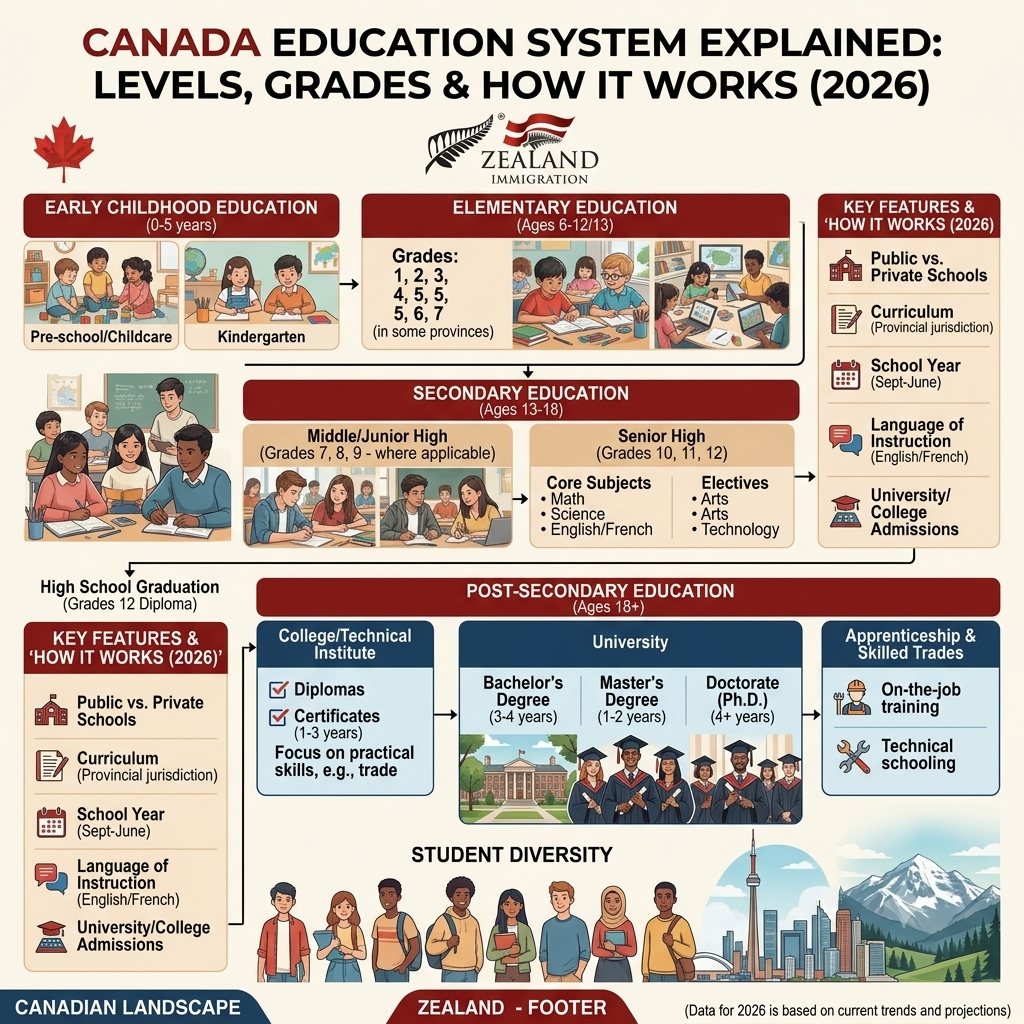
Education plays an important role in building a bright future. Canada is a popular choice for students because it offers quality education, different study options, and a welcoming learning environment. Children learn useful skills, explore new ideas, and prepare for future jobs. For Indian families planning their children's education or students hoping to study abroad, understanding the Canada Education System is a helpful first step.
How Does Education Work in Canada?
Canada has a well-developed education system that helps students learn step by step. Each province and territory manages its own education rules, so school ages, grade structures, and requirements can differ slightly. Most children attend public or private schools before moving to college or university. Students learn subjects such as English, mathematics, science, history, and arts. They also take part in sports and other activities that help them develop confidence, teamwork, and problem-solving skills.
1. Early Childhood Education
Early childhood education helps young children prepare for school. It usually includes preschool, kindergarten, and other early learning programmes. Children learn basic numbers, letters, colours, shapes, and simple words. They also learn how to share toys, follow instructions, and make friends.
Kindergarten is commonly available for children around four to five years old, depending on the province or territory. In some places, it is part of the public school system. These early years build a strong foundation for future learning.
2. Elementary School: Grades 1 to 6 or 8
Elementary school is where children begin learning more formal subjects. In many Canadian provinces, students start Grade 1 at around six years old. They usually study reading, writing, mathematics, science, social studies, and physical education.
The number of elementary grades depends on the province. Some school systems continue elementary education through Grade 6, while others include Grades 7 or 8. Teachers help students understand lessons through classroom activities, homework, group projects, and practical examples.
The main goal is to help children build basic knowledge, learn independently, and develop good study habits.
3. Secondary School: Grades 7 to 12
Secondary education prepares students for higher studies, training, or employment. Depending on the province, middle or junior high school may cover Grades 7 to 9, while high school often covers Grades 9 to 12. In Quebec, the structure is different.
During these years, students study subjects such as mathematics, languages, science, history, and technology. They may also choose optional subjects based on their interests and career goals.
Students generally complete high school around the age of 17 or 18. They must meet their province's graduation requirements to receive a secondary school diploma. This qualification can help them apply to colleges, universities, and vocational training programmes.
4. Colleges and Universities
After high school, students can choose a college, university, or vocational training programme. Each option offers different benefits.
Colleges: Colleges often focus on practical learning and career skills. Students can study business, hospitality, healthcare, information technology, engineering technology, and many other subjects. Programmes may include certificates, diplomas, and applied degrees.
Universities: Universities offer undergraduate and postgraduate education. Students can choose bachelor's degrees, master's degrees, and doctoral programmes. Popular fields include medicine, computer science, business, engineering, and education.
The length of a course depends on its level and subject. A bachelor's degree often takes three or four years, while postgraduate programmes can take longer. Students should check each institution's admission rules before applying.
5. Grading and Assessment System
Canadian schools use different assessment methods to measure student progress. These may include written tests, assignments, presentations, class participation, and projects. Grading scales vary between provinces and institutions.
Some schools use percentage marks, while others use letter grades or achievement levels. At colleges and universities, students must complete their courses and meet the required academic standards.
Regular feedback helps students understand what they are doing well and where they need improvement.
6. Cost of Education in Canada
Public elementary and secondary schools are generally funded by the government for eligible residents. International students may need to pay tuition fees, depending on the school board and their circumstances.
College and university fees vary according to the course, institution, and student's status. International students should also plan for accommodation, food, transport, books, health insurance, and other living expenses.
Families should prepare a budget before choosing a school or college. Checking official institution websites can help them understand the latest fees and payment requirements for 2026.
7. Studying in Canada as an International Student
International students should first choose a suitable institution and course. They need to check admission requirements, academic qualifications, English or French language requirements, tuition fees, and available funding options.
Students planning to move with family should research immigration requirements separately. A Spouse visa canada application may depend on the applicant's relationship, immigration status, and current eligibility rules. Not every student or spouse automatically qualifies for permission to work or stay in Canada.
Before making plans, families should check official Canadian immigration guidance and confirm the conditions that apply to their situation.
8. Important Documents and Study Requirements
Students applying to Canadian schools or universities may need academic transcripts, certificates, a valid passport, proof of language ability, and other documents requested by their institution. Requirements depend on the programme and level of study.
International students who need permission to study must also check whether they require a Canada student visa or a study permit. These are not the same thing: a study permit allows eligible foreign nationals to study in Canada, while an entry visa or electronic travel authorization may also be needed, depending on nationality and circumstances.
Conclusion
Canada offers several education pathways, from kindergarten to advanced university degrees. Understanding school grades, course options, costs, and admission rules helps families make better decisions. By researching carefully and checking official requirements, students can choose an education path that supports their future goals.

 Arabic
 French
 Spanish
 Portuguese
 Deutsch
 Turkish
 Dutch
Dutch
 Italiano
 Russian
 Romaian
 Portuguese (Brazil)
 Greek
Greek
