


How to Choose a Software Development Agency in Los Angeles
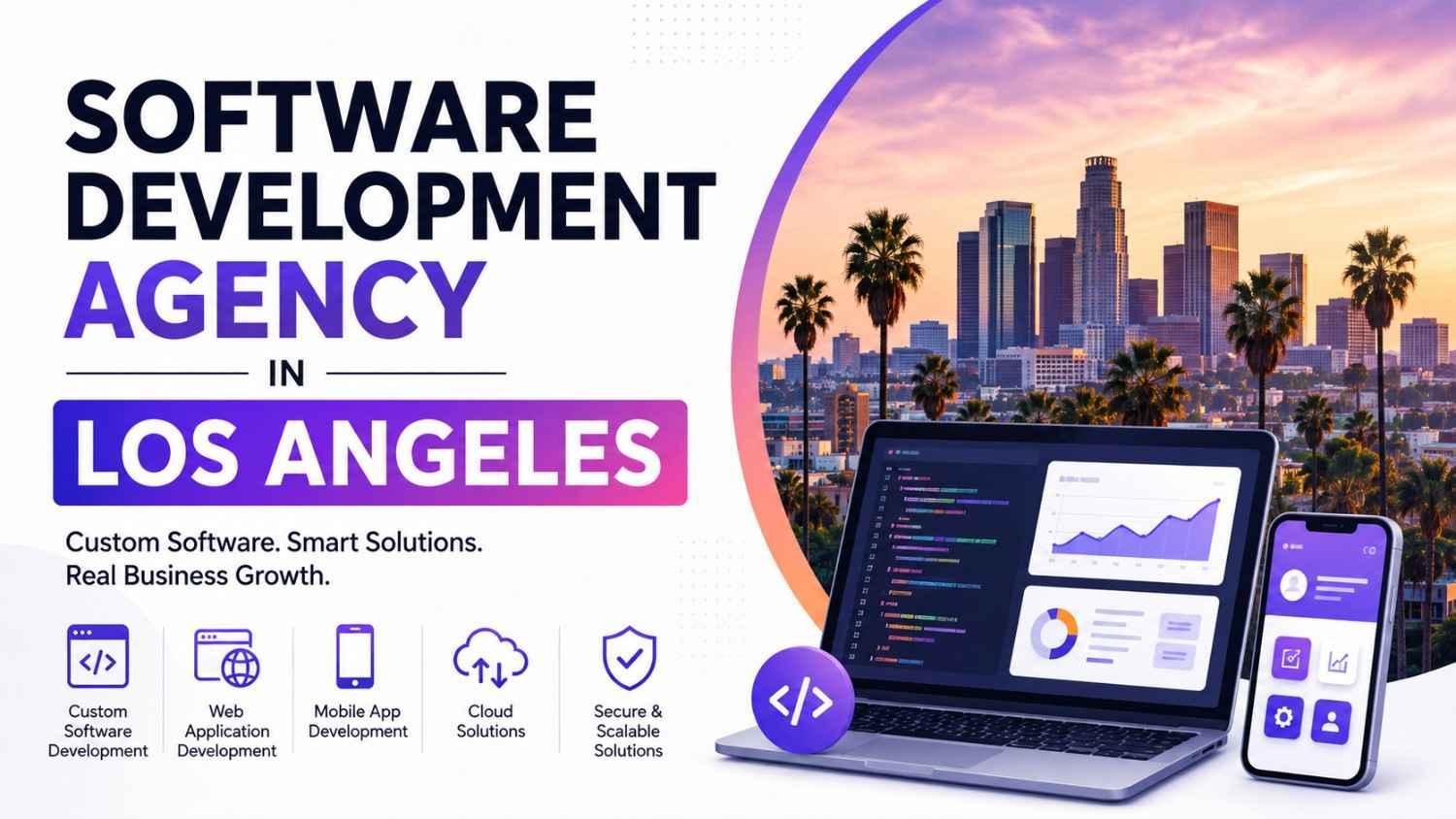
Choosing the right software development agency in Los Angeles can significantly affect how a business operates, serves customers, and prepares for growth. Whether you are launching a new digital product, improving an existing application, or replacing outdated business systems, your development partner will shape the project's cost, performance, and long-term reliability.
Los Angeles has a diverse business environment spanning entertainment, ecommerce, healthcare, logistics, professional services, and technology. Businesses across these sectors need software that solves practical problems rather than simply adds new features. Finding the right agency starts with understanding your goals, evaluating technical expertise, and identifying a team that can support your product beyond its initial launch.
Why Businesses in Los Angeles Need Custom Software Development
Many businesses begin with ready-made software because it is convenient and relatively quick to implement. However, as operations become more complex, standard tools may struggle to accommodate specific workflows, reporting requirements, or integrations.
Custom software development offers an alternative. Instead of changing established processes to fit a generic application, businesses can create systems around their actual requirements.
For example, an ecommerce company might need an inventory platform that connects its online store, warehouse, payment systems, and shipping providers. A professional services firm might benefit from a client portal that simplifies communication, document sharing, and project tracking.
A software development agency can help identify these requirements and turn them into a practical digital solution. The objective is not to build the largest possible application. It is to create software that addresses a genuine business need and remains useful as that need evolves.
What Services Does a Software Development Agency Offer?
Software development agencies provide different services depending on their technical capabilities and project experience. Understanding the main options helps businesses identify the expertise they actually need.
Custom Software Development
Custom software is designed around specific business processes, users, and operational goals. Examples include customer management systems, employee portals, workflow automation tools, reporting dashboards, and enterprise applications.
A well-planned solution can reduce repetitive work, improve access to information, and connect disconnected business systems. Before development begins, the agency should understand existing workflows and identify which problems the software needs to solve.
Web Application Development
Web applications allow customers, employees, and business partners to access functionality through a browser. They can support online bookings, account management, document processing, internal operations, and customer service.
A development team typically considers usability, performance, security, accessibility, and compatibility across devices. These factors help ensure the application works reliably for its intended audience.
Mobile App Development
Mobile applications can help businesses provide convenient access to services, deliver notifications, support field teams, or improve customer engagement.
Depending on the project, an agency may recommend native development for a particular operating system or cross-platform development to share more code between iOS and Android applications. The right approach depends on the required functionality, performance expectations, budget, and maintenance plans.
API Integration and Software Modernization
Businesses frequently rely on several applications that do not communicate effectively. API integration connects systems so information can move between platforms with less manual intervention.
Software modernization addresses another challenge: outdated applications that are expensive to maintain or difficult to extend. An agency can assess the existing architecture, improve selected components, or plan a broader rebuild when necessary.
Key Benefits of Hiring the Right Development Partner
Working with a capable software development agency can improve more than the technical quality of a product.
Better operational efficiency: Automating repetitive tasks can reduce manual data entry, simplify approvals, and free employees to focus on higher-value work.
Improved customer experience: Well-designed applications make it easier for customers to find information, complete transactions, and interact with a business.
Greater flexibility: Custom solutions can accommodate business-specific rules, integrations, and changing requirements that standard platforms may not support.
More informed decisions: Centralized information and meaningful reporting can help managers understand performance, identify bottlenecks, and prioritize improvements.
These benefits depend on selecting the right project scope and measuring meaningful outcomes. Custom software is not automatically the best choice for every business. Sometimes, configuring an existing platform is faster, more affordable, and easier to maintain.
How to Choose the Best Software Development Agency in Los Angeles
Selecting an agency requires more than comparing proposals or looking at attractive portfolio screenshots. A reliable partner should demonstrate how its approach matches your business objectives.
Review Relevant Experience and Previous Projects
Start by examining projects similar to yours in functionality, complexity, or industry. If you need an ecommerce integration, for example, look for evidence that the team has connected commerce platforms with inventory, payment, or fulfillment systems.
Ask what challenges the agency encountered, how the team addressed them, and what the finished product achieved. Detailed case studies and client references provide more useful evidence than broad claims about technical excellence.
Evaluate the Development Process
A structured process reduces misunderstandings and helps keep the project organized. A typical engagement includes discovery, requirements planning, interface design, development, testing, deployment, and ongoing improvement.
Ask how the agency handles changing requirements, progress reporting, code reviews, and project risks. You should understand who makes important decisions and how concerns will be resolved.
An agency that asks thoughtful questions before recommending a solution is often better positioned to understand your actual needs.
Assess Communication and Team Structure
Clear communication is essential throughout development. Find out who will manage the project, which developers will work on it, and how frequently you will receive updates.
For remote engagements, confirm overlapping working hours, meeting schedules, documentation practices, and response expectations. A company does not necessarily need a physical office in Los Angeles to serve a Los Angeles business effectively, but its working arrangements should be transparent.
Understand Security and Quality Assurance
Security should be considered from the beginning rather than added just before launch. Depending on the application, important measures may include access controls, secure authentication, encryption, dependency management, backups, and vulnerability testing.
Ask how the team tests software before release. Functional testing, integration testing, performance checks, and user acceptance testing can help uncover problems before they affect customers.
Also clarify who will address defects discovered after deployment.
Understanding Software Development Costs and Timelines
The cost of working with a software development agency in Los Angeles depends on several factors, including project complexity, the number of integrations, design requirements, team composition, and ongoing support needs.
A relatively straightforward application with a limited feature set generally requires less effort than a business platform with multiple user roles, complex permissions, external integrations, and advanced reporting.
Project timelines depend on similar considerations. A discovery phase can help establish priorities, identify technical constraints, and produce a more realistic estimate before substantial development begins.
When comparing proposals, examine what each price includes. Design, project management, testing, deployment, documentation, hosting, and maintenance may be priced separately. The lowest initial quote is not necessarily the least expensive option over the product's lifetime.
For better budget control, consider launching a minimum viable product (MVP). This approach prioritizes essential functionality, allowing a business to test its assumptions and gather user feedback before investing in additional features.
Why Ongoing Maintenance Matters After Launch
Launching software is an important milestone, but it is not the end of development. Business requirements change, operating systems receive updates, integrations evolve, and security vulnerabilities require attention.
A maintenance plan can include bug fixes, performance monitoring, dependency updates, security reviews, backups, and feature improvements. The precise requirements depend on the application's purpose and risk level.
Before signing an agreement, ask whether support is included, how urgent issues are handled, and who owns the source code and deployment infrastructure.
Clear ownership and documentation make it easier for your business to maintain control over its digital product, even if its development partner changes in the future.
Partner With My Virtual Teams for Software Development
Businesses looking for a software development partner should prioritize technical capability, transparent communication, and a clear understanding of their goals.
My Virtual Teams provides software development services for businesses seeking tailored digital solutions. Its approach can support organizations that need help developing applications, connecting business systems, or improving existing software. For companies in Los Angeles, a remote development engagement may be worth considering when the team's expertise, communication schedule, and delivery process align with project requirements.
Before choosing any provider, discuss your business challenges, expected deliverables, technical requirements, and long-term plans. Review relevant work and establish clear expectations around timelines, costs, security, and ongoing support.
The right partnership should give your business more than a finished application. It should provide a practical technical foundation that can adapt as your customers, operations, and priorities change.
Frequently Asked Questions
1. What does a software development agency in Los Angeles do?
A software development agency plans, designs, builds, tests, and maintains digital products, including custom applications, mobile apps, web platforms, integrations, and business management systems.
2. How much does custom software development cost in Los Angeles?
Costs depend on project complexity, features, integrations, design, and team expertise. Request a detailed estimate after defining requirements, deliverables, timelines, and maintenance expectations.
3. How long does it take to develop custom software?
Development may take several weeks for a small application or several months for a complex platform. Discovery, integrations, testing, and changing requirements influence delivery timelines.
4. How do I choose the right software development agency?
Review relevant projects, technical expertise, client references, communication practices, security measures, pricing transparency, and post-launch support before selecting a development partner.
5. Can I hire a remote software development agency for my Los Angeles business?
Yes. A remote agency can support Los Angeles businesses if it offers the right expertise, overlapping working hours, secure development practices, reliable communication, and clearly defined project responsibilities.

 English
 Arabic
 French
 Spanish
 Portuguese
 Deutsch
 Turkish
 Dutch
Dutch
 Italiano
 Russian
 Romaian
 Portuguese (Brazil)
