


Can Ceramic Injection Molded Parts Meet Diverse Industrial Requirements Efficiently?
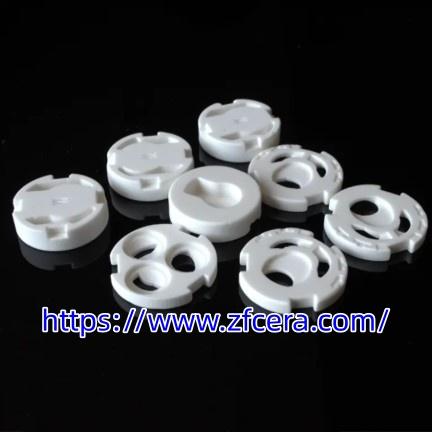
Zhufa Ceramic Injection Molded Parts produced by Zhufa are designed to meet precise industrial requirements. These components combine the benefits of ceramic materials with the flexibility of injection molding, allowing for intricate shapes and consistent performance. Manufacturers can utilize advanced techniques to maintain stability during processing and ensure uniformity in each batch.
The production process begins with careful preparation of ceramic powders mixed with binders to form a feedstock suitable for injection. Achieving the correct consistency is critical for smooth flow into molds, ensuring all features are accurately replicated. Once injected, the molded parts undergo debinding to remove organic materials, followed by high-temperature sintering. This sequence transforms the molded pieces into dense, hard ceramics with structural integrity and dimensional stability.
Material selection is essential in determining the final properties of injection molded ceramics. Common choices include alumina, zirconia, and silicon nitride, each offering unique combinations of hardness, thermal resistance, and chemical stability. Engineers select materials based on operational conditions, whether high wear, thermal cycling, or exposure to reactive chemicals is expected. By choosing the appropriate ceramic type, performance and longevity of components are optimized without requiring design compromises.
Attention to powder quality and particle size distribution further enhances the uniformity and strength of molded parts. Fine powders contribute to better surface finish and mechanical properties, while the binder system allows for complex geometries. The synergy of high-quality materials and controlled processing techniques ensures that each component meets industrial specifications and maintains consistent performance throughout its lifespan.
Advancements in automation and digital monitoring in the molding process improve repeatability and reduce defects. Injection parameters, mold temperatures, and sintering profiles are carefully monitored to maintain quality. This integration of technology allows manufacturers to produce parts suitable for a wide range of industries, from automotive components to precision engineering applications.
Zhufa's approach to ceramic injection molding emphasizes flexibility and reliability. Engineers can specify dimensions, tolerances, and materials to suit their system requirements. The resulting parts offer excellent wear resistance, thermal stability, and chemical durability. Clients looking for high-performance components can explore detailed product options and request technical guidance directly through the company website. For complete product information, visit https://www.zfcera.com/product/

 English
 Arabic
 French
 Spanish
 Portuguese
 Deutsch
 Turkish
 Italiano
 Russian
 Romaian
 Portuguese (Brazil)
 Greek
Greek
