


Material Selection for Utility Cleaning Tools
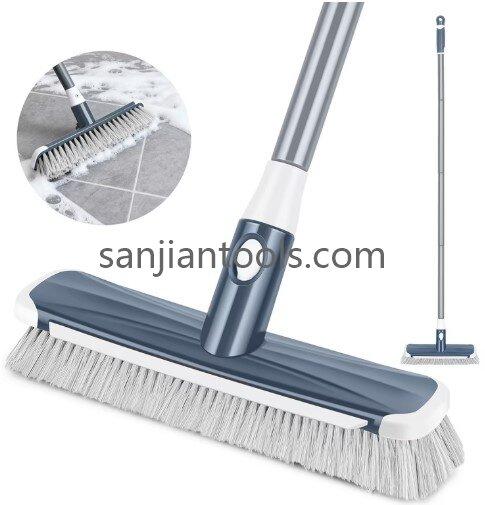
Everyday cleaning tasks vary widely, from removing dust in household spaces to maintaining equipment and work surfaces in commercial environments. A Commodity Brush is generally developed around practical functionality, accessible construction, and versatility across routine applications. Although the design may appear straightforward, its performance depends on several connected factors, including bristle material, filament density, brush-head structure, handle ergonomics, assembly quality, and manufacturing consistency.
Bristle selection is one of the first decisions in product development. Synthetic fibers are often considered because they can be manufactured with consistent dimensions and selected levels of flexibility. Natural materials may also be appropriate for particular applications. The right choice depends on the surface being cleaned, the type of debris involved, and whether the brush will be used in dry or wet conditions. Material selection should reflect the intended task rather than relying on a single specification for every market.
Bristle stiffness affects how the tool contacts a surface. Softer fibers can be useful for removing loose dust or cleaning surfaces that require lighter contact. Firmer fibers may be better suited to scrubbing tasks where more mechanical action is needed. Excessive stiffness, however, may be unsuitable for sensitive materials. Manufacturers can adjust filament dimensions, length, and material composition to create different brush models for distinct cleaning requirements.
Density and arrangement are equally important. A tightly arranged bristle pattern can provide numerous contact points, while a more open structure may allow debris to move through the brush during use. The appropriate configuration depends on whether the product is intended for sweeping, scrubbing, dust removal, or general maintenance. Consistent spacing helps maintain predictable brushing behavior and contributes to a uniform appearance across finished products.
The brush head must securely hold the bristles throughout repeated use. Depending on the design, manufacturers may use mechanical insertion, bonding, tufting, or other fastening methods. Each process requires suitable control to maintain attachment strength and consistent positioning. Loose fibers, irregular trimming, and uneven bristle distribution can affect usability, so these characteristics should be included in routine quality inspections.
Handle design influences how users control the brush during everyday tasks. Plastic handles offer flexibility in shape and can be produced with repeatable dimensions. A suitable grip should allow natural hand positioning and provide enough control for the intended cleaning movement. Surface texture, handle width, and overall length can be adjusted according to whether the product is intended for detailed work, general household cleaning, or broader maintenance tasks.
The connection between the handle and brush head also deserves attention. A stable joint helps transfer force from the user to the working surface and reduces unnecessary movement during use. Manufacturers should evaluate the connection strength alongside the quality of the molded components. Consistent assembly helps ensure that products maintain their intended structure throughout normal handling and repeated cleaning.
Different customer groups may have different expectations. Household users often prioritize convenient handling and versatility, while commercial cleaning teams may focus on durability, ease of maintenance, and repeatable performance. Workshop users may need utility brushes for cleaning components, equipment, or work areas. Product variations in head size, bristle stiffness, handle length, and material can help address these different needs without making product selection unnecessarily complicated.
Manufacturing consistency is particularly important for wholesalers. Large orders require similar dimensions, materials, and assembly quality across individual units. Inspection can cover bristle length, density, attachment strength, handle dimensions, surface finish, and overall product appearance. Standardized production procedures help reduce variation and support reliable supply planning. Clear product specifications also make it easier for distributors to compare models and communicate their intended uses.
Packaging and storage can influence the condition of brushes before they reach end users. Bristles may become flattened or deformed if products are compressed improperly during shipping. Suitable packaging helps preserve the brush shape and protects handles from scratches or other damage. Organized labeling can also help distributors separate different sizes and configurations within their inventory.
A well-designed Commodity Brush combines appropriate bristle characteristics with reliable assembly, practical handling, and consistent manufacturing. Buyers should evaluate these features according to the intended cleaning environment rather than treating all general-purpose brushes as interchangeable. For manufacturers, wholesalers, and distributors, attention to material selection, brush-head design, and quality control supports a more dependable product range. Further information about related hand tools and cleaning products is available at https://www.sanjiantools.com/product.

 English
 Arabic
 French
 Spanish
 Portuguese
 Turkish
 Dutch
Dutch
 Italiano
 Russian
 Romaian
 Portuguese (Brazil)
 Greek
Greek
