


The Strategic Value and Impact of the Modern ERP Software Market Solution
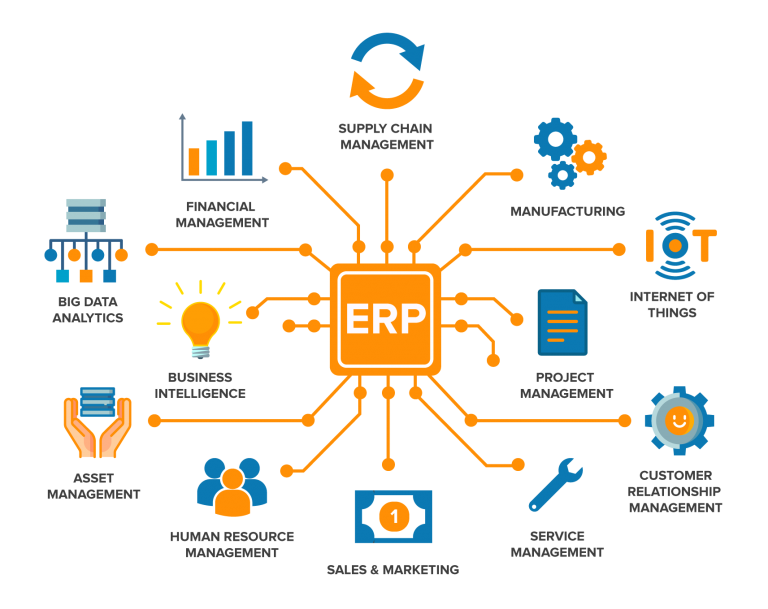
The modern ERP Software Market Solution provides a direct and comprehensive answer to one of the most fundamental and pervasive problems plaguing growing businesses: the chaos of disconnected data and siloed operations. As a company grows, it typically adopts a patchwork of different software applications to manage different functions—one for accounting, another for sales (CRM), a separate one for inventory, and perhaps a collection of spreadsheets for everything else. This creates "islands of information," where data is duplicated, often inconsistent, and difficult to share between departments. An ERP solution solves this problem by creating a single, centralized database and a unified suite of applications that all parts of the business use. This "single source of truth" ensures that when a sales representative, a warehouse manager, and an accountant all look at a customer's order, they are all seeing the exact same, up-to-date information. This eliminates manual data re-entry, reduces errors, and provides a holistic, 360-degree view of the entire business, which is the essential foundation for efficient operations and informed decision-making. The ERP solution fundamentally solves the problem of a company not having a coherent understanding of its own activities.
An ERP system is the essential solution to the problem of inefficient and error-prone manual business processes. In organizations without an ERP, many core workflows rely on a series of manual handoffs, emails, and paperwork. For example, the "order-to-cash" process might involve a salesperson manually entering an order, which is then emailed to the warehouse for fulfillment, which then sends paperwork to the finance department to generate an invoice. Each step is a potential point of delay, error, and inefficiency. An ERP solution solves this by automating and streamlining these end-to-end workflows. When an order is entered into the ERP, it can automatically check inventory levels, alert the warehouse to pick and ship the product, generate the shipping documents, and trigger the finance module to create and send the invoice, all without manual intervention. This automation drastically reduces processing times, minimizes the risk of human error, lowers operational costs, and improves customer satisfaction by enabling faster order fulfillment. By enforcing standardized, best-practice workflows, the ERP solution transforms chaotic, manual processes into efficient, automated, and predictable business operations, freeing up employees to focus on more strategic tasks.
Furthermore, an ERP software solution is the key to solving the critical business problem of a lack of real-time visibility and an inability to make data-driven decisions. Leaders of businesses that rely on disparate systems often have to wait for days or weeks for their teams to manually compile data from different sources into reports. By the time they get the information, it is already outdated and of limited use for making timely decisions. An ERP solution solves this by providing real-time business intelligence and analytics. Because all the company's operational and financial data resides in a single, unified database, managers and executives can access up-to-the-minute dashboards and reports that provide a clear view of key performance indicators (KPIs). A CEO can instantly see daily sales figures, a CFO can monitor cash flow in real-time, and a supply chain manager can track inventory levels across all locations. This immediate access to accurate, consolidated data allows leaders to spot trends, identify problems, and seize opportunities much more quickly. The ERP system provides the foundational data infrastructure that enables a business to transition from operating on guesswork and intuition to making decisions based on hard data and real-time facts.
Finally, in a globalized and highly regulated world, an ERP solution addresses the dual problems of managing multinational complexity and ensuring regulatory compliance. For a company operating in multiple countries, managing different currencies, tax laws, languages, and local accounting standards can be a logistical nightmare. A modern, global ERP solution is designed to handle this complexity. It provides multi-currency and multi-language capabilities and can be configured to comply with the specific financial reporting standards of different countries, all while providing a consolidated, global view of the entire enterprise. This solves the problem of managing a complex international operation. Similarly, ERP systems are a critical tool for solving the problem of regulatory compliance. With their standardized processes, detailed audit trails for every transaction, and robust security and access controls, they provide the framework needed to comply with regulations like the Sarbanes-Oxley Act (SOX) for financial reporting and GDPR for data privacy. The ERP provides the structure and traceability that auditors and regulators demand, helping businesses to mitigate legal and financial risk in an increasingly complex compliance environment.
Access Customized Regional And Country Reports:

 English
 Arabic
 French
 Spanish
 Portuguese
 Deutsch
 Turkish
 Dutch
Dutch
 Italiano
 Russian
 Romaian
 Portuguese (Brazil)
