


Log Trailer with Grapple for Sale, Firewood Conveyor
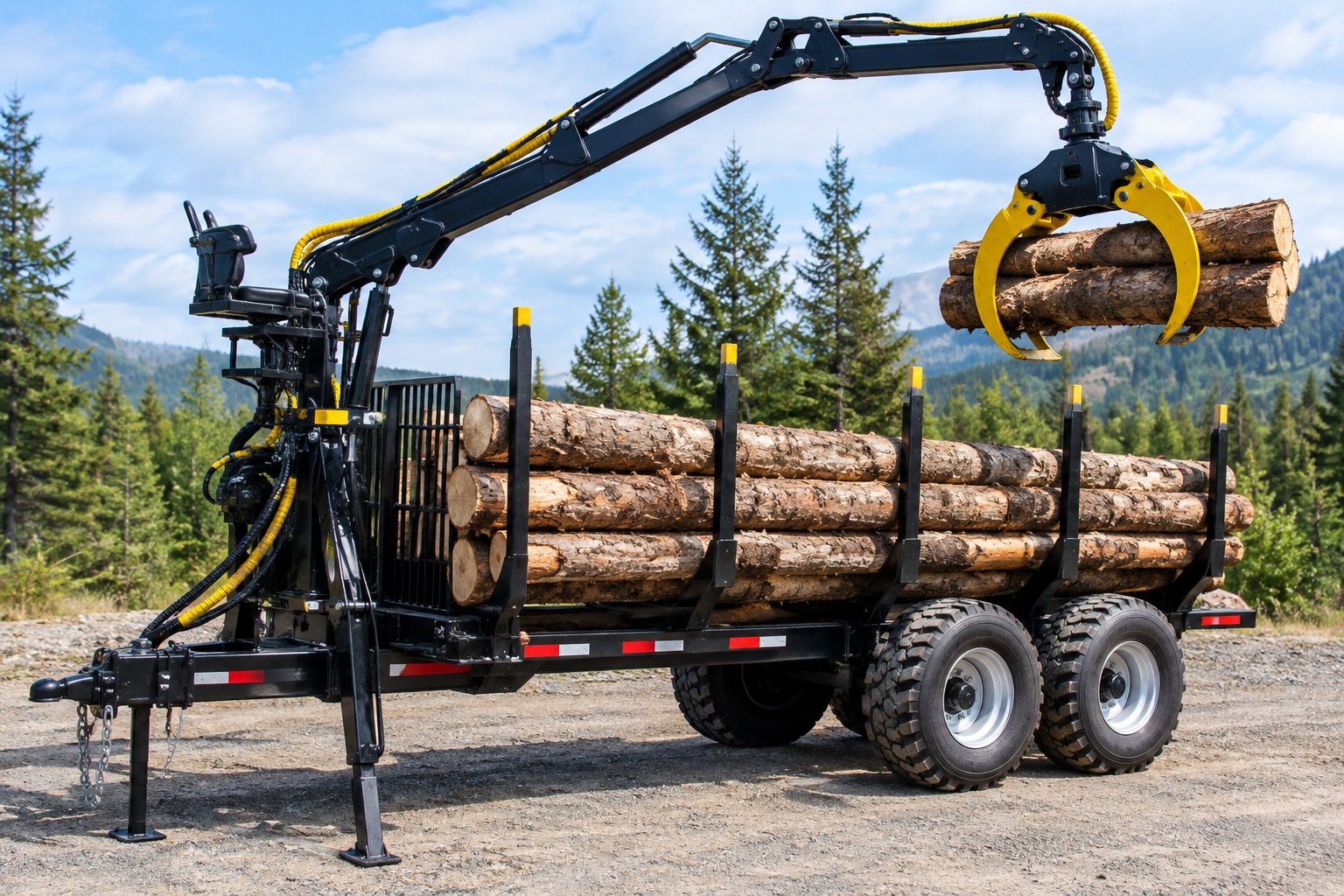
Choosing the right log trailer with grapple for sale and pairing it with a dependable firewood conveyor can transform how efficiently timber moves from the landing area to the processing zone. For operators handling heavy logs, repeated manual lifting quickly becomes a bottleneck. A well-planned setup reduces unnecessary handling, improves workflow, and helps keep each stage of wood preparation moving at a steady pace. The goal is not simply to add equipment, but to create a safer and more organized material-handling process from loading through final stacking.
Why Integrated Log Handling Matters
Wood operations often lose time between individual tasks. Logs may be cut in one area, moved for loading, and transferred again before processing. A trailer equipped for grapple loading can reduce those repeated steps. Instead of relying on several workers to reposition heavy material, the loading system allows logs to be lifted, placed, and transported more directly. When that workflow continues into a conveyor-assisted processing area, movement becomes more consistent. Split or cut wood can travel away from the machine automatically, leaving the operator free to focus on production rather than clearing piles by hand.
Key Features to Evaluate Before Choosing Equipment
Trailer Stability and Load Control
A log trailer should feel stable when loaded and when the grapple is working near the edge of its reach. Frame strength, axle placement, support legs, and load distribution all affect how confidently the operator can move timber. Good balance is especially important on uneven ground, where poor weight distribution can make loading slower and less predictable.
Grapple Reach and Handling Precision
Reach alone is not enough. The grapple should offer controlled movement so logs can be positioned accurately rather than dropped roughly into place. Smooth rotation and predictable hydraulic response help the operator build a balanced load and reduce repeated adjustments.
Conveyor Length and Working Height
The conveyor should match the layout of the processing area. A unit that is too short may create a pile directly beside the machine, while excessive length can take up valuable space. Adjustable discharge height is useful when loading trucks, filling storage bays, or building larger stacks. The best layout keeps finished wood moving away from the main work zone without interrupting the operator.
Building a More Efficient Work Sequence
Efficiency improves when each piece of equipment supports the next step. Logs can be loaded onto the trailer at the collection site, transported to the processing area, and then placed near the cutting or splitting station. From there, the conveyor can carry processed wood toward storage or another transport point. Fewer manual transfers mean less fatigue and a more predictable production rhythm. A cleaner workflow also helps with site organization. Keeping raw logs, active processing, and finished wood in separate zones reduces congestion and makes cleanup easier at the end of the day.
Safety and Maintenance Considerations
Routine inspection is essential for both trailer and conveyor systems. Hydraulic hoses, grapple pins, tires, bearings, chains, belts, guards, and structural connections should be checked before demanding work. Small signs of wear are easier to correct early than after a failure interrupts production. Operators should also keep clear of suspended logs and moving conveyor components at all times. Regular cleaning helps maintain reliability. Bark, chips, and debris can collect around rollers, moving joints, and hydraulic components. Removing buildup and following a consistent lubrication schedule supports smoother operation and helps extend equipment life.
Conclusion
For operators planning a more productive timber-handling setup, a log trailer with grapple for sale can simplify loading and transport, while a properly sized firewood conveyor can keep processed material moving without constant manual clearing. The strongest setup is one that matches the terrain, workload, available space, and production goals. By focusing on stability, handling control, layout, safety, and routine maintenance, operators can create a smoother workflow that saves effort and supports consistent output throughout the season.

 English
 Arabic
 French
 Spanish
 Portuguese
 Deutsch
 Turkish
 Dutch
 Italiano
 Russian
 Romaian
 Greek
