


Can A Stretch Spring Be Customized For A Specific Load
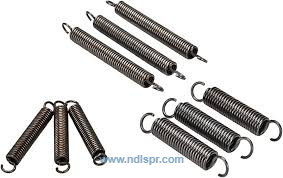
Can A Stretch Spring Be Customized For A Specific Load
An engineer reaches the point where a stock spring will not do. The device needs a pull that starts at one force, rises at a set rate, and stops at a defined extension. Nothing on the shelf matches that curve. The question that follows is practical and common. Can a Stretch Spring be customized for a specific load, or must the design bend around whatever the catalog offers? The answer shapes the product, the tooling cost, and the launch schedule.
What Sets The Load Of A Spring
Load in an extension spring comes from several linked factors. Wire diameter sets the base force, since thicker wire carries a stiffer pull. Coil diameter changes how that force builds, because a wider coil softens the rate. Active coils count toward the travel, and fewer active coils raise the rate. Free length and initial tension define the force needed just to open the coils. Material grade adds its own character, since a high-carbon steel and a stainless alloy behave in different ways under the same geometry. Change one factor and the load curve moves.
Why Custom Loads Show Up
Custom loads appear when a product has a fixed space and a fixed job. A medical device may need a gentle pull across a short stroke. An automotive latch may need a firm snap at the end of travel. A household appliance may need even tension across a long cycle. In each case, the spring must fit the housing and deliver the force the mechanism expects. A stock part rarely matches both the space and the force at once.
How Engineers Set The Target
The work starts with numbers, not guesses. The team defines the initial tension, the load at a stated extension, and the maximum travel the spring will see. They note the space around the spring, including the hook clearance and the rod it sits on. They name the cycle count the part must survive. They list the environment, such as moisture, heat, or chemicals. With those inputs, a spring maker can propose a wire size, a coil count, and a hook type that hit the target.
What A Maker Changes To Hit The Load
A skilled spring factory adjusts several levers. It selects wire diameter and material grade to match the force band. It sets the coil count and pitch to control the rate. It tunes initial tension during coiling, which shapes the first part of the curve. It chooses hook or loop ends that fit the assembly without adding stress points. It applies heat treatment to lock in the properties, then tests samples against the target. Each change is measured, not assumed.
Why Testing Matters
A spring that looks right on a drawing can still miss the load in practice. Testing confirms the force at the stated extension, the rate across the travel, and the fatigue life under repeated cycles. A maker with its own lab can run these checks and adjust before bulk production. This step protects the buyer from a shipment that passes on paper but fails in the field.
This is where a supplier such as ndlspr enters the picture. Ningdeli Spring, or Zhejiang Ningdeli Spring, runs production bases in Zhejiang and Dongguan and holds IATF 16949:2016 certification, which reflects a quality system built for demanding industries. The company produces stretch springs for healthcare, aerospace, automotive, electronics, and new energy work, and it supports wire diameters across a wide band with imported high-precision machines and automated inspection. A buyer who needs a custom load can send a drawing or a sample and receive a proposal that matches the force, the space, and the cycle count.
You can review extension spring options and send a custom request at https://www.ndlspr.com/ before a design moves to tooling.
Questions To Bring To The Table
What load is needed at the working extension? What is the maximum travel? How many cycles must the part survive? What space is free around the spring, including the ends? What temperature and moisture will the part face? Is there a sample the maker can study? Clear answers to these questions cut the back-and-forth and shorten the path from drawing to working part.
A custom stretch spring gives an engineer control over the force curve, the fit, and the life of the part. A stock spring forces the design to adapt. For products that depend on exact motion, the custom route pays for itself.
So before you settle for the closest catalog item, ask one question: can this spring be built to the load your design actually needs?

 Arabic
 French
 Spanish
 Portuguese
 Deutsch
 Turkish
 Dutch
Dutch
 Italiano
 Russian
 Romaian
 Portuguese (Brazil)
 Greek
Greek
