


Custom Printed Tissue Paper and How It Improves Packaging
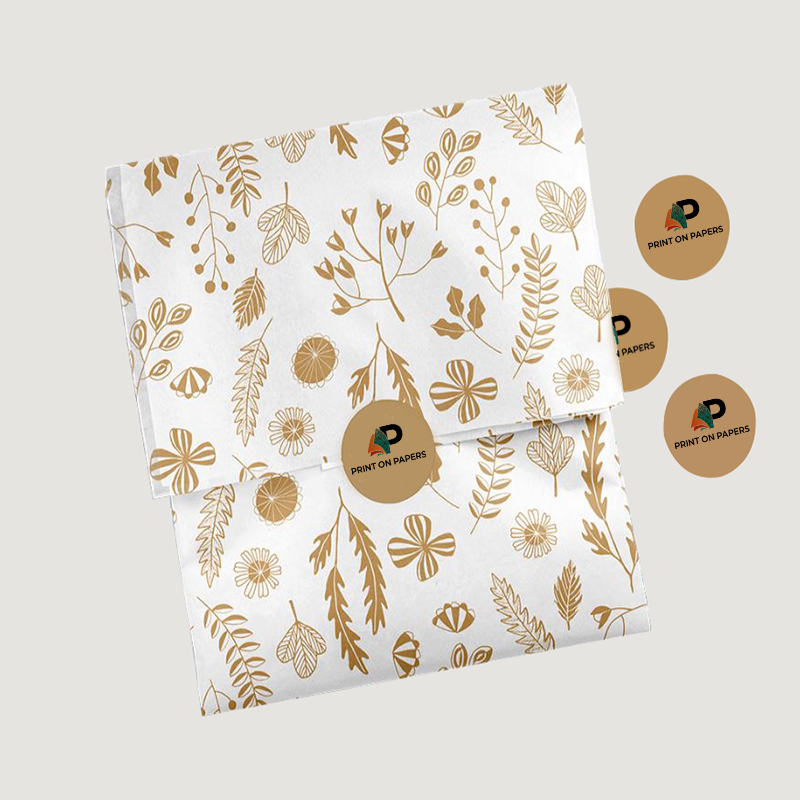
Custom printed tissue paper adds a branded layer inside the box, protects products from scuffs, and makes opening your package feel like a small event. It’s light, affordable, and one of the easiest upgrades to your packaging. If you want to see what’s available, start with the custom tissue paper page at Print On Papers.
What Is Custom Printed Tissue Paper?
Custom printed tissue paper is thin, soft wrapping paper printed with your logo, pattern, or brand colors. You use it to wrap products, line boxes, and fill empty space inside a package. Customers see it the moment they open the box, so it works as quiet advertising.
You’ll also hear it called branded tissue, logo tissue wrap, or gift tissue. They all describe the same idea: plain tissue turned into a piece of your brand.
How Does Tissue Paper Improve Packaging?
Tissue paper improves packaging by protecting products, filling gaps, and making the unboxing experience feel considered. It does a few practical jobs at once.
- Protects surfaces. A layer of tissue keeps items from scratching, rubbing, or picking up fingerprints.
- Fills empty space. It stops lightweight products from sliding around in the box.
- Hides the product. Wrapped items feel like a gift, and the surprise adds to the moment.
- Carries your brand. A repeating logo shows up on every unwrap, photo, and video.
Because tissue weighs almost nothing, it adds a nice finish without raising shipping costs.
Does It Really Help With Branding?
It does. Boutiques, bakeries, jewelry sellers, and online shops use branded tissue because customers remember it and often share it. A simple logo pattern on a clean color looks polished and costs little compared to a custom box.
Which Businesses Use Tissue Paper the Most?
Tissue paper suits any business that ships or hands over products in a box or bag.
| Business type | How they use it |
|---|---|
| Clothing and apparel shops | Wrap folded garments, line shopping bags |
| Jewelry and accessories | Cushion small items, add a gift feel |
| Bakeries and gift shops | Line boxes and wrap treats |
| E-commerce brands | Add a branded layer inside mailers |
| Cosmetics and candles | Protect glass and packaging from scuffs |
| Corporate gifting | Wrap client gifts and welcome kits |
What Should You Check Before Ordering?
Before you order, check the paper weight, sheet size, print coverage, and paper type. These choices decide how the tissue looks and behaves.
- Paper weight (GSM). Lightweight tissue is thin and airy. Heavier tissue feels sturdier and more opaque. Lighter weight suits clothing and gifts, while heavier works for premium products.
- Sheet size. Measure your product and your box. The sheet should wrap the item with a little overlap and still fit your box.
- Print layout. Choose between an all-over repeating pattern, a scattered small logo, or a single logo placement.
- Colors. Ask whether Pantone matching is available if your brand colors must stay exact.
- Paper type. Acid-free tissue is the safer choice for jewelry, garments, and keepsakes that need gentle protection.
- Minimum order. Confirm the minimum quantity before you design, so the numbers fit your budget.
Should You Choose a Pattern or a Single Logo?
An all-over pattern gives a richer, more designed look and hides the cut edges of the sheet. A small, spaced-out logo looks clean and modern and uses less ink. If you aren’t sure, ask for a proof of both and compare.
How Does Tissue Paper Compare to Other Fillers?
Different fillers solve different problems. Here’s how tissue sits next to the common options.
| Material | Look | Protection | Best for |
|---|---|---|---|
| Printed tissue paper | Branded, soft | Light surface protection | Apparel, gifts, retail |
| Crinkle paper | Textured, decorative | Light cushioning | Gift boxes, hampers |
| Kraft paper | Natural, sturdy | Moderate void fill | Shipping, rustic brands |
| Bubble wrap | Plain | Strong cushioning | Fragile items |
Tissue works best as a presentation layer. For breakable items, pair it with stronger cushioning underneath.
How Do You Get the Design Right?
Keep your artwork simple, and always approve a proof. A few quick tips help:
- Use a vector logo file so edges stay sharp
- Leave space around the logo so it doesn’t get cut off at the sheet edge
- Pick colors with enough contrast against the paper
- Check spelling and logo direction on the proof before you sign off
Is Tissue Paper Eco-Friendly?
Tissue is paper, so it’s often recyclable, and many options use recycled or responsibly sourced fiber. If you want to print “recyclable” or “eco-friendly” on your packaging, keep the wording accurate. The FTC’s Green Guides set the rules for environmental claims, so match your wording to what your supplier confirms about the specific paper and inks.
How Much Does Custom Printed Tissue Paper Cost?
Cost depends on sheet size, paper weight, number of print colors, and quantity. Larger orders usually bring the price per sheet down. Ask for a full quote so you can see every cost, including printing setup and shipping, before you approve the order.
Frequently Asked Questions
How do I order custom printed tissue paper?
Choose your sheet size, paper weight, and print layout, then send your logo and quantity to the supplier for a quote. You’ll receive a proof to approve before printing starts.
How much does custom tissue paper cost?
It depends on size, weight, colors, and quantity. Bigger orders generally lower the cost per sheet, so ask for a quote at a few different quantities.
What is the minimum order for custom tissue paper?
It varies by supplier, so confirm it before you design. Check the product page or ask when you request a quote.
What size tissue paper should I choose?
Pick a sheet large enough to wrap your product with a small overlap and still fit inside your box. Measure your largest item first.
Can I print my logo in my exact brand colors?
Many suppliers offer Pantone matching for exact colors. Ask about it when you request a quote, and check the color on your proof.
Is printed tissue paper safe for jewelry and clothing?
Acid-free tissue is the usual choice for items that need gentle protection. Ask your supplier which tissue type is best for your product.
Conclusion
Custom printed tissue paper is a simple way to protect products, fill space, and put your brand in front of customers right at the moment they open the box. Choose a weight and size that fit your products, keep the design clean, and review your proof carefully before printing.

 English
 Arabic
 French
 Spanish
 Portuguese
 Deutsch
 Turkish
 Italiano
 Russian
 Romaian
 Portuguese (Brazil)
 Greek
Greek
