


Mechanical Drive Solutions for Production Lines
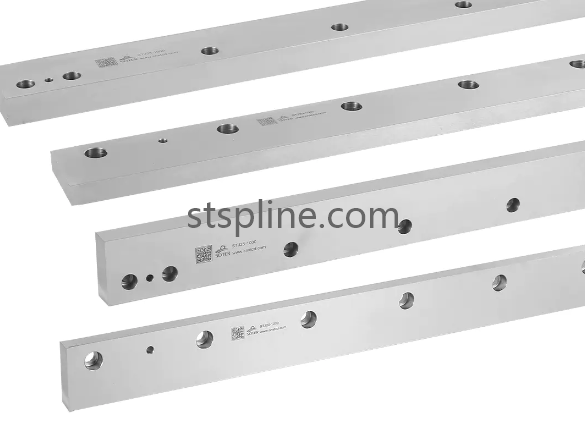
Industrial machinery depends on reliable transmission components to convert motor power into controlled movement. A properly selected Industrial Rack And Pinion assembly supports linear positioning in equipment that requires repeatable travel, stable engagement, and practical integration with mechanical and electrical systems. The rack provides a straight toothed track, while the pinion rotates to move along the rack and generate linear displacement. This straightforward operating principle makes rack drives useful in CNC machine tools, laser cutting systems, robotic handling equipment, automated assembly lines, and material transport machinery.
Material selection affects the load capacity, wear behavior, and service life of a rack drive. Carbon steel is widely used for many industrial transmission applications because it offers a useful balance of strength, machinability, and cost. Alloy steel may be considered where operating loads, repeated motion, or demanding service conditions require additional material performance. The choice should account for movement frequency, transmission force, operating speed, lubrication, and environmental exposure. Surface treatment or heat treatment may also be appropriate, depending on the component design and the requirements of the application.
Tooth accuracy is central to smooth mechanical engagement. The rack and pinion must share compatible tooth geometry, including module, pressure angle, and other relevant dimensions. Manufacturing errors can lead to uneven contact, increased backlash, noise, or premature wear. For positioning equipment, these problems may also affect repeatability and motion control. Designers therefore need to consider the complete drive system, including the motor, gearbox, coupling, mounting structure, linear guide, and control method. Coordinating these elements helps the transmission operate as intended under actual working conditions.
Production methods influence the dimensional consistency of industrial gear components. Depending on the required accuracy and design, manufacturing may involve blank preparation, tooth cutting, milling, heat treatment, grinding, deburring, and final inspection. Each operation must be planned around the selected material and component geometry. Rack straightness, pitch consistency, tooth profile, surface finish, and mounting dimensions can all affect installation and running performance. For demanding applications, suitable measurement equipment and documented inspection procedures help verify that finished components meet the agreed drawing requirements.
An Industrial Rack And Pinion system can be configured for different travel lengths, machine layouts, and transmission requirements. Compact equipment may require short rack sections and limited installation space, whereas gantry systems and large processing machines can use multiple connected sections to achieve extended travel. When racks are installed end to end, connection accuracy and alignment deserve particular attention. Misaligned joints can interrupt tooth engagement and produce changes in running resistance. Proper support, fastening, and adjustment help maintain consistent motion along the entire working path.
Different industries place different priorities on linear transmission. CNC machining equipment requires coordinated axis movement and predictable positioning. Laser cutting machines need stable travel to follow programmed paths. Industrial robots and gantry manipulators use rack drives for positioning tools, workpieces, or handling units. Packaging and logistics systems may emphasize continuous operation, straightforward maintenance, and compatibility with automated controls. Understanding the duty cycle, required speed, load characteristics, and environmental conditions helps engineers select appropriate rack dimensions and supporting components.
Installation quality has a direct effect on transmission performance. The machine frame and mounting surfaces should provide stable support, while the rack must be aligned with the intended direction of movement. Pinion engagement should be checked across the full travel range to identify local tight spots or excessive clearance. Lubrication reduces friction between contacting teeth, while protective measures can help limit contamination from dust, chips, moisture, or process residue. Regular inspection of fasteners, tooth surfaces, noise, and backlash helps identify developing problems before they cause unplanned downtime.
When evaluating a manufacturer, industrial buyers should consider engineering support, production repeatability, material traceability where required, dimensional inspection, and the ability to manufacture according to technical drawings. Clear communication about loads, speeds, travel distances, accuracy requirements, and installation conditions makes it easier to determine a suitable configuration. SOTER manufactures rack and pinion products for industrial transmission and automation equipment, with options intended for a range of mechanical motion applications. Buyers can review straight-tooth rack products and related configurations at https://www.stspline.com/product/straight-teeth-rack/ when planning a new machine or updating an existing transmission system.

 English
 Arabic
 French
 Spanish
 Portuguese
 Deutsch
 Turkish
 Italiano
 Russian
 Romaian
 Portuguese (Brazil)
 Greek
Greek
