


Can Astrology Predict Whether Two People Are Compatible for Marriage?
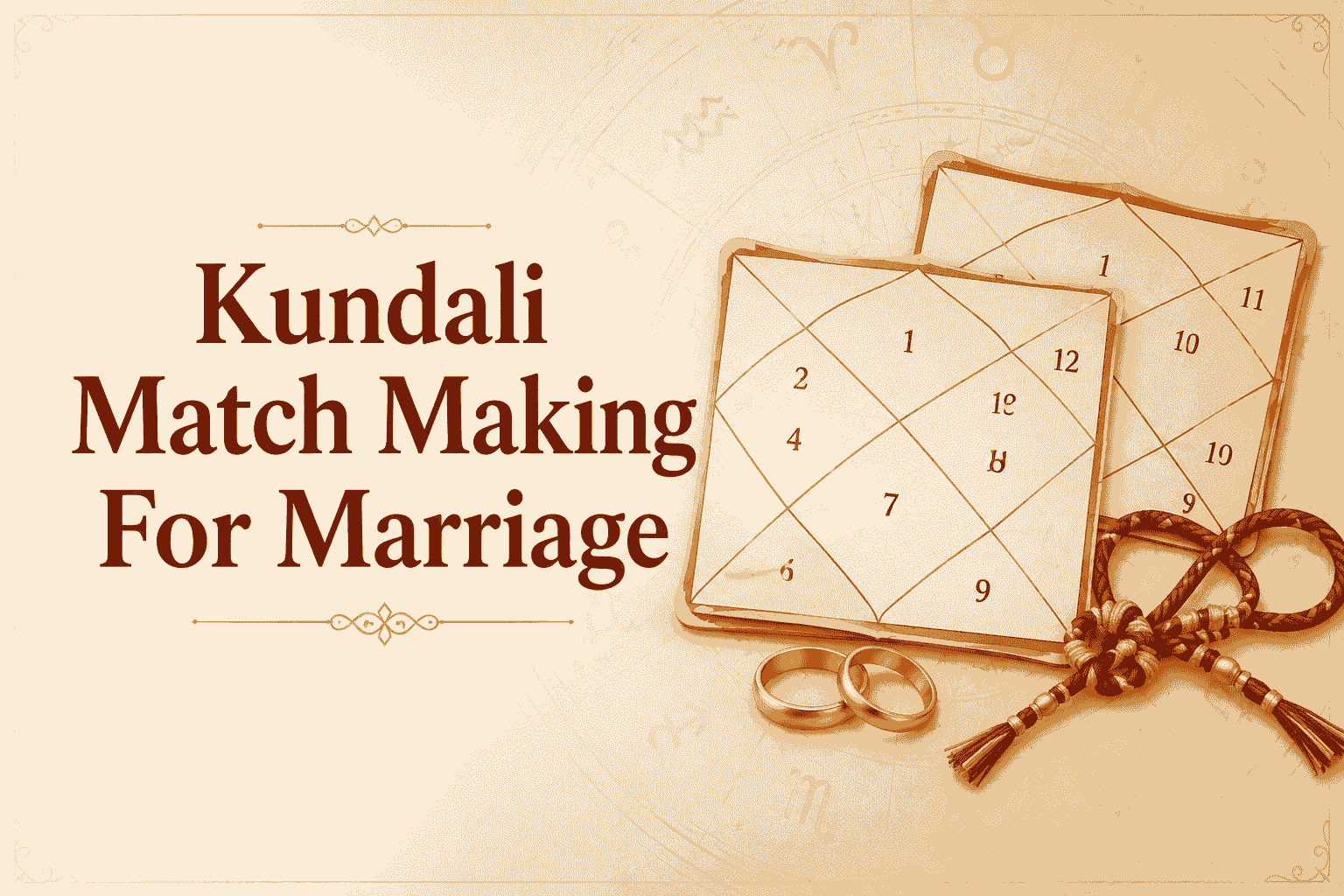
Marriage is an important life decision, and many Indian families consider astrology when evaluating a potential life partner. One common question is whether astrology can predict if two people are compatible for marriage. Through Marriage match making, Vedic astrology examines birth charts to understand traditional indicators related to emotional bonding, communication, family life, and long-term partnership.
However, astrology cannot guarantee a successful marriage. It can offer a traditional perspective on compatibility, while mutual respect, trust, shared values, and communication remain essential for a healthy relationship.
How Does Astrology Check Compatibility for Marriage?
In Vedic astrology, compatibility is commonly assessed by comparing the birth charts of both individuals. This process is known as kundali matching or horoscope matching. It considers specific astrological factors that are traditionally associated with married life.
Here are some important aspects astrologers may examine:
1. Ashtakoota Guna Milan
Ashtakoota Guna Milan is a traditional method used to assess compatibility between prospective partners. It evaluates eight factors, including Varna, Vashya, Tara, Yoni, Graha Maitri, Gana, Bhakoot, and Nadi.
The system assigns a score out of 36 points. Families often use this score as an initial reference, but it should not be treated as the only measure of compatibility or marital happiness.
2. Emotional and Mental Compatibility
A relationship requires understanding, patience, and the ability to handle disagreements. In online Vedic astrology, astrologers may examine the Moon sign and other chart factors traditionally associated with emotions, mental tendencies, and interpersonal understanding.
These interpretations offer an astrological perspective rather than a scientifically established assessment of personality.
3. Manglik Dosha and Other Chart Factors
Some traditional marriage assessments examine Manglik Dosha and other planetary placements believed to influence married life. Astrologers may interpret these factors alongside the overall birth charts instead of drawing conclusions from one placement alone.
Such interpretations vary across astrological traditions, and they should not be used to create unnecessary fear or pressure.
4. Long-Term Partnership Indicators
During marriage compatibility analysis, astrologers may also examine the seventh house, its ruling planet, Venus, Jupiter, and relevant planetary periods. Within Vedic astrology, these factors are traditionally associated with partnership, relationship expectations, and different phases of life.
These interpretations cannot establish whether a couple will definitely stay together or experience a happy marriage.
What Is the Difference Between Kundali Matching and Janmakshar Matching?
Kundali matching and janmakshar matching are terms used in traditional Indian marriage compatibility practices. Janmakshar matching may refer to matching based on birth details, birth-related astrological information, or naming syllables, depending on the regional tradition and method followed.
Kundali matching generally involves a broader comparison of the two birth charts, including Guna Milan and other relevant planetary factors.
For a meaningful traditional assessment, accurate birth details and a clear understanding of the method being used are important. Different astrologers may follow different interpretations, so the process should be explained clearly.
Can Horoscope Matching Predict a Successful Marriage?
Horoscope matching cannot reliably guarantee whether a marriage will succeed. It is a traditional belief-based practice that some individuals and families use to explore compatibility before marriage.
A high Guna score does not automatically mean that two people will have a healthy relationship. Similarly, a low score does not prove that a marriage will fail.
Before making a decision, couples should also discuss:
-
Their expectations about marriage and family responsibilities.
-
Career goals, financial habits, and future plans.
-
Communication styles and ways of resolving disagreements.
-
Personal boundaries, mutual respect, and emotional needs.
-
Family involvement and lifestyle preferences.
These conversations help couples understand each other beyond astrological calculations.
How to Get Marriage Compatibility Guidance Through Astrology
People interested in marriage match making can follow a structured process to understand traditional compatibility indicators.
Step 1: Gather birth details
Keep both individuals' dates of birth, birth times, and birthplaces ready. Accurate information helps an astrologer prepare the birth charts.
Step 2: Share your main concerns
Explain whether you want to understand Guna Milan, Manglik Dosha, emotional compatibility, or broader relationship considerations.
Step 3: Choose a consultation format
An online astrology consultation can provide an opportunity to discuss birth charts and understand the astrological methods being applied. Lunar Astro Vedic Academy is one setting where learners and astrology enthusiasts can explore Vedic astrology concepts and their traditional applications.
Step 4: Understand the findings
Ask the astrologer to explain the factors considered, the meaning of the findings, and the limitations of the interpretation. Avoid making a major relationship decision based on a single score or prediction.
Step 5: Combine insights with practical understanding
Use the discussion as one source of reflection while considering your partner's values, behaviour, expectations, and willingness to build a respectful relationship.
Final Thoughts
Astrology can offer a traditional framework for exploring marriage compatibility through kundali matching, janmakshar matching, and horoscope matching. However, it cannot provide certainty about a couple's future.
The most balanced approach is to consider astrological interpretations alongside honest communication, shared values, emotional maturity, and mutual consent. Ultimately, a strong marriage depends on how two people understand, respect, and support each other throughout life.

 Arabic
 French
 Spanish
 Portuguese
 Deutsch
 Turkish
 Dutch
Dutch
 Italiano
 Russian
 Romaian
 Portuguese (Brazil)
 Greek
Greek
