


Flexible Woven Packaging for Commercial Applications
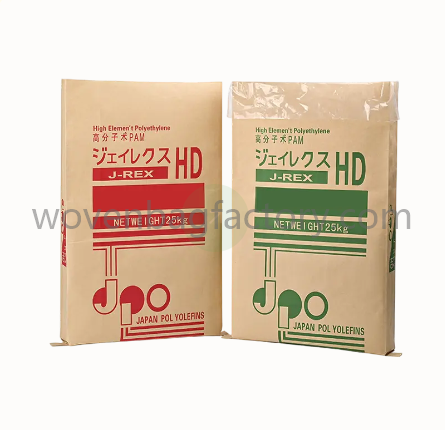
Bulk packaging must do more than contain a product. It needs to support filling, stacking, storage, transportation, and handling without creating unnecessary complications for workers or distribution partners. For businesses purchasing woven bags in volume, selecting a Polypropylene Sacks Manufacturer involves assessing material performance, production consistency, customization options, and the supplier’s ability to support repeat orders. A suitable packaging solution can help protect goods during routine logistics operations while maintaining practical handling characteristics across different industries.
Polypropylene is a thermoplastic material commonly used in woven sacks because it combines relatively low weight with useful tensile strength and processing versatility. During manufacturing, the polymer is converted into thin tapes that are stretched and woven together to create a fabric structure. This construction distributes loads across interlaced tapes and provides flexibility for different bag formats. The final performance depends on factors such as tape quality, fabric density, bag dimensions, stitching, and the characteristics of the packed material.
The production process begins with material preparation and extrusion. Polypropylene resin is heated and formed into a film, which is divided into narrow strips. These strips are stretched under controlled conditions to develop the properties needed for weaving. After winding, the tapes are fed into weaving equipment that produces fabric in the required width and construction. Consistency during these stages is important because variations in tape dimensions or weaving conditions may affect the fabric’s appearance, strength, and suitability for downstream conversion.
Once the fabric has been produced, it can undergo several finishing operations. Depending on the application, manufacturers may cut and stitch the fabric into sacks, apply a laminated layer, print product information, or add specific opening and closure arrangements. Lamination may improve resistance to moisture penetration, although the overall protection also depends on seams, closures, and the conditions in which the bags are used. Printing supports product recognition and logistics management, while suitable bag dimensions can improve compatibility with filling equipment and storage systems.
Different markets require different packaging characteristics. Agricultural customers may use woven sacks for grain, seeds, feed ingredients, and fertilizers. Construction businesses may need bags for dry materials, while manufacturers and distributors may package powders, pellets, and other granular products. These applications differ in bulk density, flow behavior, storage duration, and exposure to handling stress. Sharing accurate information about the product, expected load, filling process, and transportation environment helps the supplier determine which construction and finishing options are appropriate.
Quality assurance should be integrated throughout production rather than limited to a final visual check. Incoming material inspections can help verify that production inputs meet agreed requirements. Extrusion and weaving checks can identify inconsistencies before they affect large quantities of fabric. During conversion, attention to cutting accuracy, stitching, printing, and closure construction helps maintain uniform finished products. Depending on the application, buyers may also request agreed test methods for dimensions, tensile performance, or other relevant properties. Establishing acceptance criteria before production makes quality discussions more objective and repeatable.
For international buyers, communication is an important part of supplier management. Specifications should clearly describe dimensions, material construction, printing requirements, packaging quantities, and any application-specific expectations. Approved samples or reference documents can help reduce uncertainty when an order moves from development to mass production. Buyers should also confirm lead times, production scheduling, shipping preparation, and procedures for handling discrepancies. These practices support better coordination between procurement teams, manufacturers, freight partners, and receiving warehouses.
Customization can improve the practical value of woven sacks when it is linked to real operational requirements. Businesses may need different sizes, colors, print designs, or finishing methods for separate product categories. Clear identification can help warehouse staff distinguish products, while consistent dimensions can simplify stacking and inventory organization. At the same time, unnecessary variations can complicate purchasing and production planning. Standardizing bag designs where possible may help customers manage stock more efficiently while retaining specialized formats for applications that genuinely require them.
Cost evaluation should consider the entire packaging process rather than focusing only on the purchase price per bag. A low initial price may not provide the best value if inconsistent dimensions cause filling problems or if unsuitable construction leads to damage during handling. Buyers can compare material requirements, quality controls, delivery reliability, and communication practices alongside quoted costs. Forecast sharing and realistic order planning may also help both parties organize production and reduce avoidable disruptions.
Environmental considerations deserve attention as well. The suitability of reuse depends on the bag’s design, previous use, contamination risks, and the requirements of the packed product. Recycling options vary by location and by the condition and composition of the packaging after use. Businesses can improve decision-making by considering material efficiency, durability, collection arrangements, and local waste-management capabilities together rather than relying on a single sustainability claim.
When choosing a Polypropylene Sacks Manufacturer, businesses should look for a partner that understands the relationship between material selection, manufacturing controls, and the realities of bulk handling. HONGYANG works with woven packaging requirements across multiple commercial applications, helping buyers assess suitable options for their products and supply chains. To explore available packaging solutions and discuss project requirements, visit https://www.wovenbagfactory.com/product/kraft-paper-bag/ and review the options relevant to your purchasing plans.

 English
 Arabic
 French
 Spanish
 Portuguese
 Deutsch
 Turkish
 Dutch
Dutch
 Italiano
 Romaian
 Portuguese (Brazil)
 Greek
Greek
