


How to Choose Powder Curing Oven Manufacturers in India
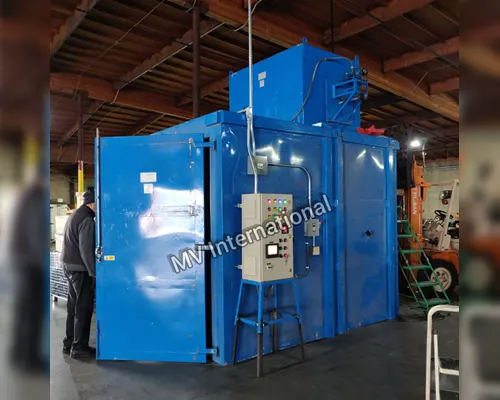
A good powder-coated product needs more than an even layer of powder. Heat plays an important role in turning that powder into a firm finish that stays on the surface. If the heating process is not suitable, the coating may not develop the required properties.
For this reason, choosing the right Powder Curing Oven Manufacturers is an important decision for factories that coat metal parts, panels, frames, and other components. Buyers should consider the products they make, the number of items they process, and the space available in their factory. Understanding these details makes it easier to compare equipment options.
What Does a Powder Curing Oven Do?
A powder curing oven heats coated products under controlled conditions. During the process, the powder melts and forms a continuous coating. The heat cycle must follow the powder supplier's instructions to achieve the required finish.
These ovens are used in industries that manufacture electrical enclosures, metal furniture, vehicle components, machine parts, and fabricated products.
When evaluating Powder Curing Oven Manufacturers, ask how the proposed oven will maintain the required temperature throughout the chamber. The correct temperature and curing time depend on the coating formulation, product thickness, and manufacturer's guidelines.
Which Type of Curing Oven Should You Choose?
The right oven depends on how your factory operates. Consider these common designs before requesting a quotation.
1. Batch Curing Oven
A batch oven handles one load at a time. Operators place the coated products inside, run the heating cycle, and remove them when the process is complete.
This design can suit factories that produce different components in smaller batches. Before choosing one, measure your products and check how many pieces can fit inside without blocking airflow.
2. Conveyor Curing Oven
A conveyor oven carries products through a heated chamber. It can support a steady production line where components need to pass through the curing process at a planned rate.
Check the conveyor speed, available heating zones, product spacing, and total curing time. These factors should match the coating requirements and expected production output.
3. Special-Purpose Curing Oven
Some manufacturing processes need equipment designed for a particular material or heating cycle. For example, buyers comparing Composite Curing Oven Manufacturers should explain the type of composite, its curing temperature, and the process recommended by the material supplier. A suitable design should follow those requirements rather than use a general-purpose setting.
Seven Things to Check Before Buying
A careful review can help you avoid choosing equipment that does not suit your factory.
-
Temperature accuracy: Ask how the oven measures and controls its internal temperature.
-
Heat distribution: Check how the design helps maintain suitable conditions in different areas of the chamber.
-
Product capacity: Confirm the dimensions and loading arrangement needed for your components.
-
Insulation: Good insulation can reduce unwanted heat loss and support efficient operation.
-
Energy requirements: Compare the electrical or fuel supply needed to operate the equipment.
-
Safety provisions: Review temperature limits, electrical protection, ventilation, and other safeguards relevant to the installation.
-
Service access: Find out how heaters, fans, sensors, and controls can be inspected and maintained.
You should also ask for a detailed quotation. Confirm whether installation, testing, operator instructions, and after-sales service are included. Clear answers make it easier to compare different suppliers fairly.
Why Is Application Knowledge Important?
An oven that works well for one product may not be suitable for another. Product dimensions, coating type, production speed, and curing conditions all influence the design.
For instance, buyers researching Rubber Curing Oven Manufacturers should discuss the rubber compound and its specific curing process with the supplier. Rubber curing requirements can differ significantly from powder coating, so equipment should be selected for the intended application.
Before placing an order, share your production details and request technical information about the proposed system. This helps both sides establish realistic expectations for operation and maintenance.
Why Consider MV International?
MV International provides industrial oven and heating equipment for manufacturing applications. Businesses planning a curing setup should first identify the size of their products, the required heating conditions, the daily production target, and the space available for installation.
Discussing these details helps clarify what the equipment needs to achieve. Buyers should review the design, operating requirements, construction, and service arrangements before making a final decision.
Comparing these practical details can help you select equipment based on your actual production needs rather than price alone.
Conclusion
Selecting an industrial curing oven requires attention to temperature control, heat distribution, capacity, energy use, and maintenance. The right equipment should suit the coating process and fit the factory's production plan.
If you are searching for Powder Curing Oven Manufacturers in India, contact MV International to discuss your requirements. Share your product dimensions, coating specifications, and expected production volume to explore suitable equipment options for your application.

 English
 Arabic
 French
 Spanish
 Portuguese
 Deutsch
 Dutch
Dutch
 Italiano
 Russian
 Romaian
 Portuguese (Brazil)
 Greek
Greek
