


Google Maps Ranking Factors: How to Improve Local Search Visibility
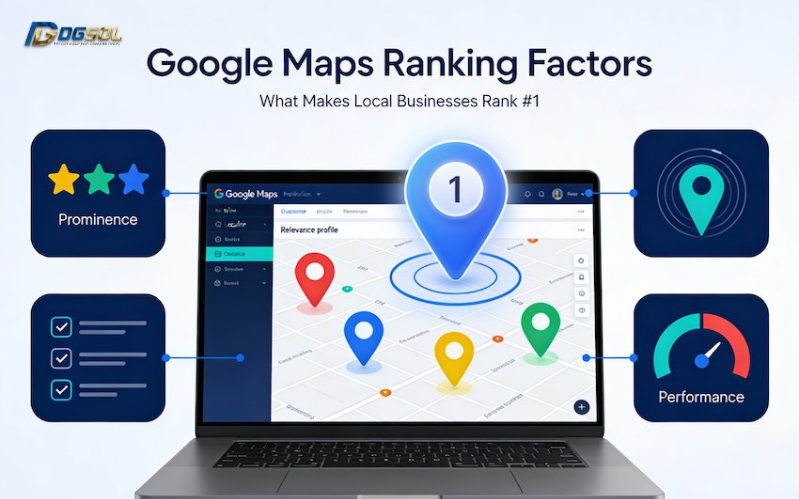
When people search for a nearby service, they often turn to Google Maps to compare businesses, check reviews, view opening hours, and find contact information. For businesses that depend on local customers, appearing prominently in these results can create valuable opportunities to attract inquiries and visits.
However, improving visibility on Google Maps requires more than adding keywords to a business profile. Google considers several factors when determining which businesses are relevant to a search, and some are outside a business owner's control.
Understanding the main Google Maps ranking factors helps businesses develop a realistic optimization strategy. From maintaining an accurate business profile to earning genuine reviews and improving website quality, several practical steps can strengthen your local presence.
What Are Google Maps Ranking Factors?
Google Maps ranking factors are the signals and considerations that help Google decide which businesses to show for a specific local search.
Google identifies three main considerations for local results: relevance, distance, and prominence. These concepts help explain why different businesses may appear for similar searches depending on the searcher's location and the type of service requested.
Relevance describes how closely a business matches what someone is searching for. A business with accurate categories, detailed service information, and a suitable website may provide stronger evidence that it meets a particular need.
Distance refers to how far a business is from the location associated with a search. A business cannot directly control where a potential customer searches from, so it should not expect to appear equally prominently across every area.
Prominence reflects how well-known or established a business appears. Reviews, online mentions, and the business's broader web presence can boost visibility.
These considerations work together. No single setting guarantees a top position, and local results can vary between searches.
1. Complete and Maintain Your Google Business Profile
An accurate Google Business Profile is a useful starting point for eligible businesses. It helps Google and potential customers understand what the business does, where it operates, and how people can contact it.
Incomplete or outdated information can create confusion. If a business has changed its opening hours, phone number, services, or address, update the profile accordingly.
Choose the Most Relevant Business Category
The primary business category should describe the main activity of the business as accurately as possible.
For example, a company specializing in plumbing should select an appropriate plumbing category rather than choosing an unrelated category simply because it appears popular.
Additional categories can be added when they accurately represent other services offered. Avoid selecting categories that have no genuine connection to the business.
Keep Business Information Accurate
Review these details regularly:
-
Business name as used in the real world.
-
Primary category and relevant additional categories.
-
Correct address or eligible service-area information.
-
Working phone number and website URL.
-
Current opening hours and holiday schedules.
-
Accurate descriptions of products and services.
Do not add promotional phrases or extra keywords to the business name unless they are genuinely part of the real-world name and comply with Google's guidelines.
The purpose of the profile is to represent the business accurately, not to manipulate search results.
Add Authentic Photos
Photos can help potential customers understand what to expect before contacting a business. Depending on the industry, useful images might include the premises, team, products, equipment, or completed projects.
Keep images current and relevant. A restaurant may benefit from genuine photographs of its interior and menu items, while a repair service could show examples of completed work with appropriate customer permission.
Images should represent the actual business and its offerings, not create misleading expectations.
2. Improve Relevance to Customer Searches
A business may provide excellent service but still struggle to appear in search results if its online information doesn't clearly communicate what it offers.
Relevance starts with understanding the terms customers use to find a particular product or service.
For example, someone searching for a computer repair service has different needs than someone searching for a computer retailer. Businesses should clearly communicate their actual services instead of trying to appear for every related keyword.
Organize Services Clearly
Where appropriate, add accurate service information to the business profile and explain those services in detail on the website.
A service page should answer common customer questions, explain the process, and describe the problems the business can solve. It should also make it easy for visitors to request information or arrange an appointment.
Avoid adding long lists of unrelated keywords to the business description. Natural, specific information helps customers more than repetitive phrases.
Use Consistent Language Across the Website
Your website should reinforce the services described in the business profile.
Use descriptive page titles, meaningful headings, relevant internal links, and clear service descriptions. If the company provides several distinct services, consider creating a dedicated page for each major offering when there is enough useful information to justify it.
Do not create near-identical pages simply by changing a service name or location. Each page should serve a clear purpose and provide value beyond repeating the same keywords.
3. Build a Strong and Useful Website
A Google Business Profile and a business website serve different purposes. The profile helps customers find essential business information, while the website gives you more space to explain your expertise, services, policies, and customer benefits.
A well-organized website can support local visibility by making the business's relevance and credibility easier to understand.
Create Helpful Service Pages
Each important service page should explain what you offer, who it benefits, how the process works, and what the next step is.
Useful elements include:
-
Clear service descriptions.
-
Genuine examples of previous work.
-
Answers to frequently asked questions.
-
Accurate contact information.
-
Relevant customer testimonials, where permitted.
-
Straightforward calls to action.
Avoid publishing generic content solely to increase the number of pages on a website. Focus on questions customers genuinely need answered before choosing a provider.
Make the Website Mobile-Friendly
Many local searches happen on mobile devices. Visitors should be able to read important information, navigate the website, and contact the business without unnecessary effort.
Check that text remains readable, buttons are easy to use, menus work properly, and important pages load reliably.
Review inquiry forms and phone links as well. A visitor who cannot submit a form or contact the company may leave, even if they found the business through a relevant search.
Keep Technical SEO in Good Condition
Search engines need to access important pages and interpret their content correctly.
Review indexing directives, internal links, canonical tags, redirects, and sitemap entries. Correct technical issues that prevent valuable pages from being crawled or indexed.
Structured data may also help describe relevant business information when implemented accurately. However, structured data does not guarantee improved Maps rankings or special search features.
4. Earn Genuine Customer Reviews
Reviews help people assess a business before deciding. Customers often use them to gauge service quality, reliability, communication, and past buyers' experiences.
Reviews also contribute to the broader prominence signals associated with local search. Nevertheless, the number of reviews alone does not determine rankings.
Develop a Consistent Review Process
Ask customers for honest feedback after a genuine interaction or completed transaction.
Businesses can make this process easier by sharing an appropriate review link through a follow-up message, receipt, email, or other suitable channel.
Requests should be neutral. Do not pressure customers to leave positive reviews, offer prohibited incentives, or discourage dissatisfied customers from sharing honest feedback.
Avoid purchasing reviews or generating artificial feedback. These practices can damage credibility and violate platform policies.
Respond to Positive and Negative Reviews
Responding professionally shows that the business takes customer feedback seriously.
For positive reviews, acknowledge the customer's comments and thank them for taking the time to share their experience.
For negative reviews, remain calm, address the concern where possible, and offer an appropriate route to resolution. Avoid revealing private information or arguing with the reviewer in public.
Review responses can also help identify recurring operational problems. If customers repeatedly mention missed appointments or unclear pricing, improving those processes may benefit the business more than publishing additional marketing content.
5. Maintain Accurate Business Information Across the Web
Business information may appear on the company website, directory listings, industry platforms, social profiles, and other online sources.
If important details conflict, potential customers may be unsure which information is correct. Keeping key records accurate supports trust and makes business information easier to verify.
Prioritize consistency for the business name, address, phone number, website, and opening hours where those details apply.
Audit Important Listings
Start with the most visible and relevant directories. Check for duplicate listings, outdated contact details, or profiles tied to an old address.
Correct inaccurate information and remove duplicates through the appropriate platform processes.
There is no need to submit a business to every directory available. Prioritize trustworthy sources that customers are likely to use and that are relevant to the industry.
If the business relocates or changes its contact details, update the Google Business Profile and important external listings promptly.
6. Understand the Role of Distance
Distance matters in local search results. A business may appear prominently for a search near its premises but less prominently when the same search comes from another area.
This means businesses should set realistic expectations about geographic visibility.
A company cannot guarantee that it will rank first throughout an entire city or region. Local results may vary depending on where the search originates, the wording used, the competition, and the business type.
Represent Your Service Area Honestly
Businesses with physical premises should provide accurate location information and follow the eligibility requirements for their business type.
Service-area businesses should define their service coverage realistically. They should not create misleading addresses or duplicate profiles in locations where they don't qualify.
If a company serves multiple areas, its website can explain where services are available and what customers in those areas can expect.
Location pages may be appropriate when the business genuinely serves distinct locations, and each page provides useful, specific information. Avoid creating doorway pages designed primarily to capture searches for many place names.
Focus on Areas You Can Serve Well
Instead of attempting to appear everywhere, identify the areas where the business can deliver a good customer experience.
Use inquiry data and customer records to understand where demand comes from. This information can guide service coverage, content planning, and business decisions without assuming that repeating geographic keywords will improve Maps rankings.
7. Improve Business Prominence and Trust
Prominence reflects how well-known a business is and how it appears across the web. Businesses can support their credibility through genuine customer experiences, useful content, professional relationships, and accurate information.
Publish Helpful, Relevant Content
Create content that answers real customer questions and demonstrates knowledge of the service.
For example, a home maintenance company could publish a guide to identifying common repair problems. A professional service provider might explain how to compare suppliers or prepare for an initial consultation.
Useful content can attract relevant visitors, support brand awareness, and give customers more confidence in the business.
Do not publish articles solely to repeat search phrases. Each piece should answer a meaningful question or help readers make a better decision.
Build Genuine Industry Relationships
Relevant mentions from trusted organizations, professional associations, suppliers, or local community websites can help people discover a business and learn more about its work.
Focus on genuine relationships and useful contributions. Avoid arranging misleading mentions or participating in schemes that promise guaranteed Maps rankings.
The goal is to build a credible online presence that reflects the company's actual reputation and expertise.
8. Track Local Search Performance
Optimization decisions are more effective when they are based on measurable evidence.
Google Business Profile performance information and Google Search Console can provide different perspectives on how customers discover a business.
Business Profile performance may include eligible interactions such as calls, website clicks, and other customer actions. Search Console provides information about organic website impressions, clicks, search queries, and page performance.
Use these sources together to understand whether visibility is producing meaningful outcomes.
Monitor Useful Metrics
Consider tracking:
-
Relevant customer searches.
-
Website clicks from the business profile.
-
Calls and inquiries.
-
Organic impressions and clicks for important service pages.
-
Customer review activity.
-
Qualified leads and completed bookings.
-
Changes in the performance of key landing pages.
Avoid relying on a single ranking check. Local results vary by location and context, so one observation doesn't reflect every potential customer’s experience.
Review Results Over Time
Compare similar periods and consider seasonal demand, business changes, and other factors that may influence performance.
If a service page receives impressions but few clicks, review its title, description, and alignment with search intent.
If visitors don't enquire, check whether the page answers their questions, shows clear contact information, and offers an easy next step.
If customer interactions decline, investigate whether business details are accurate, services have changed, or the website has developed a technical problem.
9. Common Google Maps Optimization Mistakes
Some practices waste resources or put a business profile at risk. Avoid these common mistakes:
Keyword stuffing in the business name: Adding extra service terms to the name can violate profile guidelines when those terms are not part of the real-world business name.
Fake reviews: Artificial feedback undermines trust and may violate platform policies.
Incorrect business information: Outdated hours, phone numbers, or addresses can frustrate customers and create uncertainty.
Unnecessary duplicate profiles: Multiple profiles for the same business at the same location can create confusion and should be handled according to eligibility rules.
Unrealistic ranking promises: No provider can guarantee a first-place Maps position for every search and location.
Thin location pages: Repetitive pages with minimal unique information provide little value to customers.
Ignoring customer experience: Search visibility is only one part of the process. Poor service, unanswered inquiries, and confusing websites can prevent customers from choosing a business.
A sustainable strategy prioritizes accurate information, helpful content, genuine reputation building, and a reliable customer experience.
10. A Practical 30-Day Google Maps Optimization Plan
A structured plan makes it easier to improve the most important elements without trying to do everything at once.
Week 1: Review the Business Profile
-
Verify the accuracy of the business name and category.
-
Update contact details and opening hours.
-
Review service information and profile completeness.
-
Check that photographs represent the current business.
-
Investigate duplicate or outdated profiles.
Week 2: Improve the Website
-
Review important service pages.
-
Make contact options easy to find.
-
Check mobile usability and page performance.
-
Fix broken links and major indexing issues.
-
Ensure the website and business profile provide consistent information.
Week 3: Strengthen Trust
-
Introduce a process for requesting honest customer reviews.
-
Respond professionally to existing feedback.
-
Correct outdated information on important directories.
-
Publish a helpful resource that answers a common customer question.
-
Review whether the website clearly explains the business's experience and services.
Week 4: Measure and Prioritize
-
Review Business Profile performance.
-
Check Search Console for relevant search queries and page trends.
-
Compare calls, inquiries, and other useful business outcomes.
-
Identify the pages or profile details that need further improvement.
-
Create a prioritized plan for the next month.
This process is a starting point, not a promise of ranking improvement. Results depend on the business's circumstances, competition, relevance, distance, prominence, and implementation quality.
Final Thoughts
Improving Google Maps visibility requires accurate business information, relevant services, a useful website, genuine customer reviews, and consistent monitoring.
The most effective strategy is to focus on factors the business can control while recognizing that distance, competition, and search context influence local results. Avoid shortcuts that promise instant rankings or rely on misleading information.
By maintaining a trustworthy profile, answering customer questions, improving the website, and measuring real inquiries, businesses can create a stronger foundation for long-term local search performance.
Frequently Asked Questions
What are the main Google Maps ranking factors?
Google identifies relevance, distance, and prominence as the main considerations for local results. Accurate business information, relevant services, customer reviews, and a credible online presence can support these areas, but no single action guarantees a particular ranking.
Do Google reviews improve Maps rankings?
Reviews contribute to a business's reputation and are one of the factors associated with prominence. Businesses should encourage genuine feedback and respond professionally, rather than attempting to manipulate review numbers.
Can a business rank across an entire city?
Local visibility varies by the searcher's location, competition, and the business's relevance to the query. A business should not assume it will rank equally everywhere in a city.
Does a website help Google Maps visibility?
A useful website can provide additional information about services, business credibility, and customer needs. Website quality and organic search performance are important parts of a broader local search strategy, although a website alone cannot guarantee Maps rankings.
How often should a Google Business Profile be updated?
Review the profile whenever important business information changes. It is also useful to check it periodically for outdated hours, incorrect contact details, missing information, and customer feedback.

 English
 Arabic
 French
 Spanish
 Portuguese
 Turkish
 Dutch
Dutch
 Italiano
 Russian
 Romaian
 Portuguese (Brazil)
 Greek
Greek
