


Manufacturing Considerations for Stainless Valve Parts
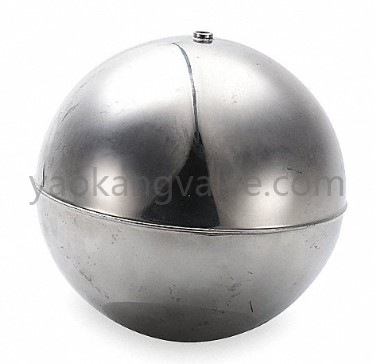
In fluid control equipment, material durability and buoyancy are important considerations when selecting components for automatic liquid level regulation. A Stainless Steel Float Ball combines a buoyant structure with the mechanical strength and corrosion resistance available from suitable stainless steel grades. Its effectiveness depends on the relationship between material properties, internal construction, manufacturing accuracy, and the requirements of the connected valve system.
Stainless steel is commonly considered for applications involving regular moisture exposure or demanding operating environments. Its resistance to corrosion can help support durability when the selected grade is appropriate for the surrounding conditions. However, stainless steel grades are not interchangeable in every application. Fluid composition, temperature, cleaning procedures, and environmental exposure should be reviewed before choosing a specific material.
The operating process is based on the principle of buoyancy. As the liquid level rises, the component moves upward and transfers movement to a connected lever or valve mechanism. This movement may close the valve or reduce incoming flow. When the liquid level drops, the component descends and allows the mechanism to return toward its previous position. This mechanical response is useful in tanks, water control equipment, plumbing systems, and industrial fluid management applications.
The design must balance material weight and liquid displacement. Stainless steel is denser than many alternative materials, so the component's shape and internal volume are particularly important. A hollow structure can provide the displacement needed for buoyancy while maintaining a durable external shell. Wall thickness, dimensions, internal construction, and weight distribution should all be considered during product development.
Manufacturing methods influence the final geometry and consistency. Depending on the design, stainless steel components may be produced through stamping, pressing, deep drawing, machining, or other metalworking processes. Tooling condition and process control can affect the shape, surface quality, and dimensional accuracy of the finished part. Consistent manufacturing helps ensure that components remain compatible with their intended valve assemblies.
For products made from multiple sections, joining quality is another important factor. Welding or another suitable joining method may be used to create the required structure. The process should maintain adequate structural integrity while minimizing deformation. Where a hollow construction is used, the integrity of joined areas can influence the component's ability to maintain its expected buoyancy characteristics.
Surface finishing can help prepare the component for installation and use. Depending on the application, suitable processes may include cleaning, polishing, or deburring. These operations can improve surface consistency and remove unwanted edges or residues. The appropriate finish depends on the stainless steel grade, production method, and intended working environment. In applications with specific cleanliness requirements, finishing and cleaning procedures should be evaluated carefully.
Compatibility with the connected valve mechanism should be checked before procurement. The component may attach to a lever, stem, bracket, or other moving part, and the connection must support the intended movement. Overall dimensions, connection points, installation orientation, and movement range can affect system operation. For replacement parts, comparing the new component with the original assembly is particularly useful.
Environmental conditions also affect product selection. Water storage systems, industrial processing equipment, and other fluid applications may expose components to different temperatures, liquids, or maintenance procedures. Although stainless steel offers useful corrosion-resistant properties, suitability still depends on the specific grade and environment. Reviewing actual operating conditions helps manufacturers and buyers make a more informed choice.
Quality inspection can support consistency across production batches. Manufacturers may examine material condition, dimensions, forming quality, welded areas, surface finish, and overall appearance. Depending on the intended use, functional testing may also be performed to assess buoyancy or mechanical movement. These checks can help identify manufacturing variation before components are installed in complete equipment.
For distributors and equipment manufacturers, clear communication with the supplier can improve procurement decisions. Details about the fluid, operating environment, connection dimensions, valve structure, and expected service conditions provide a practical basis for evaluating the appropriate construction. Such information is particularly valuable for customized orders and applications that require compatibility with existing equipment.
A well-designed Stainless Steel Float Ball brings together suitable material selection, controlled construction, and compatibility with the complete fluid control system. Evaluating these factors can help buyers identify components appropriate for their intended applications. For more information about related valve products and component solutions, visit https://www.yaokangvalve.com/product/ to review the available range.

 English
 Arabic
 French
 Spanish
 Portuguese
 Deutsch
 Turkish
 Dutch
Dutch
 Italiano
 Russian
 Portuguese (Brazil)
 Greek
Greek
