


Practical Damping Solutions for Door Systems
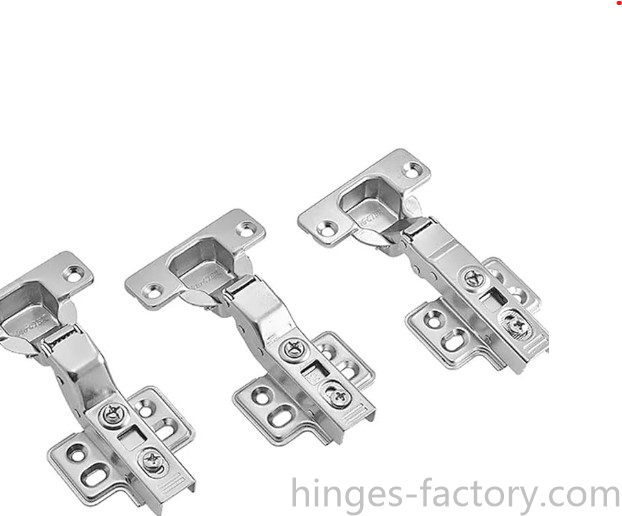
Door movement affects comfort, noise, and the overall usability of a building. Hardware that limits sudden movement can help create a smoother experience in spaces where doors are opened and closed frequently. Hydraulic Buffer Hinges incorporate a buffering mechanism into the hinge assembly to regulate movement or soften the impact associated with closing, depending on the specific design. They can be considered for residential interiors, offices, hospitality facilities, and other architectural applications.
The buffering function generally relies on resistance generated within a hydraulic mechanism. As the door moves through a controlled portion of its operating cycle, the mechanism moderates movement rather than allowing the panel to travel without resistance. This can help reduce abrupt contact and contribute to a more controlled closing experience. The exact behavior varies by product, so buyers should confirm whether a particular model provides closing assistance, damping, or another specified function.
One of the main benefits of an integrated design is the potential to combine movement control with the structural role of the hinge. Depending on the configuration, this can reduce the need for additional buffering components and simplify the overall hardware arrangement. However, integration alone does not guarantee compatibility. The hinge must still be selected according to the door's mechanical requirements and the intended installation environment.
Door weight and construction are important starting points. Panel thickness, material, frame structure, mounting position, and opening angle can influence the performance of the hinge. A door that places excessive loads on unsuitable hardware may move inconsistently or place unnecessary stress on the mechanism. Reviewing these factors before purchasing can help manufacturers, contractors, and distributors select a more appropriate solution.
Buffering can be especially useful in areas where doors are used repeatedly. In offices, bedrooms, hotel interiors, and shared residential spaces, abrupt closing may disturb occupants or create unwanted impact between the door and frame. A suitable damping mechanism can moderate movement and help make normal operation more comfortable. The degree of impact reduction depends on the hinge design, door mass, installation accuracy, and operating conditions.
Installation quality is essential for achieving the intended result. The hinge must be securely mounted and aligned with the door and frame. Incorrect positioning can affect clearances, introduce resistance, or prevent the mechanism from operating as designed. Installers should follow the manufacturer's instructions, verify the permitted opening range, and check the complete movement cycle before the door is put into regular use.
Material selection and manufacturing consistency also influence reliability. The external body and mounting sections must support the door, while the internal components need to operate consistently during repeated movement. Suitable materials and accurate production help maintain fit and function. For projects involving multiple doors, consistent dimensions and performance can make installation planning and replacement sourcing more manageable.
Aesthetic requirements should be considered alongside functionality. Contemporary interiors often favor clean door surfaces and hardware finishes that coordinate with surrounding architectural elements. Depending on its design, a buffering hinge can be integrated into a door system without adding unnecessary visible accessories. This may be useful in projects where the appearance of the finished door is as important as its operation.
Maintenance requirements vary according to the mechanism and installation conditions. Periodic checks can help identify loose mounting points, alignment changes, or differences in movement. Users should avoid forcing the door beyond its intended operating range, as this may place unnecessary stress on the hinge. Following the product's installation and maintenance guidance can help preserve normal operation.
Buyers should also distinguish between buffering, damping, and self-closing functions. Some products are designed mainly to soften movement, while others actively return a door toward its closed position. These functions are related but not interchangeable. Understanding the required behavior before sourcing hardware helps avoid selecting a product that does not match the intended application.
For door manufacturers, architects, contractors, and hardware distributors, selecting Hydraulic Buffer Hinges requires consideration of door construction, desired movement control, installation space, and expected usage. Product specifications and catalogue information are available at https://www.hinges-factory.com/product/catalogue-download/ for buyers comparing suitable hardware options for their projects.

 English
 Arabic
 French
 Spanish
 Deutsch
 Turkish
 Dutch
 Italiano
 Russian
 Romaian
 Portuguese (Brazil)
 Greek
