


How to Choose a Desiccator Cabinet for Hygroscopic Laboratory Samples?
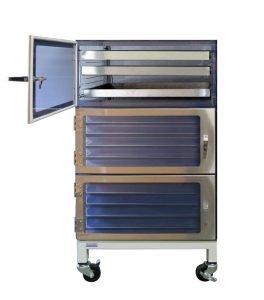
Hygroscopic laboratory samples can absorb moisture from the surrounding air, potentially changing their weight, composition, stability, or performance. If your laboratory handles moisture-sensitive chemicals, powders, reagents, or analytical materials, choosing the right storage environment is essential. A suitable desiccator cabinet helps limit moisture exposure and supports consistent sample handling. To make the right choice, evaluate your humidity requirements, storage capacity, cabinet construction, monitoring features, and daily laboratory workflow before purchasing.
Understand Your Samples’ Moisture Sensitivity
Start by identifying how your samples respond to atmospheric humidity. Hygroscopic materials absorb water from the air, but their moisture sensitivity varies. Some samples tolerate moderate humidity, while others require tightly controlled dry storage.
Review the storage recommendations and safety data for your materials. Determine the acceptable relative humidity (RH), storage temperature, and maximum exposure time during handling.
Consider these questions:
· Do your samples absorb moisture quickly after exposure?
· Must you maintain a specific humidity range?
· Are you storing powders, reagents, electronic components, or prepared specimens?
· Will moisture absorption affect measurements or product quality?
Your answers will help you determine whether basic desiccant-based storage is sufficient or whether you need a more advanced humidity-control system.
Select the Right Humidity Control Method
Humidity control is one of the most important factors when choosing a desiccator cabinet for hygroscopic laboratory samples. Different systems offer different levels of control, maintenance, and convenience.
Desiccant-based cabinets: These use moisture-absorbing materials, such as suitable silica gel, to maintain a dry environment. They can work well for routine storage when you can monitor and replace or regenerate the desiccant as required.
Automatic humidity-controlled cabinets: These systems regulate humidity using an integrated control mechanism. They may be appropriate when your laboratory requires repeatable conditions, frequent access, or reduced manual monitoring.
Nitrogen-purged cabinets: These introduce dry nitrogen to displace moisture-containing air. Consider this approach when your application requires a controlled dry atmosphere and your facility can accommodate the gas supply and operating requirements.
Before choosing a system, compare its specified humidity range, recovery time after door openings, monitoring capabilities, and maintenance requirements with your actual needs.
Calculate the Storage Capacity You Need
A cabinet should accommodate your current sample inventory without making everyday access difficult. Choosing a unit that is too small can lead to overcrowding, while excessive capacity may waste valuable laboratory space.
Measure your largest containers, trays, sample holders, and instruments. Then estimate how many items you need to store simultaneously.
Look for features such as:
· Adjustable shelves for different container heights.
· Multiple compartments for separating sample categories.
· Doors that allow convenient access.
· Sufficient internal clearance for organized storage.
· A footprint compatible with your laboratory layout.
Leave adequate space around stored items for practical handling. Also consider future research projects and changes in sample volume.
Explore the available desiccator cabinets for moisture-sensitive laboratory storage to compare options for your laboratory requirements.
Evaluate Cabinet Construction and Sealing
The cabinet material and sealing system influence moisture protection, durability, and ease of use. A well-designed enclosure helps limit the entry of humid air whenever the door is closed.
When comparing models, examine the door gasket, closure mechanism, panel construction, shelf design, and resistance to the chemicals or cleaning agents used in your facility.
Transparent cabinets can make it easier to identify samples without opening the door. If your materials are light-sensitive, check whether a suitable light-protective enclosure is available.
For demanding applications, assess whether the construction is compatible with your laboratory's cleanliness, static-control, and environmental requirements. Do not assume that every cabinet provides the same sealing performance or chemical resistance.
Check Humidity Monitoring and Maintenance
A cabinet cannot protect samples reliably if you cannot verify its internal conditions. A humidity indicator or digital hygrometer allows you to monitor relative humidity and identify potential changes.
For more demanding applications, consider a system that supports continuous monitoring, alarms, or humidity records. Verify the sensor's accuracy and calibration requirements before relying on readings for quality-critical work.
Establish a routine maintenance plan that includes:
· Checking internal humidity at defined intervals.
· Inspecting door seals for wear or damage.
· Replacing or regenerating desiccants according to their instructions.
· Recording humidity excursions when required.
· Confirming that the cabinet returns to the required humidity after access.
Keep the door closed whenever possible, and organize frequently used samples for quick retrieval. This reduces the amount of humid room air entering the enclosure.
Match the Cabinet to Your Laboratory Workflow
Your storage practices matter as much as the cabinet itself. A system that works for occasional sample retrieval may be unsuitable for a laboratory that opens its storage enclosure throughout the day.
Evaluate how often staff will access the cabinet, whether different samples require separate compartments, and whether humidity recovery time could affect your process.
You should also consider available utilities, nitrogen consumption where applicable, equipment maintenance, staff training, and total operating costs.
Choose equipment based on documented performance requirements rather than price alone. Reliable moisture control can help reduce sample deterioration, avoid unnecessary repeat testing, and support consistent laboratory procedures.
Make an Informed Purchasing Decision
Before selecting a cabinet, prepare a short specification covering your target humidity range, sample dimensions, storage volume, monitoring needs, construction preferences, and available space.
Compare these requirements against each model's technical documentation. If you are unsure whether a standard desiccant cabinet or an actively controlled system is suitable, consult an experienced laboratory equipment supplier.
At CleaTech LLC, you can explore laboratory storage solutions and identify equipment options that align with your application. Review the available specifications carefully and confirm that the selected cabinet meets your sample protection requirements.
Conclusion
Choosing a desiccator cabinet for hygroscopic laboratory samples requires more than selecting a suitable size. You must understand your materials' moisture sensitivity, choose an appropriate humidity-control method, verify sealing performance, and establish a monitoring and maintenance routine.
When these factors align with your laboratory workflow, you can protect valuable samples, improve storage organization, and support more consistent research and testing practices.
Frequently Asked Questions
1. What is a desiccator cabinet used for in a laboratory?
A desiccator cabinet provides a low-humidity storage environment for moisture-sensitive materials, including hygroscopic chemicals, powders, reagents, and selected electronic components. Its purpose is to reduce moisture exposure and help preserve sample quality during storage.
2. How do you choose a desiccator cabinet for hygroscopic samples?
Identify the required humidity range, sample dimensions, storage capacity, frequency of access, and monitoring needs. Then compare cabinet sealing, humidity-control technology, construction, and maintenance requirements against your laboratory's specifications.
3. Is a desiccant-based cabinet sufficient for moisture-sensitive samples?
It can be sufficient when your samples' humidity requirements can be met by the selected desiccant and enclosure. More demanding applications may require automatic humidity control or a dry-gas purge system. Confirm performance against your materials' storage requirements.
4. Why is humidity monitoring important in a desiccator cabinet?
Humidity monitoring helps you verify internal conditions, recognize changes, and identify when maintenance may be necessary. For quality-critical storage, choose monitoring equipment with suitable accuracy and calibration procedures.
5. How can you maintain a desiccator cabinet effectively?
Monitor relative humidity, inspect door seals, maintain or replace desiccants according to manufacturer instructions, and keep the door closed when not in use. Follow a documented maintenance schedule appropriate to your application.
6. Where can you find laboratory desiccator cabinets?
You can explore the CleaTech desiccator cabinet selection for laboratory moisture control and compare available options with your sample storage requirements. For application-specific guidance, Contact us today to discuss your laboratory needs.
Original Source: https://laboratoryquipment.blogspot.com/2026/10/how-to-choose-desiccator-cabinet-for.html

 English
 Arabic
 French
 Spanish
 Portuguese
 Deutsch
 Turkish
 Italiano
 Russian
 Romaian
 Portuguese (Brazil)
 Greek
Greek
