


Can Specialty Chemicals Create a New Growth Path for Japan’s Iodine Market?
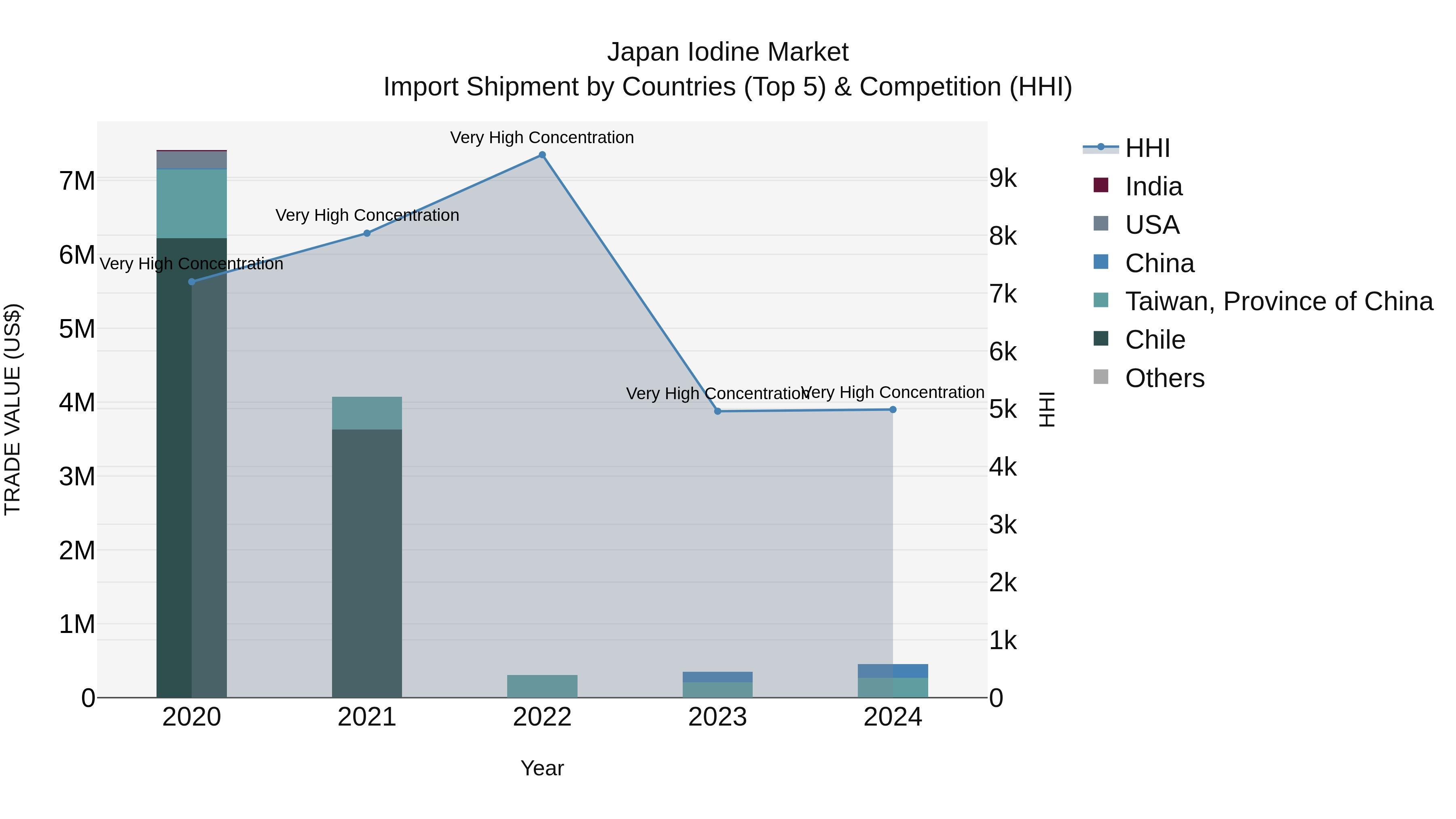
The Japan Iodine Market is connected to a broad industrial ecosystem that includes pharmaceuticals, electronics, fluorochemicals, polymer processing, animal nutrition, and other specialized applications. While iodine is often discussed in the context of healthcare, its use in industrial chemistry also creates commercial opportunities for manufacturers, processors, and chemical distributors.
According to 6Wresearch, the market is projected to grow at a 9.3% CAGR during 2026–2032. Businesses seeking to benefit from this outlook must understand how iodine-containing materials serve different applications and why product quality, supply reliability, and production economics influence purchasing decisions.
How Does Iodine Support Industrial Manufacturing?
Iodine and its compounds have useful chemical characteristics that make them relevant to selected industrial processes. Depending on the formulation, they may serve as intermediates, components of specialized chemicals, or materials used in particular manufacturing applications.
Two areas identified in the 6Wresearch market segmentation are catalysts in polymer processing and fluorochemicals. Demand in these segments depends on the chemistry involved, production volumes, customer specifications, and the availability of suitable alternatives.
1. Polymer Processing
Selected iodine-containing compounds can be used in specific catalytic or chemical processes associated with polymer manufacturing. The commercial relevance of these applications depends on the production method and the properties required in the finished material.
Manufacturers may evaluate iodine-based solutions according to process efficiency, product quality, compatibility, and cost. Suppliers that understand customer processes can offer more value than those competing only on commodity pricing.
2. Fluorochemical Applications
Iodine-containing compounds can participate in certain specialized chemical production pathways. Their use depends on the target molecule, reaction chemistry, and process requirements.
Demand from fluorochemical producers may be influenced by industrial investment, downstream product demand, and changes in chemical manufacturing technologies. Companies should therefore monitor application-specific developments instead of assuming that all specialty chemical categories will grow at the same pace.
What Does the Market Segmentation Reveal?
Japan’s iodine market is divided into three broad dimensions in the 6Wresearch outlook.
By source
-
Caliche ore
-
Underground brines
-
Recycling
-
Seaweeds
By form
-
Organic compounds
-
Inorganic salts and complexes
-
Elemental iodine and isotopes
By application
-
X-ray contrast media
-
Pharmaceuticals
-
Optical polarizing films
-
Catalysts in polymer processing
-
Animal feed
-
Fluorochemicals
-
Human nutrition
-
Other applications
This segmentation is useful because a supplier’s commercial opportunity depends on the precise product form and application it can serve. A material suitable for one industrial process may not meet the requirements of another.
What Challenges Face Industrial Buyers?
Raw-Material Price Volatility
Iodine procurement costs may change with international supply conditions, production expenses, transportation costs, and demand. Sudden price movements can affect manufacturers’ margins and complicate budgeting.
Technical Qualification
Industrial customers need materials that perform consistently in their production processes. Changes in supplier or product specifications may require evaluation and testing before commercial adoption.
Supply-Chain Concentration
Dependence on a narrow group of sources can expose buyers to shipping disruptions and international market changes. Procurement teams need to evaluate supply risk alongside price.
Environmental and Process Requirements
Chemical manufacturers must manage waste, emissions, handling procedures, and applicable environmental requirements. The exact obligations depend on the material, process, and facility.
How Can Manufacturers Improve Competitiveness?
Industrial businesses can pursue five practical measures:
-
Improve procurement planning: Use demand forecasts and supplier assessments to reduce unexpected shortages.
-
Build technical expertise: Understand the role of iodine in targeted production processes.
-
Diversify qualified suppliers: Evaluate alternative sources without compromising required specifications.
-
Explore recovery options: Assess whether suitable iodine-containing streams can be economically recycled.
-
Strengthen customer collaboration: Work with chemical formulators and industrial users to identify new applications.
Companies can also monitor developments in electronics and healthcare because changes in these sectors may influence broader iodine procurement and supply conditions.
Where Could Future Opportunities Emerge?
Specialty chemical manufacturers may find opportunities through improved process efficiency, application-specific formulations, and more reliable supply arrangements. Businesses that understand customer requirements and invest in technical service can develop stronger commercial relationships.
However, new applications must be assessed on their individual merits. Commercial adoption depends on demonstrated performance, production economics, and the suitability of the material for its intended use.
Conclusion
Japan’s iodine industry is more than a healthcare-related market. Its connections to polymer processing, fluorochemicals, electronics, and other specialized manufacturing applications create a diverse commercial landscape.
The 9.3% CAGR forecast for 2026–2032, reported by 6Wresearch, offers a useful reference for strategic planning. Manufacturers that combine technical knowledge, careful sourcing, and cost management may be better positioned to capture opportunities as industrial requirements evolve.
Who We Are
About 6Wresearch: 6Wresearch is a commercial strategy and growth advisory firm founded in 2011 and headquartered in New Delhi, India, with partners across Southeast Asia and the Middle East & Africa. The firm has delivered over 20,000 commercial engagements for over 2,000 organizations, including Fortune 500 companies, government agencies, and multilateral institutions such as the World Bank and the Asian Development Bank. Backed by proprietary market research and advanced analytics, 6Wresearch combines sector expertise with data-driven intelligence to help organizations navigate market complexity and drive sustainable growth. These capabilities explain why organizations trust 6Wresearch Global Market Research & Consulting Firm for reliable commercial insights and confident decision-making.
Our Proprietary Platform: 6W Export GTM
6W Export GTM is 6Wresearch's proprietary trade intelligence and go-to-market platform, built on UN Comtrade data and enhanced with 6Wresearch's in-house analytical and simulation models, including system dynamics-based forecasting. Unlike broad, sector-level market sizing tools, 6W Export GTM operates at the individual product level down to specific HS codes and micro-segments to identify precise, actionable export opportunities by country and product pair, including markets where trade currently does not exist. This granular, simulation-driven approach allows 6W Export GTM to surface opportunities that sector-wide analysis typically misses, positioning it among a small number of platforms globally offering this depth of product-and-country-specific export intelligence.

 English
 French
 Spanish
 Portuguese
 Deutsch
 Turkish
 Dutch
Dutch
 Italiano
 Russian
 Romaian
 Portuguese (Brazil)
 Greek
Greek
