


Lead Generation Tools Every Business Needs to Find and Convert More Customers
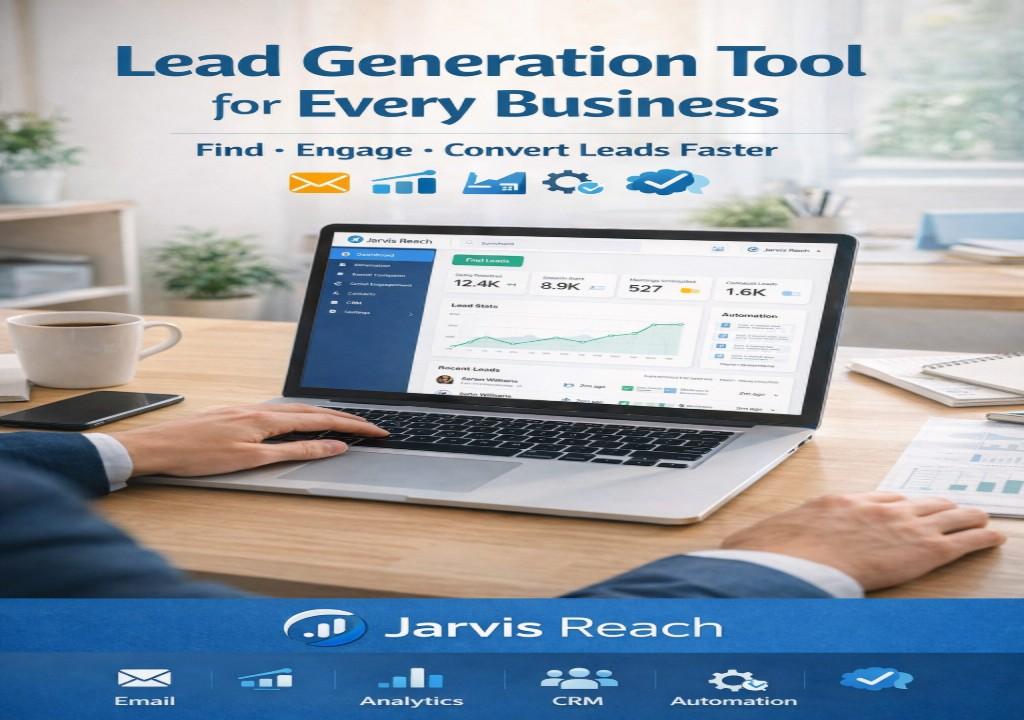
Finding potential customers is one of the biggest challenges for businesses of every size. Whether you run a small company, manage a sales team, or operate a growing SaaS business, having a consistent way to discover and connect with prospects can make a real difference. This is where lead generation tools become useful.
The right tools help businesses identify potential buyers, collect relevant contact information, organize prospects, and track communication throughout the sales process. Instead of relying entirely on manual research, teams can use technology to save time and focus on building valuable customer relationships.
What Is Lead Generation?
Lead generation is the process of attracting people or businesses that may be interested in a product or service. A lead could be someone who fills out a website form, downloads a resource, requests a product demonstration, or matches a company's ideal customer profile.
For B2B companies, lead generation often involves researching businesses, identifying decision-makers, finding professional contact details, and reaching out through email or other communication channels.
An effective lead generation strategy combines useful content, targeted outreach, accurate data, and a clear follow-up process.
Why Businesses Need Lead Generation Tools
Manual prospecting can take considerable time, especially when sales teams need to research hundreds of potential customers. Lead generation tools simplify several parts of this process and help teams maintain organized records.
Here are some important benefits:
-
Save research time: Find relevant companies and potential buyers more efficiently.
-
Improve targeting: Focus on prospects that match your industry, location, company size, or customer profile.
-
Organize contact information: Keep prospect details in a structured system.
-
Support sales outreach: Prepare more relevant messages for potential customers.
-
Measure progress: Monitor lead sources, follow-ups, and conversions.
-
Improve collaboration: Allow marketing and sales teams to work with shared information.
Using tools does not automatically guarantee more sales. Results depend on the quality of your data, your offer, and how well you communicate with prospective customers.
Types of Lead Generation Tools to Consider
1. Lead Research and Contact Discovery Tools
Contact discovery platforms help businesses research companies and locate professional contact information. These tools can be useful for B2B sales teams that need to identify relevant prospects before beginning outreach.
When comparing a lead generation tool, look at its data coverage, search filters, accuracy, pricing, and available export options. If your team works with large prospect lists, check whether the platform supports bulk searches and integrations with your existing workflow.
Choose a provider that explains where its data comes from and offers ways to correct inaccurate information.
2. Email Finding and Verification Tools
Finding an email address is only one part of successful prospecting. Businesses also need to check whether contact information is likely to be valid before sending campaigns.
Email-finding tools help discover professional email addresses, while email verification services assess whether addresses appear deliverable. Using both carefully can support cleaner contact lists and reduce avoidable delivery problems.
However, verification results are not a guarantee that every message will reach an inbox. Teams should also maintain a good sender reputation, follow applicable email marketing laws, and respect unsubscribe requests.
3. SaaS Tools for Marketing Automation
Marketing automation platforms help businesses manage repetitive activities such as email sequences, form submissions, lead nurturing, and campaign reporting.
Many SaaS tools allow marketers to create workflows based on user actions. For example, someone who downloads a product guide may receive a relevant follow-up message or be assigned to a sales representative.
Automation works best when messages are useful and appropriately targeted. Sending too many generic emails can damage engagement and reduce trust.
4. Lead Management and CRM Platforms
Generating leads is not enough if a business cannot organize and follow up with them. Lead management systems and customer relationship management (CRM) platforms help teams record prospect details, track conversations, assign tasks, and monitor sales opportunities.
A CRM can also help identify leads that need attention and show where prospects are moving through the sales pipeline.
For small businesses, a simple system with contact records and follow-up reminders may be sufficient. Larger teams may need reporting dashboards, role-based access, and integrations with other sales applications.
5. Lead Tracking Software
Lead tracking software helps businesses understand where prospects come from and what happens after their first interaction. Depending on the platform, teams can monitor website form submissions, campaign responses, sales activities, and conversions.
This information helps identify which marketing channels generate useful leads rather than simply attracting traffic.
For example, a company might discover that a webinar generates fewer leads than a social media campaign but produces more qualified sales opportunities. Tracking both lead volume and lead quality helps businesses make better decisions about their marketing budget.
How to Choose the Right Lead Generation Tools
Not every business needs a large collection of applications. Start by identifying the biggest problem in your current process.
Consider these factors before choosing a platform:
-
Business requirements: Decide whether you need contact discovery, email verification, automation, or lead management.
-
Ease of use: Select tools your team can learn and use consistently.
-
Data quality: Review available coverage, accuracy, and update practices.
-
Integration options: Check compatibility with your CRM, email platform, and existing systems.
-
Pricing: Compare subscription costs, usage limits, and additional charges.
-
Privacy and compliance: Review data handling practices and applicable privacy requirements.
-
Reporting: Make sure you can measure lead quality, response rates, and conversions.
Testing a free trial or limited plan can help you understand whether a tool fits your workflow before making a long-term commitment.
Best Practices for Getting More Value from Lead Gen Tools
Technology is most effective when it supports a well-planned sales process. Start by defining your ideal customer profile and identifying the industries, business sizes, and roles most likely to benefit from your product.
Keep your contact database organized and remove outdated or irrelevant records. Personalize outreach based on a prospect's business needs instead of sending the same message to everyone. Use lead tracking to understand which activities produce meaningful conversations, and regularly review your results.
It is also important to protect customer data and follow relevant privacy and anti-spam regulations. Use appropriate contact sources, respect communication preferences, and provide a clear way for recipients to opt out where required.
Final Thoughts
The right combination of lead generation tools can help businesses find prospects, organize contact data, improve follow-ups, and understand their sales performance. Contact discovery platforms, email verification services, marketing automation systems, CRM software, and lead tracking software each support a different part of the process.
Rather than adopting every available application, choose tools that solve your most important challenges and work well together. With accurate data, thoughtful outreach, and consistent lead management, businesses can build a more organized approach to finding potential customers and turning promising opportunities into lasting relationships.

 Arabic
 French
 Spanish
 Portuguese
 Deutsch
 Turkish
 Dutch
Dutch
 Italiano
 Russian
 Romaian
 Portuguese (Brazil)
 Greek
Greek
