


RFID Access Control Systems for Offices Across the KSA
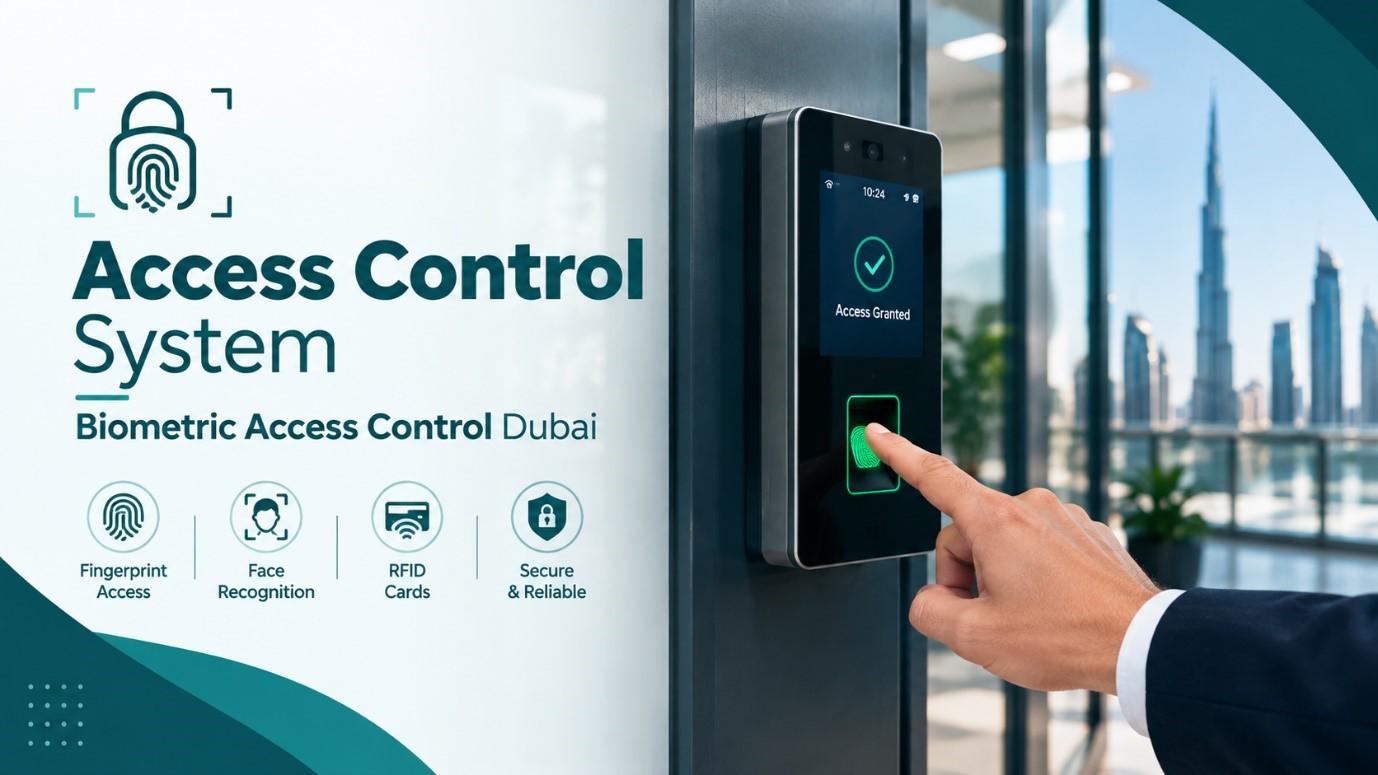
A modern Access Control System based on RFID technology helps offices across the Kingdom of Saudi Arabia decide who can enter, when they can enter and which areas they can reach. From corporate headquarters in Riyadh to branch offices in Jeddah, Dammam and Al Khobar, organizations now treat the door as a key part of their cybersecurity and safety posture.
Saudi Arabia is expanding its business landscape quickly under Vision 2030, and every new tower, campus and shared workspace needs dependable entry control. This article explains how RFID credentials, readers, controllers and software work together, how biometrics and mobile credentials extend protection, and how office owners can plan a compliant, scalable deployment.
Why Saudi Offices Are Moving to RFID Credentials
Metal keys are easy to copy, hard to track and expensive to replace when an employee leaves. Paper logs and informal guard checks leave gaps that auditors and insurers no longer accept. RFID credentials solve these problems because each card or tag carries a unique encrypted identity that can be issued, suspended or deleted in seconds from a central console.
Offices also gain a clear audit trail. Every badge read is stored with time, door and user, so security managers can answer questions about an incident without searching through paper records. For companies handling client data, regulated information or intellectual property, this visibility has become a basic expectation rather than a luxury.
How RFID Credentials, Readers and Controllers Work
Credential Technologies
Modern offices typically choose high frequency smart cards operating at 13.56 MHz, such as those built on MIFARE DESFire and HID Seos platforms. These use mutual authentication and strong encryption, which makes cloning far harder than with older 125 kHz proximity cards. Operators migrating from legacy cards can use multi technology readers to transition gradually without disrupting daily work.
Readers and Controllers
When an employee presents a credential, the reader sends the identity to a controller, which checks it against stored rules for that door and time schedule. If the rule allows entry, the controller releases the lock within a fraction of a second. Because decisions are made locally at the controller, doors keep working even if the network is temporarily unavailable, and events synchronize with the central server once the link returns.
Adding Biometrics for Higher Assurance
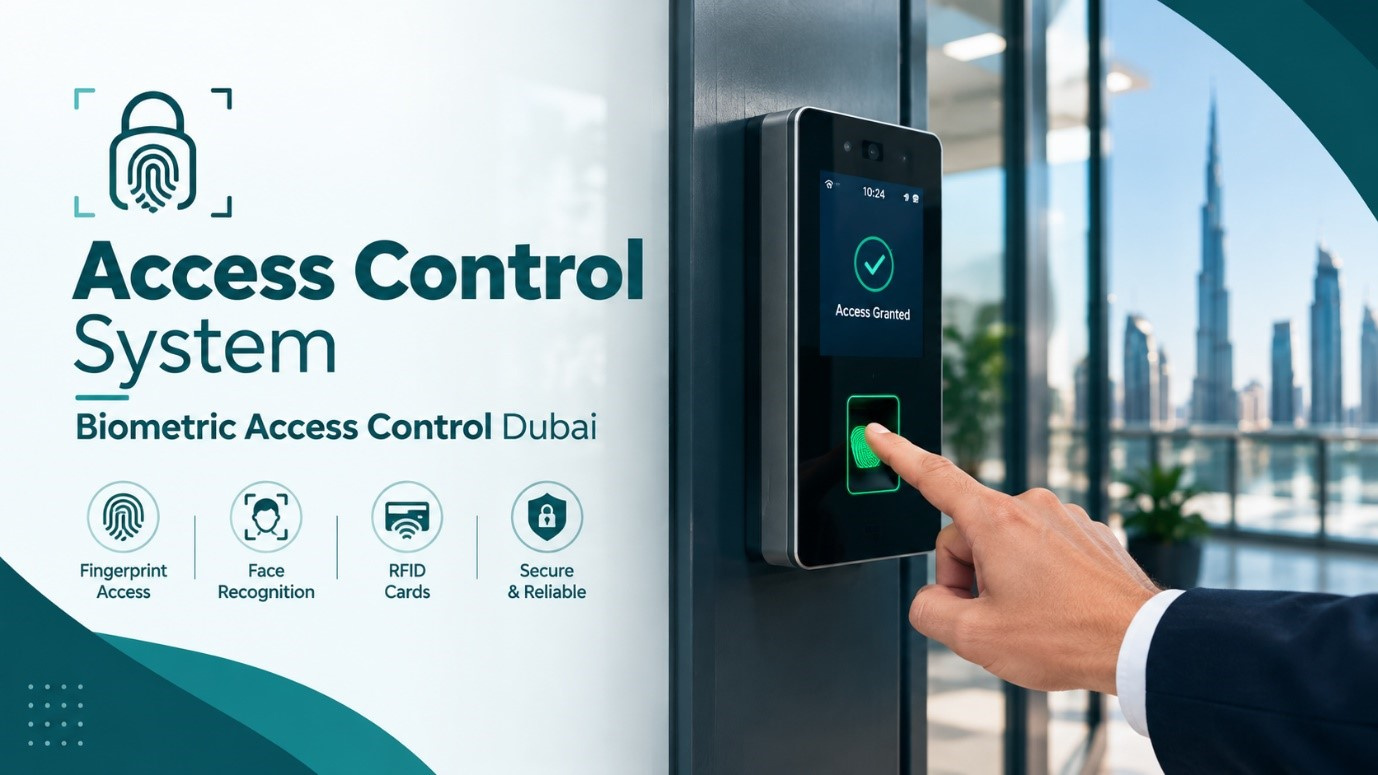
Cards can be lost, shared or borrowed, so sensitive rooms often need proof that the person is the rightful holder. A Biometric Access Control System adds fingerprint, face or iris verification to the credential, linking entry rights to the individual rather than to an object. Server rooms, finance departments, executive floors and research areas are common candidates for this extra layer.
Facial recognition readers are especially popular in offices because they are fast and touchless. Employees walk up, look at the device and pass through without removing gloves or handling a card. Responsible deployments store templates rather than raw images, encrypt them and follow privacy rules, which protects staff while delivering strong identity assurance.
Layered Protection Across the Workplace
Strong protection comes from layers rather than a single lock. A Security Access Control System combines perimeter gates, lobby turnstiles, floor level readers, lift controls and room level locks, each with rules matched to the risk of the area. Visitors receive temporary credentials limited to specific floors, contractors are restricted to working hours, and high risk zones require dual authentication.
Integration multiplies the value. Linking entry events to video surveillance lets investigators jump straight to the right footage. Connecting to fire alarms ensures doors unlock safely during evacuations. Feeding data into human resources platforms automatically removes access when employees change roles or leave the company, which closes one of the most common security gaps in growing organizations.
Readers, Controllers and Field Hardware
Every Access Control Device on site, including readers, controllers, electric locks, exit buttons and door sensors, should be chosen for reliability, certification and long term support. Offices in the Gulf climate need hardware tested for heat and dust, while public facing entrances benefit from tamper alerts and vandal resistant housings. Standard protocols such as OSDP provide encrypted communication between readers and controllers and are preferred over older wiring methods.
Careful installation matters as much as product choice. Correct cable routing, power backup, door hardware compatibility and fail safe settings determine whether a system performs well for years. Working with certified installers reduces service calls and protects warranties.
Smartphone Credentials and Cloud Management
Employees already carry a phone everywhere, so using it as a credential is a natural step. Secure mobile credentials work through Bluetooth or NFC, can be sent by email in minutes and can be revoked instantly if a phone is lost. This removes card printing, courier delays and replacement costs, and it is particularly helpful for companies with several offices or a hybrid workforce.
Cloud based management adds further flexibility. Administrators can update schedules, add new staff and review events from a browser, and regional managers can compare activity across Riyadh, Jeddah and the Eastern Province in one dashboard. Organizations that prefer to keep data inside the Kingdom can choose private cloud or onsite hosting while still enjoying the same convenience.
Mobile credentials also improve the guest and contractor experience. Temporary passes can be sent before arrival, limited to specific doors and set to expire automatically, which reduces the workload for reception and ensures that short term access never turns into permanent access by mistake.
Planning a Rollout in the Kingdom
A successful Access Control System KSA project starts with a site survey, a risk assessment and clear policies about who needs access to which areas. Planners should align with the Personal Data Protection Law overseen by the Saudi Data and Artificial Intelligence Authority, and with the Essential Cybersecurity Controls published by the National Cybersecurity Authority. Questions about encryption, retention, administrator authentication and onshore hosting should be answered before purchase.
A phased approach reduces risk. Begin with a pilot on one floor or entrance, collect feedback, refine schedules and then expand. Training for receptionists, security officers and administrators ensures the new routines are followed. Regular reviews of reports and access rights keep the system accurate as the organization grows.
Measuring Results and Return on Investment
Return on investment appears in several places. Reception and security teams spend less time issuing keys and checking lists, human resources spends less time handling lost cards, and managers gain instant reports for audits and insurance reviews. Fewer security incidents and faster investigations reduce hidden costs that are easy to overlook.
To prove value, set baseline measures before launch. Useful indicators include the number of unauthorized entry attempts, time to deactivate a leaver, time to produce an audit report and the percentage of doors covered by electronic control. Reviewing these figures every quarter shows what is working and where adjustments are needed, which keeps the program aligned with business goals and ready for future expansion.
Future readiness matters too. Choosing open standards and upgradeable hardware means the organization can add facial recognition, turnstiles, parking control or visitor handling later without replacing the foundation.
Why Offices Trust Tektronix
Tektronix Saudi Arabia combines engineering expertise in access control, biometrics, video analytics, visitor handling and smart lockers, and works with recognized security technology brands. This breadth allows the team to design entry control as part of a complete security architecture rather than an isolated product.
Projects follow a documented process of survey, design, commissioning, training and ongoing support, with clear handover documents and named contacts. Customers looking for a connected RFID workplace security platform benefit from local knowledge of Saudi regulations, bilingual user needs and regional building practices, which reduces delays and builds confidence at every stage.
Conclusion
RFID credentials give Saudi offices a fast, auditable and flexible way to protect people, assets and information. Reliable Door Access Control ensures that only approved employees and guests reach each room. Smartphone credentials through Mobile Access Control remove plastic cards and simplify onboarding for growing teams. Integration with video, alarms and human resources data strengthens every layer of workplace security.
Companies seeking a trusted Access Control System Riyadh partner can rely on Tektronix to design, install and support the solution.
FAQs
1. What does a complete office deployment include?
Professional Access Control Solutions include credentials, readers, controllers, locks, management software, integration with video and alarms, installation, training and ongoing support.
2. Is RFID secure enough for sensitive areas?
Yes, when encrypted smart cards and secure reader protocols are used. For the most sensitive rooms, combine the card with a fingerprint or face check.
3. Can employees use smartphones instead of cards?
Yes. Mobile credentials can be issued, revoked and updated remotely, which saves time and reduces card printing costs.
4. How does the platform support Saudi data protection rules?
Choose a platform with encryption, role based permissions, configurable retention and audit logs that align with the Personal Data Protection Law and national cybersecurity guidance.
5. How long does installation take?
A single office floor can often be completed within a few weeks, while multi floor or multi site projects depend on scope, hardware delivery and training. A site survey provides the most accurate timeline.

 English
 Arabic
 French
 Spanish
 Portuguese
 Deutsch
 Turkish
 Dutch
Dutch
 Russian
 Romaian
 Portuguese (Brazil)
 Greek
Greek
