


Improving Valve Reliability in Cryogenic Pipelines
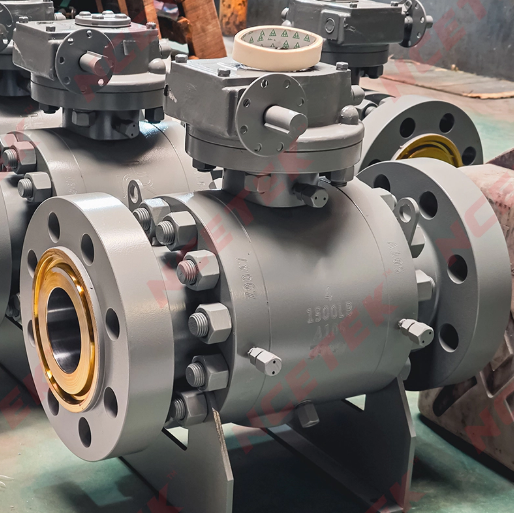
Extremely low temperatures create demanding conditions for industrial flow control equipment. Materials may become less tolerant of impact, components contract as temperatures fall, and sealing interfaces can behave differently from those in ambient-temperature service. Effective Cryogenic Ball Valve Design therefore requires coordinated attention to material selection, valve geometry, sealing arrangements, stem construction, and verification under appropriate conditions. These factors are especially important in liquefied natural gas facilities, industrial gas production, and other processes that transport or control fluids at very low temperatures.
Material compatibility is one of the first design considerations. A material that performs adequately at room temperature may not provide the required toughness or dimensional stability in cryogenic service. Designers must consider the minimum operating temperature, pressure conditions, fluid properties, and applicable standards when selecting body, ball, stem, fastener, and trim materials. Austenitic stainless steels are commonly considered for many cryogenic applications because of their low-temperature toughness, but the suitability of any grade must be confirmed for the specific service. Material certificates and traceability may also be important for critical installations.
Thermal contraction affects the relationships between internal and external components. As the valve cools, the body, ball, stem, and seats may contract at different rates. If these effects are not considered, the result can be excessive contact stress, altered operating torque, or reduced sealing reliability. Design calculations and qualification testing should address expected temperature changes, pressure loading, and the possibility of repeated thermal cycling. Appropriate clearances and component tolerances help the valve accommodate these changes while preserving the intended shut-off function.
Sealing technology is another central issue. Seat materials must remain suitable at the required temperature and must also tolerate the fluid, pressure differential, and expected operating cycles. Soft seats can provide effective sealing in applications where their temperature and chemical limits are satisfied. Metal-seated constructions may be appropriate for selected severe-service conditions, although leakage performance and operating torque depend on the specific design. Engineers should evaluate the complete seat arrangement rather than selecting a sealing material based on temperature alone.
Stem extension is often necessary because the operating mechanism must remain accessible while the valve body is exposed to cryogenic fluid. An extended bonnet or stem arrangement can help position the actuator or handle away from the coldest region, depending on the system layout. Extension length, insulation, mounting position, and heat transfer should be assessed together. The design must also consider potential condensation, frost formation, access for inspection, and the effects of the surrounding environment on operating equipment.
Pressure management and internal cavity behavior require attention as well. Some valve configurations can trap liquid in the body cavity when closed. If that liquid warms and expands, pressure may increase significantly. The appropriate cavity-relief or pressure-relief arrangement depends on the valve design, flow direction, process requirements, and applicable safety standards. Engineers should establish whether the selected construction addresses trapped-liquid pressure and whether installation orientation or flow direction affects safe operation.
Operational performance must be considered alongside static sealing. Low-temperature service may involve frequent cycling, long periods in one position, rapid cooldown, or changes in pressure. These conditions influence actuator sizing, stem torque, seat wear, and maintenance intervals. The actuator and valve should be selected as a coordinated assembly, with adequate operating margin under the expected temperature and pressure conditions. Where automated operation is required, instrument and actuator components should also be appropriate for the environmental exposure.
Inspection and testing help verify that the design performs as intended. Depending on the application and governing standard, requirements may include shell pressure tests, seat leakage tests, dimensional checks, material verification, and cryogenic testing under controlled conditions. Testing at ambient temperature alone does not necessarily demonstrate performance at extremely low temperatures. Project specifications should clearly identify required test conditions, acceptance criteria, documentation, and traceability expectations before manufacturing begins.
Correct installation and commissioning are equally important. Pipelines should be prepared according to project procedures, and cooldown should follow the process designer's instructions to avoid unnecessary thermal shock. Operators should verify flow direction, actuator settings, accessible stem arrangements, and insulation requirements. Maintenance teams should use approved procedures and compatible replacement components to avoid compromising low-temperature performance.
Reliable Cryogenic Ball Valve Design depends on treating the valve as an integrated pressure-containing and flow-control system rather than a standard valve with a different material. Zhejiang Naishi Valve Co., Ltd. offers industrial valve solutions for specialized operating environments, with model selection and configuration requiring confirmation against the project's temperature, pressure, medium, and testing requirements. To review available products and discuss application needs, visit https://www.ncevalve.com/product/.

 English
 Arabic
 French
 Spanish
 Portuguese
 Deutsch
 Turkish
 Italiano
 Russian
 Romaian
 Portuguese (Brazil)
 Greek
Greek
