


Fire Safety at Work What Building Owners Should Know Before Installing an Alarm System
Fire incidents rarely give warning, and by the time smoke or flames are visible, the window for a safe response is often very small. This is why fire detection is treated as a basic safety requirement in most commercial and institutional buildings rather than an optional upgrade. Property owners planning to install protection often begin by checking the fire alarm system price in pakistan so they can budget properly, but understanding the system itself is the more important first step.
The Core Components of a Detection System
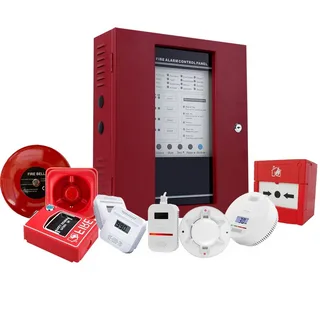
A fire alarm system is a network rather than a single device. Each element plays a specific role in detecting and warning:
-
Smoke detectors — sense smoke particles before flames appear.
-
Heat detectors — respond to a rapid rise in temperature.
-
Control panel — the brain of the system, receiving and processing signals.
-
Sounders and flashing strobes — alert occupants audibly and visually.
-
Manual call points — allow anyone to raise an alarm immediately.
-
Power backup — keeps the system functional during outages.
Working together, these components provide both early warning and a clear signal for evacuation.
Where Fire Alarms Are Now Considered Necessary
Fire detection is no longer limited to industrial sites. It is now commonly installed in:
-
Office buildings and multi-storey commercial towers.
-
Factories and manufacturing units.
-
Schools, colleges, and universities.
-
Hospitals and clinics.
-
Warehouses and logistics facilities.
-
Hotels, restaurants, and retail outlets.
In many cases, insurance providers and building regulations also require documented fire detection as a condition of occupancy.
What Affects the Overall Cost
Pricing varies significantly from one project to another. The main factors include:
-
Building size and layout — more area means more detectors and zones.
-
System type — conventional systems versus addressable ones.
-
Number of zones — how the building is divided for detection.
-
Detector quality — standard units versus multi-sensor models.
-
Installation complexity — wiring runs, panel placement, and cabling.
-
Monitoring options — whether the system connects to an external service.
Because of this, two buildings of similar size can have very different system costs. A site-specific assessment is generally the most reliable way to get an accurate figure.
Maintenance Matters More Than Most People Realise
Even a well-installed system can lose effectiveness over time. Dust accumulation, ageing sensors, and power issues can all affect performance. Routine servicing, periodic testing, and keeping a log of inspections help ensure the system responds correctly when it is genuinely needed. This is particularly important in dusty or high-traffic environments where detectors are exposed to more contaminants.
Final Thoughts
Fire alarm systems are a fundamental part of any responsible building safety plan. While cost is understandably a consideration, the real value lies in early detection and the time it gives occupants to respond safely. For readers who want more updates on technology, business, and safety-related topics, additional articles are regularly published on SocioMint, where a variety of content is shared for a broad audience.

 English
 Arabic
 French
 Portuguese
 Deutsch
 Turkish
 Dutch
Dutch
 Italiano
 Russian
 Romaian
 Portuguese (Brazil)
 Greek
Greek
