


Why a Restored Couch Often Costs Less Than Disposable Furniture Over a Decade
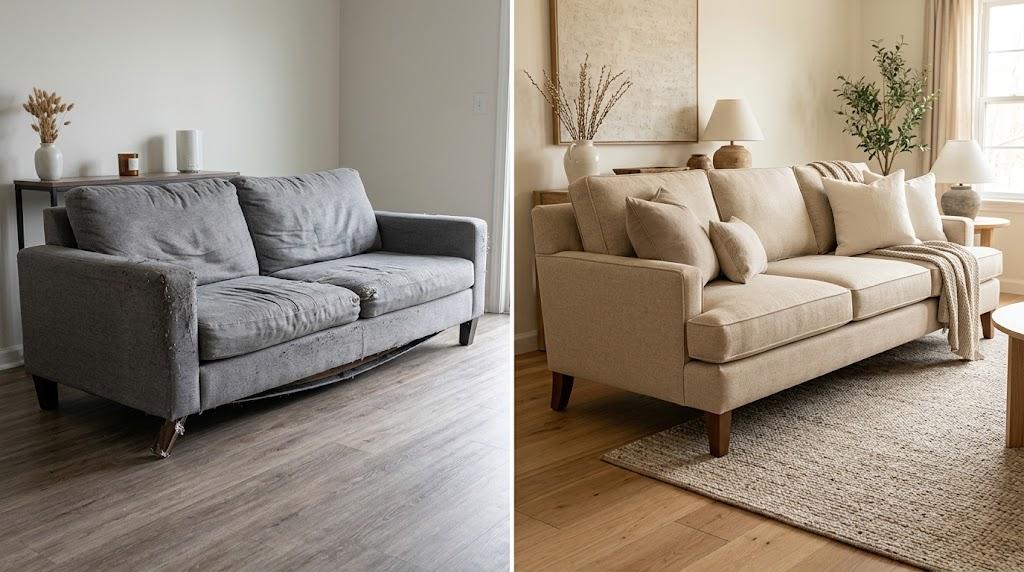
Many people have faced this situation. A room needs a couch, and the budget is tight. A large retailer offers a quick, low-cost option. The piece looks fine and arrives within days.
After a few years, cushions flatten. Fabric pills. A leg becomes wobbly. The couch is discarded, and the search begins again.
This cycle is called fast furniture. It seems cheap at the register. Yet the total expense grows with each replacement. Over a decade, the cost can exceed that of restoring one solid piece.
That is where professional restoration enters the picture. The comparison involves structure, materials, and hidden costs. A closer look reveals why repair can be the wiser financial path.
The Disposable Furniture Trap
Fast furniture is designed for quick turnover, not long service. Producers use inexpensive materials to keep costs low. Frames may be particleboard or soft pine. Staples and glue often replace proper wood joinery.
Fabric is typically thin and synthetic. Cushions contain low-density foam that compresses within months. The expected lifespan is short. A typical piece may last three years.
With children or pets, two years is common. Replacement becomes a routine expense. The initial outlay is low, but the total grows. Each new couch brings delivery and disposal fees.
Consider a simple scenario. If a couch is replaced three times in ten years, the purchase cost multiplies. Logistics add more. The total outlay for uncomfortable furniture far exceeds the first receipt.
For owners of a sturdy older sofa, sofa reupholstery offers a different path. Instead of paying for a new frame and springs, the existing structure is retained. Only the worn surfaces are renewed. This approach changes the long-term calculation.
Hidden Costs of Buying New
Buying new also consumes time. There is shopping, delivery scheduling, and sometimes assembly. Warranties often cover defects for a short period. They rarely cover normal wear.
When foam flattens after a year, the owner bears the cost. Resale value for low-cost furniture is minimal. Moving often means leaving it behind. These expenses do not appear on the price tag.
Over repeated cycles, the hidden costs grow. The convenience of a quick purchase is offset by ongoing hassle. This is part of the long-term comparison.
A low-cost couch may also lack replacement parts. Cushion covers may not be available. Legs may loosen with no easy fix. The owner is left with limited options.
When exploring sofa upholstery services, ask about the frame's condition. A sound frame is an asset. Renewing it can be less expensive than buying several short-lived couches. The upfront figure is higher, but the long-term figure is often lower.
What Makes a Sofa Worth Saving
To understand the financial case for restoration, examine how a quality couch is built. A well-made sofa, especially one from fifteen or twenty years ago, often has a solid hardwood frame. Joints are screwed, doweled, and glued. Springs are metal coils tied by hand.
This construction can last for decades. The frame rarely fails. The springs rarely break. The soft materials wear out first.
Fabric, foam, and thread are the weak points. A low-cost new couch includes a new frame and springs. An older couch with a good frame already has the costly parts. Only the covering and cushioning need renewal.
Sofa reupholstery fits this situation. A craftsperson strips the piece to the frame. Weak joints are repaired, and springs are retied. New foam and fabric are fitted.
The frame can also be reinforced during the process. Loose joints are tightened. Broken webbing is replaced. These steps extend the useful life of the piece.
The Math Behind Restoration
The upfront cost of restoration can surprise people. The work is labor-intensive. Old fabric is removed. The frame is inspected and repaired.
New foam is cut, and a new cover is sewn. The process takes skill and time. Yet the comparison should span a decade, not a single receipt. A restored solid sofa may serve many more years.
Spread over that period, the annual cost is modest. Repeated replacement often costs more per year. Delivery and disposal add to the total. The long-term figure favors restoration when the frame is sound.
When considering sofa upholstery services, focus on the frame's condition. A sound frame is an asset. Renewing it can be less expensive than buying several short-lived couches. The upfront figure is higher, but the long-term figure is often lower.
The comparison should also include time and effort. Restoration requires one project. Repeated buying requires ongoing attention. The quieter cost is the mental load of constant replacement.
Better Materials, Better Longevity
A low-cost couch comes with factory-selected foam and fabric. That usually means low-density foam that compresses quickly. The buyer has no control over durability.
Restoration allows the owner to specify materials. Higher-density foam holds its shape longer. It resists permanent dents. A heavy-duty fabric with a high rub count can also be chosen.
The old couch becomes a custom piece. This is a practical advantage of sofa reupholstery. A new budget couch cannot match that level of material choice.
Fabric color and texture can be selected to match the room. Stain-resistant options are available. The owner can also choose a weave that suits pets or children. The result is a piece tailored to the household.
Comfort and Familiarity
Comfort matters alongside cost. A new couch often has a break-in period. It may feel stiff. The body needs time to adjust.
An existing couch already fits the owner's habits. Cushions have settled into a familiar shape. Restoration preserves those dimensions. The upholsterer can adjust foam firmness if desired.
The owner keeps the comfort of a known piece. The appearance is refreshed. This benefit does not appear in a simple cost comparison.
Seat depth and back height remain unchanged. Armrests stay in the same position. A quiet advantage of sofa upholstery services is that the piece continues to fit the room. The people who use it keep their familiar seating.
Avoiding Disposal Hassles
Removing an old couch is difficult in many places. Curbside pickup is not always available. A truck rental and dump fee may be required. Listing it online depends on finding someone to collect it.
Fast furniture creates this problem every few years. Restoration reduces the burden. The couch stays in the home. Old fabric is taken away by the upholsterer.
This is a practical advantage of sofa reupholstery. The piece is renewed rather than discarded. The owner avoids heavy lifting and disposal fees.
The home also avoids the disruption of a new delivery. No new couch must be squeezed through a doorway. No old couch must be dragged to the curb. The project happens in place.
When to Restore and When to Replace
Not every couch is worth saving. A flat-pack piece bought recently may not justify the investment. The frame may be too weak. A simple test can help.
Push one end of the couch diagonally. If it wobbles significantly, the frame may be loose. If it feels solid and heavy, restoration may be viable. Lift the bottom dust cover and inspect the wood.
Solid wood and metal springs are positive signs. A professional offering sofa upholstery services can assess the frame honestly. A good technician will decline a job if the structure is rotten.
Sofa reupholstery can be a sound choice rather than a wasted expense. The final decision should rest on the frame's condition. Age alone does not determine value.
A well-built older piece may outlast a new budget model. The key is the quality of the frame and springs. A careful inspection answers that question.
Environmental Benefits
Fast furniture contributes to landfill waste. Millions of tons of furniture are discarded each year. Much of it is low-cost seating that failed after a short time.
Restoration keeps bulky items out of the waste stream. It preserves a solid wooden frame. The fabric may look tired, but the structure remains useful. Using what already exists reduces demand for new materials.
The environmental benefit is practical rather than dramatic. One restored couch means one less piece of furniture in a landfill. It also means fewer resources are used to build a replacement. Small choices accumulate over time.
The Long-Term Conclusion
Fast furniture relies on a low initial outlay. That figure does not reflect the full cost of repeated replacement. Over ten years, buying several short-lived couches can cost more in money, time, and hassle.
If a sofa has a solid frame, worn fabric is not a reason to discard it. Investigate restoration options. Run the numbers for the specific situation. Over a decade, keeping and restoring a well-built piece is often the more economical and comfortable decision.

 English
 Arabic
 Spanish
 Portuguese
 Deutsch
 Turkish
 Dutch
Dutch
 Italiano
 Russian
 Romaian
 Portuguese (Brazil)
 Greek
Greek
