


Modern Manufacturing Solutions for Vehicle Lighting
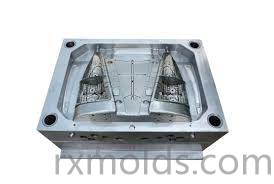
Original equipment automotive lighting must satisfy a combination of visual, mechanical, optical, and assembly requirements. A lamp assembly may contain transparent lenses, reflective surfaces, structural housings, light guides, mounting brackets, and other molded components that work together within a limited space. Each part must follow approved drawings and fit the surrounding assembly accurately. Developing an OEM Automotive Lamp Mold therefore involves more than reproducing the exterior shape of a component; it requires coordinated engineering to control material flow, surface quality, dimensional stability, and production repeatability.
The development process begins with a review of product data, functional requirements, and manufacturing expectations. Engineers examine the three-dimensional model, wall thickness, draft angles, undercuts, fastening features, and parting-line options. They also identify cosmetic surfaces and dimensions that are critical to final assembly. If the product contains thin optical sections, deep ribs, or complex curved surfaces, these features may influence mold orientation, cavity layout, gate selection, and ejection design. Early communication between the customer and tooling team helps clarify potential manufacturing limitations before detailed mold construction begins.
Polymer selection must reflect the function of each lamp component. Transparent lenses may require materials with suitable optical properties and environmental resistance, while housings may use engineering plastics selected for strength, dimensional stability, and thermal performance. The correct choice depends on the component's location, exposure conditions, design requirements, and applicable customer specifications. Resin properties also influence processing behavior. Shrinkage, melt viscosity, moisture sensitivity, and thermal characteristics affect cavity dimensions and the conditions needed to fill and cool the part. These factors should be reviewed before the mold design is finalized.
Gate and runner design are central to filling performance. A poorly positioned gate can create visible weld lines, uneven flow, or excessive pressure requirements. In transparent components, flow-related defects may be particularly noticeable because surface appearance and optical quality are often closely scrutinized. Mold flow simulation helps engineers compare possible gate positions, examine filling patterns, and identify areas where air may become trapped. Venting must then provide a suitable path for displaced air to escape without allowing unwanted flash. Simulation is most effective when supported by reliable material data and confirmed through physical trials.
Cooling design affects both part quality and manufacturing productivity. Lamp components can combine thin walls with thicker mounting areas or structural features, causing different regions to cool at different rates. If heat removal is poorly balanced, the finished part may develop warpage, residual stress, or dimensional variation. Cooling channels should be designed around the component's geometry while maintaining the mold's structural integrity. Where conventional channels cannot provide sufficient temperature control, engineers may assess alternative channel layouts or localized cooling approaches. The objective is to achieve consistent solidification while keeping cycle time and maintenance requirements practical.
Precision machining determines how accurately the cavity reproduces the approved product model. CNC machining is used for many complex profiles and fitting surfaces, while EDM can produce detailed features and narrow recesses. Optical surfaces may require additional polishing and careful protection against contamination or damage. Dimensional inspection verifies critical cavity features, alignment, and interfaces before assembly. For projects involving multiple cavities or interchangeable inserts, consistency between machined components is important because differences can lead to variations in finished parts or complicate production control.
Ejection and mold movement require equal attention. Sliders and lifters may be necessary to release undercuts, side openings, or complex mounting features. Ejector pins and sleeves must be positioned to remove the molded part without distorting thin sections or leaving unacceptable marks on visible surfaces. Guiding systems and moving mechanisms should operate smoothly throughout repeated cycles. The design must also allow practical access for cleaning, lubrication, inspection, and repairs. These considerations influence not only initial performance but also the cost and reliability of long-term operation.
Mold trials provide an opportunity to validate design assumptions using actual material and processing equipment. Engineers evaluate filling, packing, cooling, demolding, dimensions, and surface appearance, then adjust parameters or modify tooling features when necessary. Short shots may indicate insufficient filling, while flash can result from sealing problems, excessive pressure, or unsuitable clamping conditions. Warpage may be linked to uneven cooling, material shrinkage, or part geometry. Recording trial conditions and corrective actions helps the team establish a repeatable process rather than relying on undocumented adjustments.
Once production begins, ongoing quality management helps maintain the original performance of the tooling. Routine checks can identify worn shutoff surfaces, blocked vents, damaged cavity finishes, or cooling-system problems. Maintenance records support planned servicing and help identify recurring defects. For OEM programs, drawing revisions, material traceability, inspection standards, and change approvals should be managed carefully to keep production aligned with the customer's requirements. Taizhou Renxin Mould Co., Ltd. supports automotive tooling projects through coordinated mold design and manufacturing. Buyers can learn more at https://www.rxmolds.com and discuss drawings, materials, validation needs, and production plans when considering an OEM Automotive Lamp Mold for an original equipment lighting application.

 English
 Arabic
 French
 Spanish
 Portuguese
 Deutsch
 Turkish
 Dutch
Dutch
 Italiano
 Russian
 Portuguese (Brazil)
 Greek
Greek
