


Ground to Air Antennas: Sculpting the Beam to the Airspace
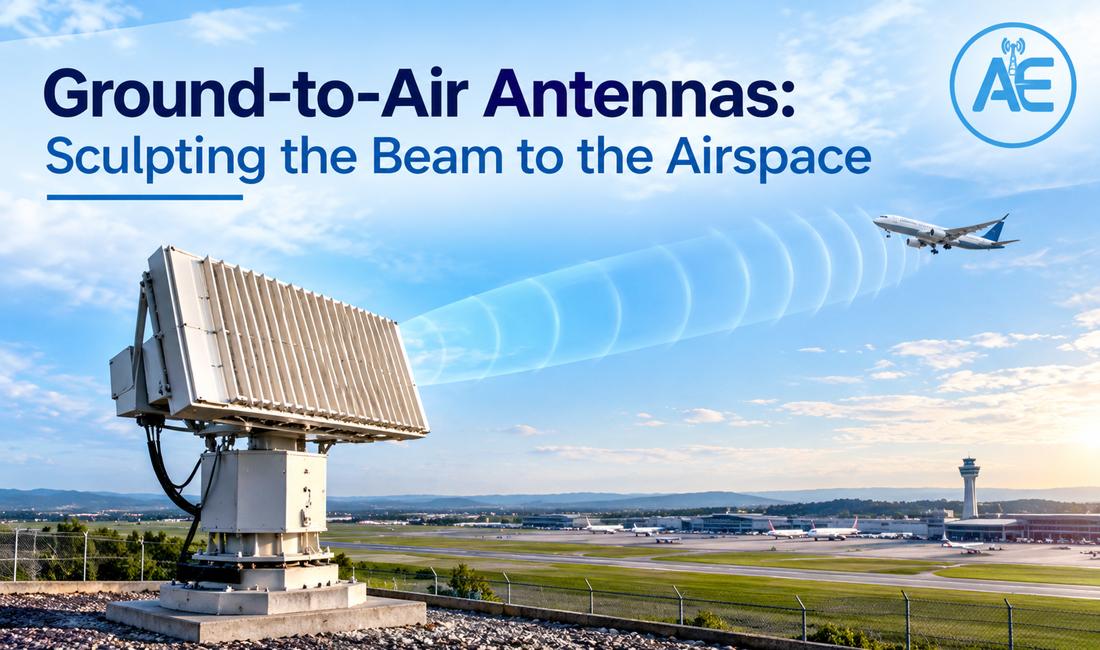
Ground to Air Antennas: Sculpting the Beam to the Airspace
The air ground communication system includes a ground to air antenna, which ensures controllers and pilots can reliably communicate with each other through radio signals across a specific airspace. It is not merely to transmit and receive, but to produce a radiation pattern that actually conforms to the coverage area it is to serve. A station serving a long, narrow air route requires a different beam shape than one serving a broad oceanic area. Getting the right design starts with knowing the airspace and not just picking the antenna with the highest gain; that's where working with a seasoned ground to air antenna supplier in India makes a real world difference.
Why FIR Shape Should Drive Antenna Choice
Antenna selection must be guided by the shape and size of the airspace that a ground station has to cover from the outset. If the station serves a long, narrow air corridor, it is best to have a radiation pattern that concentrates coverage along the corridor, rather than spreading the signal broadwise where there is no traffic. A site responsible for broad regional coverage needs the opposite approach, a pattern that is consistent over a wider area.
- Long Strip vs Oceanic Coverage
Coverage over a large remote or oceanic region is very different from coverage along an elongated route. In either case there is no single best choice of antenna. Which design actually performs best for a particular airspace is dependent on the radiation pattern, site geometry, aircraft altitude, operating frequency and overall link budget. These must be considered in combination and not simply assume a single antenna type will suit all scenarios.
Omni, Sector and Stacked Options for Air Ground Voice
Omnidirectional antennas are useful when traffic can come from any angle around the ground station, since they provide broad coverage in all azimuth directions. Sector antennas , however , focus the coverage on a specific range of angles . This is useful if you know that the traffic will always be coming from certain directions .
Stacked antenna configurations use multiple elements to control the vertical radiation pattern more precisely. That does not mean coverage or gain will necessarily increase everywhere. The actual benefit depends on how the stacking is engineered and what the coverage goal is. When choosing a Ground-To-Air Antenna configuration, start from the traffic pattern. The most complex option is not always the right one.
Elevation Beamwidth for High and Distant Aircraft
The elevation beam width is the vertical width of the antenna radiation pattern . This is of direct relevance when the aircraft are at different altitudes and distances from the ground station . An airplane shaped pattern at cruise altitude is a different animal than one for lower approach traffic nearer the station.
The higher the gain, the narrower the beam is generally in any given plane. However, the antenna geometry and overall design determine the pattern shape, not just the gain. A High Gain ATC Antenna with a big gain figure on its datasheet can still underperform if its elevation pattern does not match the traffic
- Gain vs Vertical Beamwidth
Selecting an antenna solely on the basis of maximum gain can be misleading. A High Gain Yagi Antenna has a narrow beam, so a small tilt error can leave the aircraft operating area uncovered. Gain and vertical beamwidth have to be matched together to the actual altitude and distance range the station actually serves.
Redundancy and Diversity at Remote Sites
Remote ground stations often have redundancy, but a single point of failure can leave a large area without coverage until repairs can be made. Backup antennas, multiple radio paths and dual or separate antenna arrangements all support continuity in the event of primary system failure.
Remote locations can be more difficult to get to for repairs, so site access and maintenance planning is just as important as equipment redundancy. Some technical situations benefit from diversity approaches, but diversity alone does not automatically fix all communication failures. It's designed to deal with certain failure modes. It is not a universal safety net.
- Site Power, Lightning and Access
Everything else depends on reliable power at a remote site. Even a well designed antenna system can’t work without consistent power. Surge and lightning protection can prevent a common source of damage to equipment at exposed installations. Site design, grounding and bonding planning, careful cable routeing and realistic assessment of weather exposure all need to be considered. Tower or mast loading and maintenance access complete the practical considerations affecting long term reliability.
How Antenna Experts Supports Ground to Air Networks
Antenna Experts, New Delhi, India, has over 35 years experience in antenna design, with design, manufacturing and testing done in house under one roof. The selection of a ground to air antenna is generally a series of interrelated engineering decisions concerning frequency range, radiation pattern, gain, elevation coverage, mounting, environmental conditions, cable routing and site limitations.
The company is ISO 9001:2015, ISO 14001:2015 and ISO 45001:2018 accredited and is registered with NATO NCAGE for government and defence procurement. Export experience and installations in over 60 countries show experience with varied site conditions and needs in different markets. This in house structure as a Ground To Air Antenna manufacturer in India helps to address airspace specific coverage requirements as a connected problem, rather than isolated specifications and teams comparing options with a ground to air antenna supplier in India can use these facts as a documented starting point for evaluation.
Conclusion
The right ground to air antenna is not one that claims the highest gain, but rather one that matches its radiation pattern and electrical characteristics to the airspace it needs to serve. Antenna Experts can talk to aviation authorities, ANSPs and integrators working on coverage planning about frequency, coverage area, site and mounting requirements. You might also want to check out the High Gain ATC Antenna, High Gain Yagi Antenna and ILS Antenna ranges.
FAQs
1. What antenna is used for Ground to Air communication?
A Ground to Air Antenna is used for radio communication between aircraft and ground stations. The suitable type depends on the required frequency band, coverage area, antenna height, radiation pattern and aircraft operating altitude.
2. How does the shape of airspace affect antenna choice?
Airspace shape helps determine the required radiation pattern. Wide area coverage may need broader azimuth coverage, while long, narrow air routes may benefit from a more focused pattern directed along the required communication area.
3. Why does elevation beamwidth matter?
Elevation beamwidth determines how widely an antenna radiates in the vertical direction. It affects communication with aircraft at different altitudes and distances, so it should match the station's intended coverage area and flight profile.
4. How is coverage kept reliable at remote sites?
Reliable remote coverage depends on more than the antenna itself. Redundant equipment, backup power, lightning and surge protection, proper grounding, suitable cable routing and planned maintenance can help reduce service interruptions.

 English
 Arabic
 French
 Portuguese
 Deutsch
 Turkish
 Dutch
Dutch
 Italiano
 Russian
 Romaian
 Portuguese (Brazil)
 Greek
Greek
