


What I Learned Preparing for the OTR and Occupational Therapy Certification?
How Preparing for the OTR Exam Changed My Perspective?
When I began preparing for the Occupational Therapist Registered (OTR) examination, I approached the material as a collection of subjects I needed to review. I revisited anatomy, neurological conditions, rehabilitation principles, and therapeutic interventions, expecting that stronger recall would make the examination easier.
However, I soon realized that occupational therapy requires a different level of thinking. Knowing that a patient has limited shoulder movement is useful, but understanding how that limitation affects dressing, bathing, or reaching into a kitchen cabinet is even more important.
This became the central lesson of my preparation: occupational therapy is not simply about treating a physical limitation. It is about understanding how that limitation affects a person's ability to participate in everyday life.
What the OTR Exam Taught Me About Functional Assessment?
Functional assessment became one of the most meaningful areas of my review. I learned to look beyond a diagnosis and consider the relationship between the patient, the activity, and the surrounding environment.
For example, imagine an older adult who struggles to prepare meals after a hospital stay. Reduced standing tolerance may be one problem, but poor balance, fatigue, difficulty reaching shelves, or an unfamiliar kitchen layout may also contribute.
An occupational therapist must identify which barriers matter most before selecting an intervention. Depending on the assessment, treatment might involve practicing daily activities, modifying the environment, introducing adaptive equipment, or developing strategies to conserve energy.
Thinking through examples like this helped me understand why assessment findings should guide treatment decisions rather than relying on a standard intervention for every patient.
How I Studied Clinical Reasoning for the OTR Exam?
The most challenging questions were often those in which several answers initially seemed reasonable. I learned to slow down, identify the patient's primary occupational difficulty, and determine which information was most important to the decision.
I used OTR Practice Questions with Answers to review clinical scenarios and examine the reasoning behind each option. When I made a mistake, I recorded the concept I had misunderstood and returned to the relevant material.
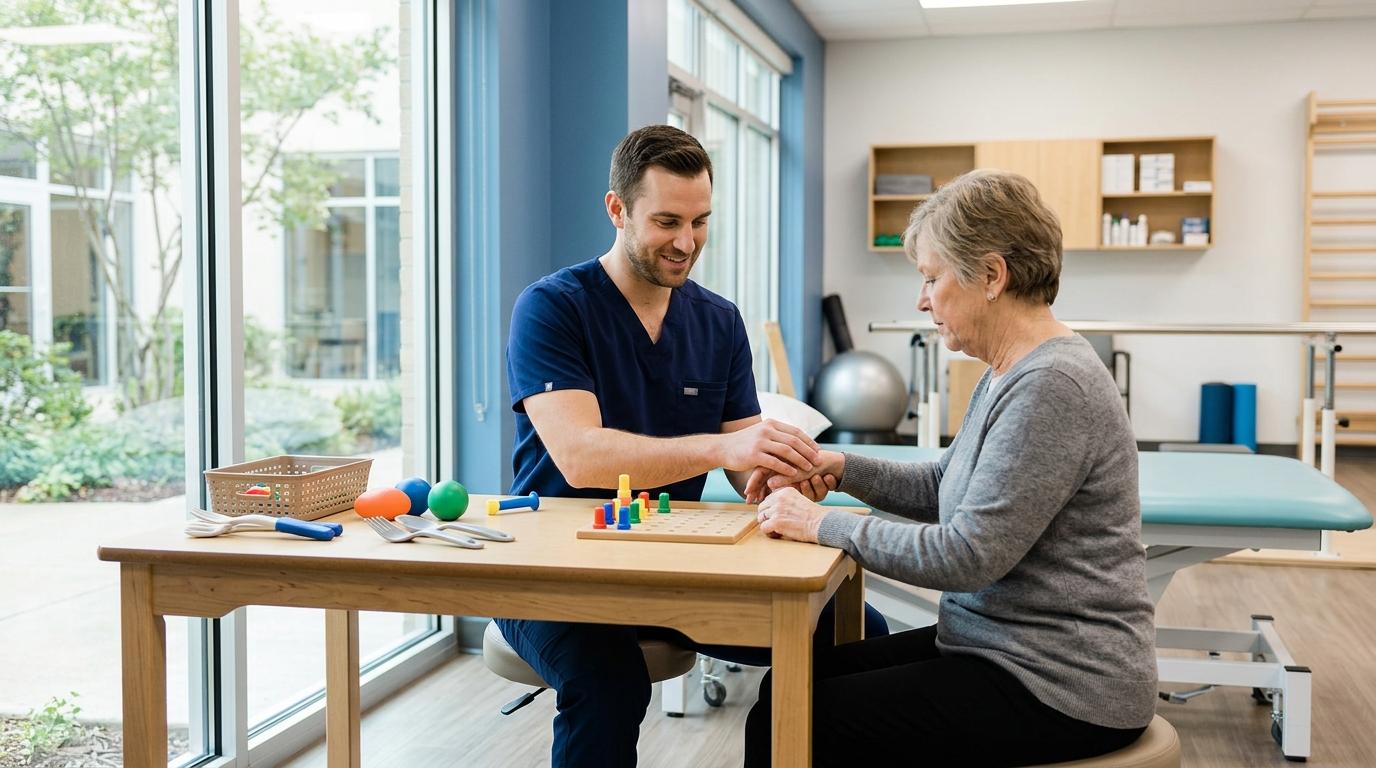
For instance, a patient with reduced hand function might benefit from strengthening exercises, adaptive equipment, or task modification. The appropriate choice depends on the patient's abilities, goals, safety, and the demands of the activity. The objective is not to select the most complicated intervention but to choose one that addresses the identified problem.
This approach helped me move away from memorizing isolated answers and toward understanding the clinical reasoning behind occupational therapy practice.
What the OTR Exam Helped Me Understand About Neurological Rehabilitation?
Neurological rehabilitation required me to connect several areas of knowledge. Conditions such as stroke can affect movement, sensation, coordination, attention, and problem-solving. These changes may influence how a person completes familiar activities.
I reviewed how occupational therapists assess functional performance and support the relearning or adaptation of daily tasks. I also considered the importance of positioning, safe transfers, upper-extremity function, and the patient's ability to follow instructions.
One important lesson was that two patients with the same diagnosis may need very different interventions. Their previous abilities, current limitations, home environments, and personal priorities all influence treatment planning.
How the OTR Exam Reinforced Patient Safety and Adaptation?
Patient safety was another essential part of my preparation. I reviewed fall prevention, transfer techniques, precautions associated with different medical conditions, and environmental risks that can interfere with independence.
I also explored how adaptive equipment can help people perform activities more safely. A long-handled reacher may reduce the need to bend, while a properly selected bathing aid may make personal care more manageable. However, equipment is only helpful when it matches the person's abilities and can be used correctly.
These examples reminded me that independence does not always mean performing an activity without assistance. Sometimes, the most appropriate outcome is helping someone complete an activity safely with the right tools, adaptations, or support.
How I Made My OTR Study Routine More Effective?
Instead of measuring progress by the number of pages I reviewed, I began assessing whether I could explain a concept and apply it to a patient scenario.
I organized my study sessions around specific topics, recorded recurring mistakes, and returned to difficult material before moving on. I also used PracticeTestMaster as one resource for structured review, alongside my notes and other occupational therapy learning materials.
For additional preparation, I would use the official NBCOT examination materials to confirm the current exam outline and align my study plan with the published content areas. This helped me keep my review focused on the actual certification requirements rather than relying on assumptions about what might appear.
The Most Important Lesson From My OTR Preparation
My biggest takeaway was that occupational therapy decisions should begin with the person and the activity, not simply the diagnosis. Clinical knowledge matters, but it becomes more useful when connected to meaningful goals, environmental demands, and patient safety.
For future candidates, I recommend practicing with realistic clinical scenarios, reviewing why incorrect options are unsuitable, and connecting every major concept to an everyday activity. This method encourages deeper understanding and provides a stronger foundation for applying occupational therapy principles in professional practice.

 Arabic
 French
 Spanish
 Portuguese
 Deutsch
 Turkish
 Dutch
 Italiano
 Russian
 Romaian
 Portuguese (Brazil)
 Greek
