


Excavator Starter Swap Guide Mounts Voltage and Solenoids
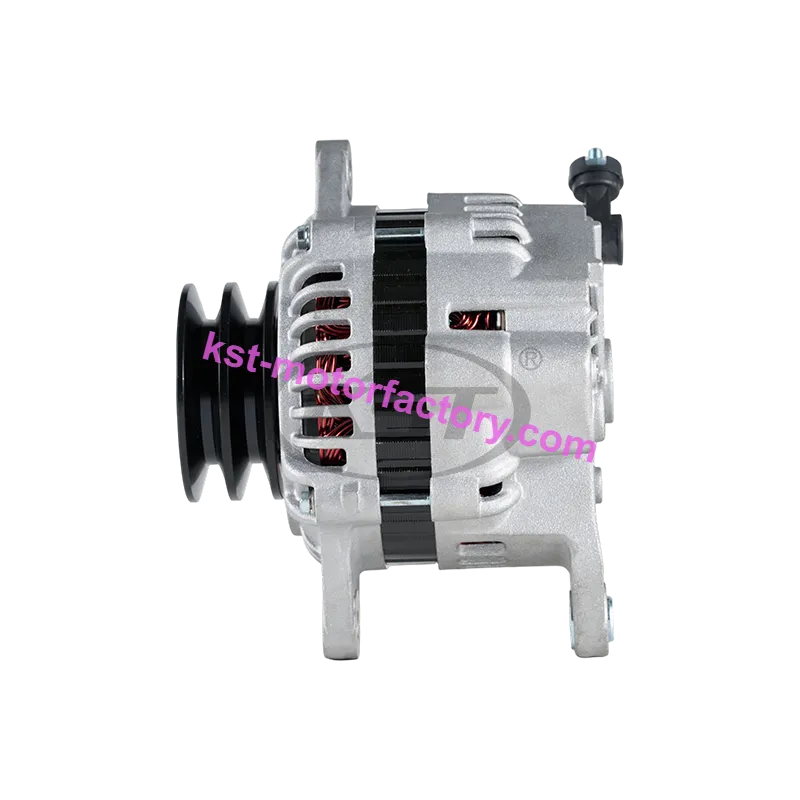
Dawn on a job site waits for no machine, and when a starter fails two hours from the nearest dealer, every parked excavator starts costing money by the minute. Fleet managers facing that scenario often eye the starter bolted to a neighboring brand, wondering whether a quick swap will save the shift, and that gamble touches the exact question kst-motorfactory hears from customers worldwide: is an Excavator Starter from one marque safe to bolt onto another?
Interchangeability is not a yes or no matter but a ladder of checks, and the first rung is mounting geometry. SAE housings dominate the market, yet flange diameters, bolt circle patterns, and nose cone depths still vary by application, so a unit that spins the right direction can still refuse to seat flush against the bell housing. Gear tooth count and pitch decide whether the pinion actually mates with the flywheel ring gear, and a mismatch here chews teeth within hours of the first crank.
Electrical Ground Rules
Voltage sets the boundary before anything else. Compact excavators often run twelve volt systems while mid size and heavy machines demand twenty four, and crossing those rails either starves a starter into lazy cranking or overvolts one into premature brush wear. Power rating follows voltage, since kilowatt output must match engine displacement and compression, and undersized units heat up while oversized ones hammer ring gear teeth with excessive torque.
Solenoid behavior hides the subtlest traps. Modern machines route start commands through controllers that monitor neutral switches, safety relays, and immobilizer circuits, so a starter that demands a simple keyed feed may sit silent on a model that expects a ground side trigger. Pin assignments on the solenoid spade terminals vary even among makers that share the same parent group, and a hasty jumper wire can backfeed a controller that costs far beyond the part being replaced.
Brand ecosystems complicate the map further. Several manufacturers share engines under the skin, meaning a Komatsu machine and a Volvo cousin may accept identical starters, while sibling models within one badge split across generations that never interchange. Dealers and parts interpreters guard these tables, yet independent suppliers increasingly publish cross reference charts that connect OEM numbers across marques, letting buyers trace a Caterpillar starter number to equivalents that fit Hitachi, Doosan, or Hyundai applications.
Physical clearance writes the final exam. Turbochargers, hydraulic lines, and frame rails crowd the starter pocket on many machines, so a unit with the correct electrical profile can still foul an oil return line once torqued down. Clocking, the rotational position of the solenoid and terminals, matters just as much, since terminals that point toward a hot exhaust pipe melt insulation within weeks of installation.
Warranty and liability deserve sober thought as well. A mismatched starter that survives its first month can still shorten ring gear life across the whole engine, turning a parts saving into a drivetrain bill, and insurance investigators do notice improvised substitutions after failures. Documentation that ties the replacement unit to the machine serial number protects everyone from the technician to the fleet accountant.
Geography and season also shape the answer. Arctic crews need starters that tolerate thickened oil and stiff seals, while desert fleets battle dust ingestion and heat soaked solenoids, so a unit that swaps cleanly in one climate may demand shrouds or gear ratios elsewhere. Fuel type shifts the load curve as well, since Tier after Tier of emission hardware has raised cranking resistance on newer engines, meaning an older cross reference no longer fits a late model sibling even when the flange bolts align.
Practical workflow saves the day when a machine is down. Record the machine model, serial, and engine type; photograph the original starter from every angle including terminal markings; measure flange diameter and count ring gear teeth where access allows; and compare all of that against a cross reference before any money moves. Suppliers that staff engineers rather than only order takers turn that packet of information into a verified match, and kst-motorfactory handles exactly this kind of translation between brands daily, mapping an Excavator Starter from one badge onto the machine that needs it.
Remanufactured units add another layer of nuance, since a quality rebuild with new bushings, solenoid contacts, and balanced armatures can outlast cheap fresh units, while sloppy rebuilds fail under warranty and sour the whole idea of interchangeability. Buyers should ask who tested the unit, under what load, and for how long, because a bench spin without load proves far less than a dyno pull that simulates compression.
Fleet standardization softens the question over time. Operators who standardize on a handful of engine platforms across brands shrink their spare shelf dramatically, since one starter design then covers many machines, and parts rooms stop playing roulette during breakdowns. Distributors that understand this strategy stock depth across the shared numbers rather than chasing every badge.
Every cranking circuit tells its own story of compatibility, and careful matching keeps that story short. kst-motorfactory supports that matching with cross reference data on every Excavator Starter, application engineers, and tested stock spanning the major badges. Downtime crews can reach the full range at https://www.kst-motorfactory.com/product where search tools, model tables, and support channels sit behind one address, and the team answering that inbox treats every interchange question as a machine down until proven otherwise.

 English
 Arabic
 Spanish
 Portuguese
 Deutsch
 Turkish
 Dutch
 Italiano
 Russian
 Romaian
 Portuguese (Brazil)
 Greek
