


How Can Businesses Deep-Clean Concrete Without Disrupting Daily Operations?
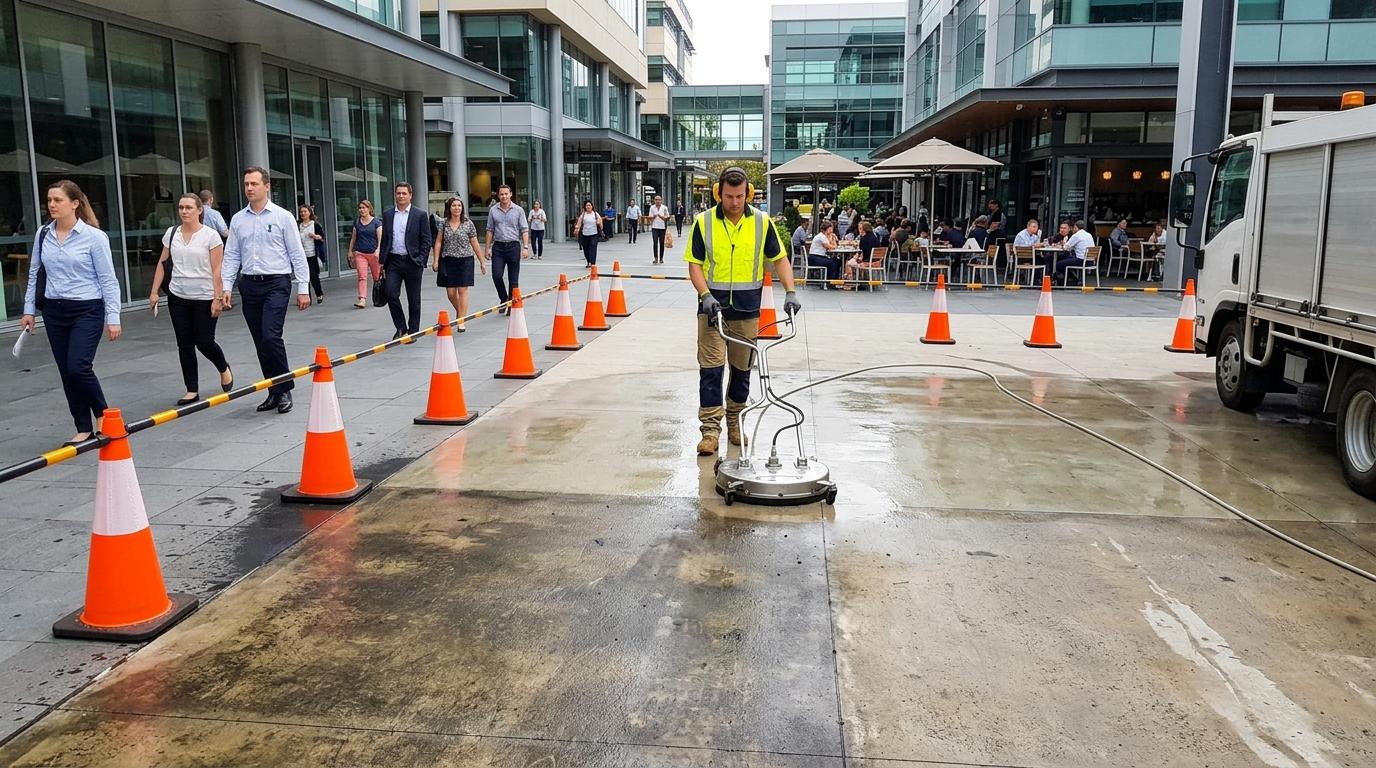
Dirty concrete creates challenges for commercial properties that extend beyond appearance. Grease near a restaurant entrance, tire marks in a loading area, and accumulated dirt along busy walkways can affect how customers and employees use the space. Unlike a residential driveway, a commercial site may have deliveries, parked vehicles, pedestrians, and several access points operating throughout the day. Cleaning therefore requires more than removing stains. A successful project must account for surface conditions, water management, safety, and the business's normal schedule.
Start by Identifying the Areas That Need Attention Most
Not every part of a commercial property becomes dirty at the same rate. Main entrances often collect tracked-in soil, chewing gum, drink spills, and weather-related grime. Parking areas may develop tire marks and oil contamination, while loading docks can accumulate grease, dust, and debris from regular vehicle movement. Sidewalks beneath trees may also develop slippery biological growth when they remain damp. Treating the entire property as one uniform cleaning area can waste time and overlook locations that need specialized attention.
A practical assessment begins with a walk-through during normal operating conditions. Identify the busiest pedestrian routes, delivery entrances, drainage points, and locations where stains repeatedly develop. Photograph problem areas and note whether the concrete is cracked, coated, heavily worn, or previously repaired. This provides a useful starting record and helps determine which sections require immediate attention. High-risk walking areas and heavily contaminated surfaces may deserve priority over sections with only minor cosmetic discoloration.
Different Stains Need Different Cleaning Treatments
Commercial concrete commonly contains several types of contamination within a relatively small area. Ordinary soil and loose debris may respond to sweeping and appropriate washing, but grease and oil usually require a cleaner designed to break down oily residue. Chewing gum can need a different removal technique, while rust and mineral deposits may require specialized products. No single cleaning solution should be expected to remove every type of stain without affecting the surrounding surface.
Commercial concrete cleaning works best when the treatment matches both the contaminant and the condition of the pavement. A worn concrete surface may be more vulnerable to concentrated water jets than a sound, properly finished slab. Coated or sealed concrete requires additional care because aggressive washing can damage its protective finish. Some old stains may have penetrated deeply enough that complete removal is not realistic. Setting appropriate expectations before work begins helps prevent disputes over permanent discoloration.
Plan the Work Around Customers and Deliveries
A commercial cleaning project should avoid creating unnecessary interruptions to the business. Restaurants may have predictable periods of heavy customer activity, while warehouses and retail properties depend on scheduled deliveries. In many cases, dividing the project into smaller sections is more practical than attempting to clean the entire site at once. This allows entrances, loading routes, and accessible walking paths to remain available where the layout permits.
Before scheduling, review operating hours, vehicle movements, pedestrian access, and the time needed for surfaces to become safe to reopen. Consider whether cleaning can take place before opening, after closing, or during a quieter period. Some projects may require temporary barriers or an alternative entrance. Employees, tenants, delivery personnel, and customers should receive appropriate notice when their normal routes will change. The schedule should also allow time to remove equipment and confirm that no slippery residue remains.
Manage Wastewater Before Cleaning Begins
Water runoff is one of the most important differences between a controlled commercial cleaning project and an ordinary rinse. Dirt, grease, cleaning chemicals, and other contaminants can be carried toward storm drains. Many stormwater systems discharge into nearby waterways without the type of treatment used for sanitary wastewater. As a result, commercial cleaning operations may need containment, collection, filtration, or another approved wastewater management method depending on local requirements and the contamination involved.
The cleaning plan should identify nearby storm drains and determine where wastewater can legally be directed. Wastewater containing detergents or pollutants should not simply be allowed to enter a storm drain. Collected water may require disposal through an approved system with permission from the appropriate wastewater authority. Rules vary by jurisdiction and site conditions. Even products marketed as environmentally friendly can create problems if contaminated wash water is released without proper controls.
Protect People and Property During the Cleaning Process
Wet pavement can create slipping hazards, especially when cleaning solutions loosen oil or grease. Equipment hoses can also become tripping hazards in busy areas. Before starting work, establish a controlled cleaning zone and use appropriate signs or physical barriers. Protect nearby doors, electrical equipment, sensitive landscaping, parked vehicles, and other surfaces that may be exposed to spray. Workers should use suitable protective equipment and follow the instructions for the chemicals and machinery involved.
A few practical controls can make the project safer:
-
Keep customers and employees away from active washing areas.
-
Use temporary barriers and clearly marked alternative access routes.
-
Manage hoses and equipment so they do not block emergency access.
-
Confirm that walking surfaces are adequately rinsed and safe before reopening.
Safety checks should continue throughout the project rather than being completed only once. Traffic patterns can change during a workday, and a previously empty loading area may become active without much warning. Assigning responsibility for site coordination helps prevent conflicts between cleaning crews, delivery drivers, and building occupants.
How to Judge Whether the Cleaning Was Successful
Commercial concrete should be inspected after it has dried enough for the finished condition to be evaluated accurately. Wet pavement can appear darker and more consistent than it will once dry. Look for remaining debris, noticeable cleaning lines, untreated edges, and residue near walls or drainage points. Compare the results with the agreed scope and any photographs taken before work began. Permanent staining and surface wear should be distinguished from areas that were simply missed.
A satisfactory result should also include a clean and usable site. Wastewater should be properly managed, equipment removed, barriers taken down when appropriate, and access routes restored. If cleaning reveals damaged concrete, unstable sections, or drainage problems, those observations should be documented for the property manager. Washing can improve appearance and remove contamination, but it does not repair broken pavement or resolve persistent water accumulation.
Build a Maintenance Schedule Around Actual Property Use
Commercial cleaning frequency should reflect the activities taking place on the property. A busy restaurant entrance may need more frequent attention than a lightly used office walkway. Loading areas exposed to grease, spills, or heavy equipment may require prompt spot treatment rather than waiting for the next full wash. Regular sweeping, litter removal, and early spill response can reduce the amount of embedded contamination that accumulates between professional cleanings.
Property managers can use a simple inspection record to track recurring stains, hazardous conditions, drainage concerns, and completed cleaning work. This makes it easier to adjust the schedule based on actual conditions rather than choosing an arbitrary interval. Where staining returns quickly, investigate its source. A leaking vehicle, poorly positioned waste container, or drainage problem may need correction before another cleaning provides lasting improvement.
Conclusion
Commercial pavement maintenance requires planning around the people who use the property as well as the concrete itself. Matching treatments to stains, protecting access routes, and controlling wastewater can improve cleaning outcomes without unnecessary disruption. One important consideration is nonpoint source pollution, which occurs when runoff carries pollutants from broad or scattered areas into the environment. Understanding this process helps explain why contaminated cleaning water requires careful management, even when the original goal is simply to make a sidewalk or parking area cleaner.

 English
 Arabic
 French
 Portuguese
 Deutsch
 Turkish
 Dutch
 Italiano
 Russian
 Romaian
 Portuguese (Brazil)
 Greek
