


Strengthen Data Center Security Across Kuwait
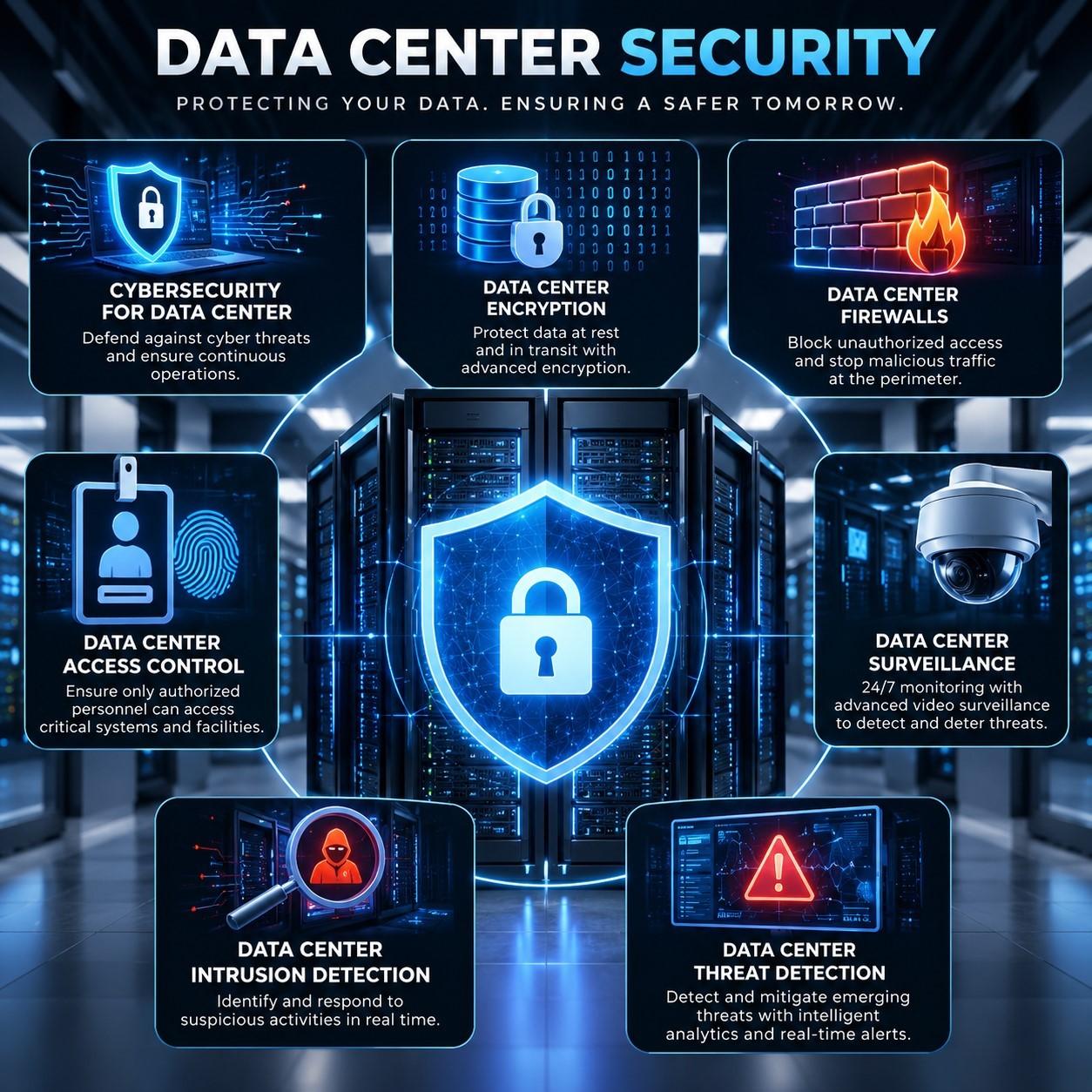
Kuwait's growing digital economy, from banking platforms to government cloud services, now depends on a small number of physical facilities holding the servers behind it all. Data Center Security has become a board level concern rather than a purely technical one, because a single breach, whether physical or digital, can take down services relied upon by thousands of businesses and millions of residents at once.
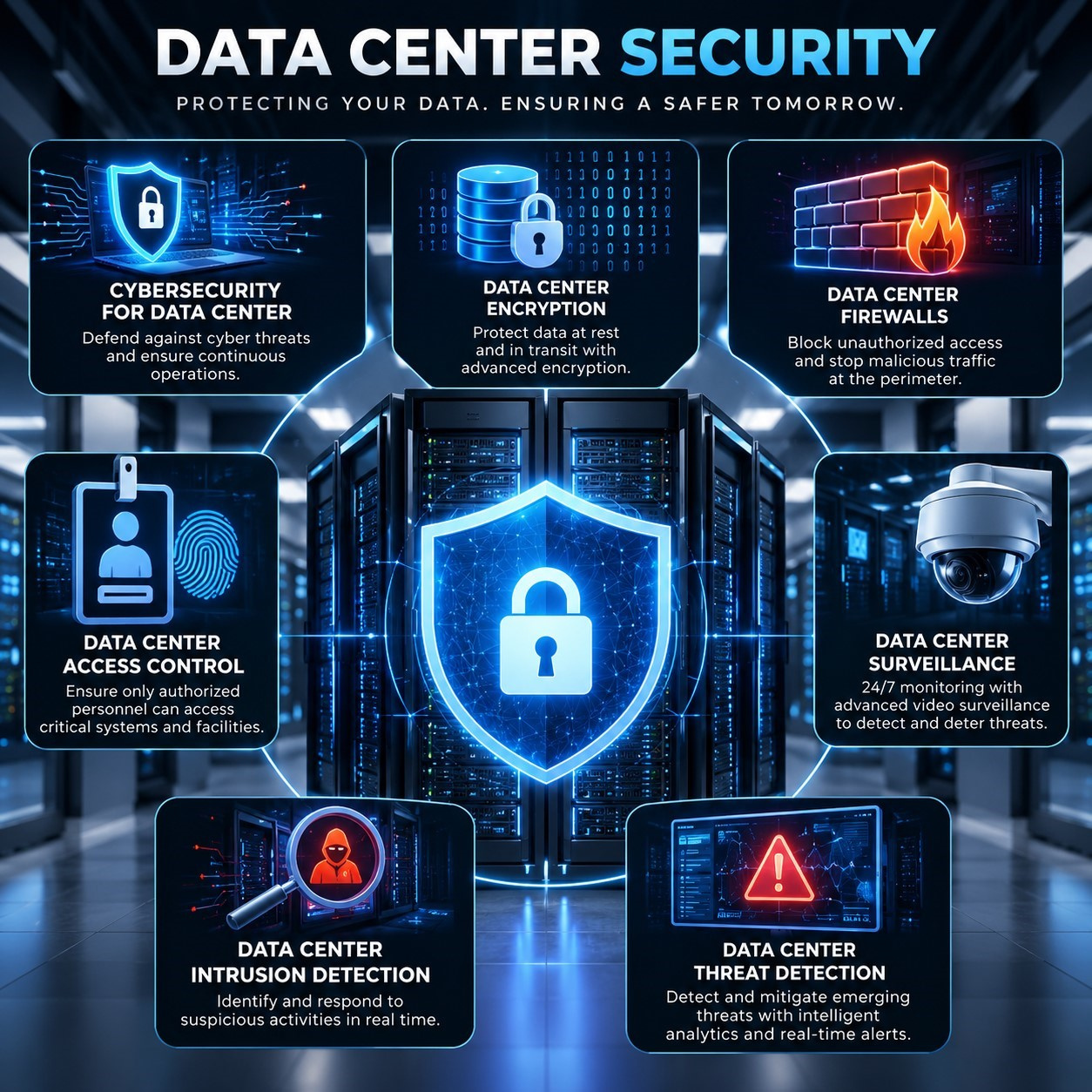
Tektronix has designed and deployed security infrastructure for data centers and critical facilities across Kuwait and the wider Gulf for many years, and its data center security solution for Kuwait brings together the physical and digital layers that a modern facility needs rather than treating them as separate projects. This article walks through what a complete data center security program actually includes today, the layers that matter most, and what Kuwaiti operators should expect from a vendor capable of delivering all of them together.
Why Data Center Security Now Spans Both Physical and Digital Layers
A facility can have the strongest firewall in the region and still suffer a serious incident if an unauthorized person walks into the server hall through a poorly controlled door. Equally, a facility with excellent perimeter fencing and guards can still be compromised entirely through a network vulnerability that never requires anyone to set foot on site. Kuwaiti operators are increasingly recognizing that these two sides of protection need to be designed together rather than procured from separate vendors who never coordinate with each other.
Cybersecurity for Data Center Operations Where Physical and Digital Defense Meet
Cybersecurity for Data Center environments covers the network monitoring, patching discipline, and credential management that keep attackers out of the systems hosted within a facility. The strongest programs link this digital layer to the physical side as well, so a badge event at the server room door and a suspicious login attempt on the same rack can be correlated by the same security team rather than investigated by two departments that never compare notes.
Data Center Encryption for Information at Rest and in Transit
Data Center Encryption protects stored data on disk and data moving between servers or out to connected clients, so that even if storage media is physically removed or network traffic is intercepted, the information itself remains unreadable without the proper keys. Kuwaiti organizations handling financial records or government data increasingly require encryption key management to be documented and auditable, not simply enabled as a default setting left unmonitored.
Data Center Firewalls as the First Line of Network Defense
Data Center Firewalls filter traffic entering and leaving a facility's network, blocking known malicious sources and enforcing rules about which services should ever be reachable from outside the organization. A well configured firewall policy reviewed on a regular schedule catches far more issues than one set up once during initial deployment and left untouched for years, which unfortunately remains a common gap in facilities that treat firewall configuration as a one-time task rather than ongoing maintenance.
Data Center Access Control for Restricted Zones and Server Rooms
Data Center Access Control governs exactly who may enter a facility, which specific racks or cages they may approach, and during which hours that access is valid. Modern deployments increasingly layer biometric verification on top of card credentials for the highest sensitivity zones, since a shared card can be lent or lost while a fingerprint or face cannot, and every entry event is logged automatically for later audit rather than relying on a guard's memory or a paper sign in sheet.
Data Center Surveillance for Continuous Visual Monitoring
Data Center Surveillance provides the visual record that access logs alone cannot capture, covering corridors, loading docks, and the server hall itself around the clock. Video analytics layered on top of standard camera feeds can now flag an unusual event automatically, such as a cabinet door left open or a person lingering near a restricted rack, rather than requiring a guard to notice it manually on a wall of monitors during a quiet overnight shift.
Data Center Intrusion Detection for Unauthorized Entry and Network Anomalies
Data Center Intrusion Detection spans both the physical perimeter, through sensors on fences, doors, and windows, and the network layer, through systems that watch for traffic patterns consistent with an attacker probing or moving laterally inside the environment. Treating both forms of intrusion detection as part of one coordinated alerting system, rather than two unrelated tools generating separate alarms, gives a security team a far more complete picture of what is actually happening at a facility in real time.
Data Center Threat Detection Across Physical and Digital Layers
Data Center Threat Detection goes a step further than simple intrusion alarms by analyzing patterns over time to identify a developing threat before it becomes a full incident, whether that is a credential being used in a pattern inconsistent with someone's normal schedule or a server showing early signs of compromise. Facilities that invest in this analytical layer typically catch problems during the early reconnaissance stage rather than only after an attacker has already gained a meaningful foothold.
Data Center Security Kuwait: Market Drivers and Compliance
Kuwait's push toward digital government services and a growing local cloud and hosting sector under its broader economic diversification goals has raised baseline security expectations for any facility handling sensitive national or financial data. Data Center Security Kuwait projects increasingly need to demonstrate documented physical security controls alongside standard cybersecurity certifications during client and regulator audits, since international clients hosting data locally often require proof of both layers before signing a contract.
Layered Security Design Combining Physical and Cyber Defenses
The strongest data center security programs are built in layers, so that a failure at any single point does not expose the entire facility. A typical design might combine perimeter fencing and surveillance, biometric access control at the building entrance, a separate higher assurance check at the server hall door, encrypted storage and network traffic throughout, and continuous monitoring software watching for both physical and digital anomalies at once. Each layer is designed to catch what the previous one might miss, rather than relying on any single control to carry the entire burden of protection.
Engineering Experience and Trust Behind Every Deployment
Tektronix has engineered and commissioned security infrastructure for data centers, banks, and critical national facilities across Kuwait and the wider Gulf for well over a decade, with an in house engineering team handling site surveys, network integration, and system configuration rather than outsourcing installation to a subcontractor unfamiliar with the platform. Every deployment follows a documented access governance and monitoring process suited to the sensitivity of a data center environment, and the company maintains regional technical support so a failed sensor or controller does not leave a facility without a working safeguard for an extended period.
Full technical documentation covering integration options, supported hardware, and monitoring capabilities is available through the company's data center security page for Kuwait, giving facility operators and compliance teams verifiable detail to review rather than a marketing summary alone.
Choosing a Data Center Security Partner in Kuwait
Selecting a vendor for a data center security upgrade is as much about proven experience across both physical and digital layers as it is about any single product. Facility and compliance teams should ask any prospective supplier about past data center deployments, how physical access events are correlated with network monitoring, what encryption and key management practices are supported, and how quickly local support can respond if a critical sensor or controller fails. Organizations that want a single accountable partner across physical and digital security can review Tektronix's full data center security solutions for Kuwait before finalizing a shortlist of suppliers.
Environmental and Operational Resilience Alongside Security
Security controls work best when they are designed alongside the environmental and power resilience that keeps a data center running in the first place. Redundant power feeds, fire suppression systems, and climate control all protect the same physical assets that access control and surveillance are guarding, and a facility that coordinates these teams during design tends to avoid conflicts, such as a fire suppression test accidentally triggering a false intrusion alarm because the two systems were never tested together.
Kuwaiti operators building new facilities increasingly specify a single commissioning process that validates security, environmental, and power systems together before go live, rather than testing each system in isolation and discovering integration gaps only after the facility is already handling live traffic.
Preparing for Growth and Regulatory Change
A data center expanding its capacity or adding new tenant zones should choose security infrastructure that scales without requiring a complete platform replacement each time a new hall or cage comes online. Licensing and hardware architected around growth, rather than a fixed package sized for the facility's opening day footprint, gives an operator room to expand gradually without renegotiating an entire security contract every time capacity increases.
Kuwait's regulatory expectations around data protection and critical infrastructure continue to evolve, so a security platform that supports configurable reporting and audit trails tends to adapt to new requirements far more easily than one built around a fixed, inflexible set of compliance checkboxes from day one.
Conclusion
Strong Data Center Security now depends on physical and digital defenses working together rather than as separate, disconnected projects across Kuwait. Cybersecurity for Data Center operations and Data Center Encryption protect information itself, while Data Center Firewalls guard the network perimeter around it. Reliable Data Center Access Control and continuous Data Center Surveillance give facility teams full visibility over who enters and what happens onsite. Data Center Intrusion Detection and advanced Data Center Threat Detection catch problems early, before a small anomaly becomes a major incident.
Organizations investing in Data Center Security Kuwait projects should choose a partner like Tektronix with proven regional engineering across every security layer.
FAQs
1. What is the difference between data center access control and general building access control?
Data center access control typically applies much stricter, layered verification down to the individual rack or cage level, often combining biometrics with card credentials, whereas general building access control usually governs broader zones such as floors or departments.
2. Can physical security events be linked with network security alerts?
Yes, many modern platforms allow a badge event or camera alert at a server room door to be correlated with network activity on the same rack, giving a security team a combined view rather than two separate systems operating in isolation.
3. How often should firewall rules and access policies be reviewed?
Most facilities review firewall rules and access permissions on a quarterly basis at minimum, with additional reviews triggered whenever staff roles change or a new vendor or service is connected to the network.
4. Does encryption protect data if a physical server or drive is stolen?
Yes, properly implemented encryption at rest means that even if a drive is physically removed from a facility, the data on it remains unreadable without the correct decryption keys, which should themselves be stored and managed separately from the data they protect.
5. What should a Kuwait based organization look for when auditing a data center vendor?
A thorough audit should cover documented physical access logs, encryption and key management practices, firewall and network monitoring records, and evidence of regular testing for both the physical and digital layers rather than certification claims alone.

 English
 Arabic
 French
 Spanish
 Portuguese
 Deutsch
 Turkish
 Dutch
 Italiano
 Russian
 Romaian
 Greek
