


Why Is Naishi Double Block and Bleed Ball Valves OEM/ODM Useful For Maintenance Planning?
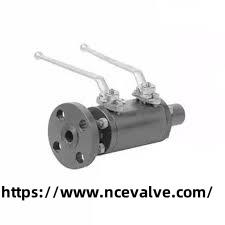
Naishi Double Block and Bleed Ball Valves OEM/ODM provide a practical alternative for facilities that require precise adaptation to operational demands. While standard models are available from stock, they often do not address unique conditions such as unusual pipe layouts, aggressive fluids, or specific pressure profiles. Custom-engineered units allow specifications to match site requirements closely, minimizing installation adjustments and potential operational interruptions. By offering tailored options, manufacturers ensure that each valve integrates with existing systems efficiently.
The distinction between standard and OEM/ODM valves becomes evident in material and design choices. Standard products typically offer general-purpose materials and fixed configurations, which may perform adequately under average conditions but can degrade faster in environments with high corrosiveness, abrasive media, or temperature fluctuations. Customized solutions provide selection of alloys, composite seat materials, and specialized stems that resist wear and maintain functional integrity over prolonged service. This approach reduces maintenance demands and helps sustain operational stability without major interventions.
Customization also extends to functional design. Engineers can specify dual block arrangements, internal bleed paths, or multi-port designs to accommodate complex pipelines. Such options allow partial isolation of segments without shutting down entire systems, which is particularly valuable in chemical processing, water treatment, or energy facilities. By matching valve performance with system requirements, plants can maintain consistent flow control while reducing the risk of fluid mixing or unintended pressure surges.
Monitoring and operational oversight benefit from OEM/ODM solutions as well. Valves can be prepared to integrate with automated control systems, enabling remote observation and actuation. Real-time feedback on flow rates, pressure changes, and cycle activity supports predictive maintenance and operational planning. In contrast, standard models may require additional retrofitting or supplementary devices to achieve similar integration, which can increase complexity and installation time.
Industrial applications illustrate the advantages of customized designs clearly. In water treatment plants, precise control of flow and isolation capabilities reduces contamination risk and allows targeted maintenance. In chemical production, materials resistant to specific solvents or high temperatures prevent early degradation and maintain process consistency. In energy facilities, valves tailored to handle high-pressure streams ensure that operations remain stable without compromising safety. Across these sectors, the combination of material choice, structural design, and functional flexibility enhances both efficiency and reliability.
Production processes for OEM/ODM units include meticulous quality verification. Leak testing, operational assessment, and pressure checks confirm that each valve meets specified requirements. Automated assembly and precision machining maintain consistency across batches, providing confidence that each component functions as expected under operating conditions. Standard models, while convenient for general use, may not undergo the same level of adaptation or functional testing for specific applications, which can limit long-term performance.
The global shift toward more complex and interconnected industrial systems reinforces the value of tailored solutions. As pipelines carry diverse fluids under variable conditions, direct collaboration with manufacturers allows engineers to address system needs at the design stage. This proactive approach reduces risk, simplifies installation, and supports operational stability over time. By integrating functional features and material choices early, facilities can avoid costly modifications or downtime later in the process.
For industrial operators evaluating options for pipeline control and isolation, Naishi Double Block and Bleed Ball Valves OEM/ODM offer a considered solution. They combine adaptability, material selection, and functional integrity to align with operational requirements while maintaining reliable service. For full details on product specifications and available configurations, please visit https://www.ncevalve.com/product/

 English
 Arabic
 French
 Spanish
 Portuguese
 Deutsch
 Turkish
 Dutch
 Italiano
 Russian
 Portuguese (Brazil)
 Greek
