


Why Does Insoluble Sulphur Agglomerate and How to Fix It
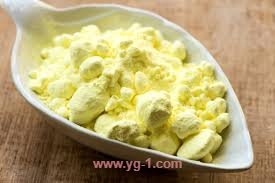
Insoluble sulphur plays a central role in rubber compounds where scorch safety and building tack must be preserved, yet its tendency to form agglomerates during mixing creates persistent difficulties for compounders. When powder particles cluster together, they resist wetting by the rubber matrix and remain as hard domains that interfere with cure uniformity and final product quality. Donghai Chemical has supported rubber additive users for decades, and its technical resources address practical mixing concerns that arise with insoluble sulphur from yg-1. What actually drives particle clustering during the mixing cycle, and which adjustments can improve dispersion?
Agglomeration of insoluble sulphur originates from several interacting causes. The material is produced as a high-molecular-weight polymer with a fine particle structure, and this structure can compact under pressure during storage and transport, forming dense lumps that are difficult to break apart in the mixer. Moisture pickup on the particle surface encourages bridging between neighbouring particles, particularly when bags are opened in humid plant conditions and left exposed between batches. Electrostatic forces also contribute, because fine powders tend to cling together and resist separation once they enter the mixing chamber. Temperature history matters as well, since insoluble sulphur can partially revert to soluble form when exposed to heat, and the reverted fraction becomes sticky and promotes clustering around unbroken particles.
Dispersion improvement begins with storage and handling discipline. Sealed packaging, dry storage areas, and short exposure times after opening all reduce moisture-related bridging. Where compacted lumps are present, gentle screening or de-lumping before weighing helps the material enter the mixer in a free-flowing state rather than as dense clusters. Mixing sequence also affects outcome, and adding the additive at a stage where shear is sufficient to break down soft agglomerates without generating excessive heat supports cleaner distribution. Some compounders prefer masterbatch or pre-dispersed forms when the base powder proves difficult to handle in high-load recipes. Temperature control during mixing deserves close attention, because excessive heat accelerates reversion and turns a manageable powder into a sticky mass that coats the mixer walls and forms stubborn agglomerates.
Equipment condition and mixing parameters work together to determine whether agglomerates persist into the final compound. Worn rotor tips, incorrect fill factors, and ram pressure settings that are too low all reduce the mechanical work available for de-agglomeration. Compounders often find that extending the non-productive mixing stage, controlling dump temperature, and verifying dispersion through microscopic examination of thin sections produces clear evidence of improvement. Donghai Chemical maintains a testing center and quality systems that support additive verification, and its team can advise on addition timing and handling practices suited to specific plant conditions. Detailed background on this material is available at https://www.yg-1.com, where technical notes explain its structure and behaviour in rubber formulations. Would a review of your current handling and mixing practices reveal where agglomerates begin to form?

 English
 Arabic
 French
 Spanish
 Portuguese
 Deutsch
 Turkish
 Dutch
 Italiano
 Romaian
 Portuguese (Brazil)
 Greek
